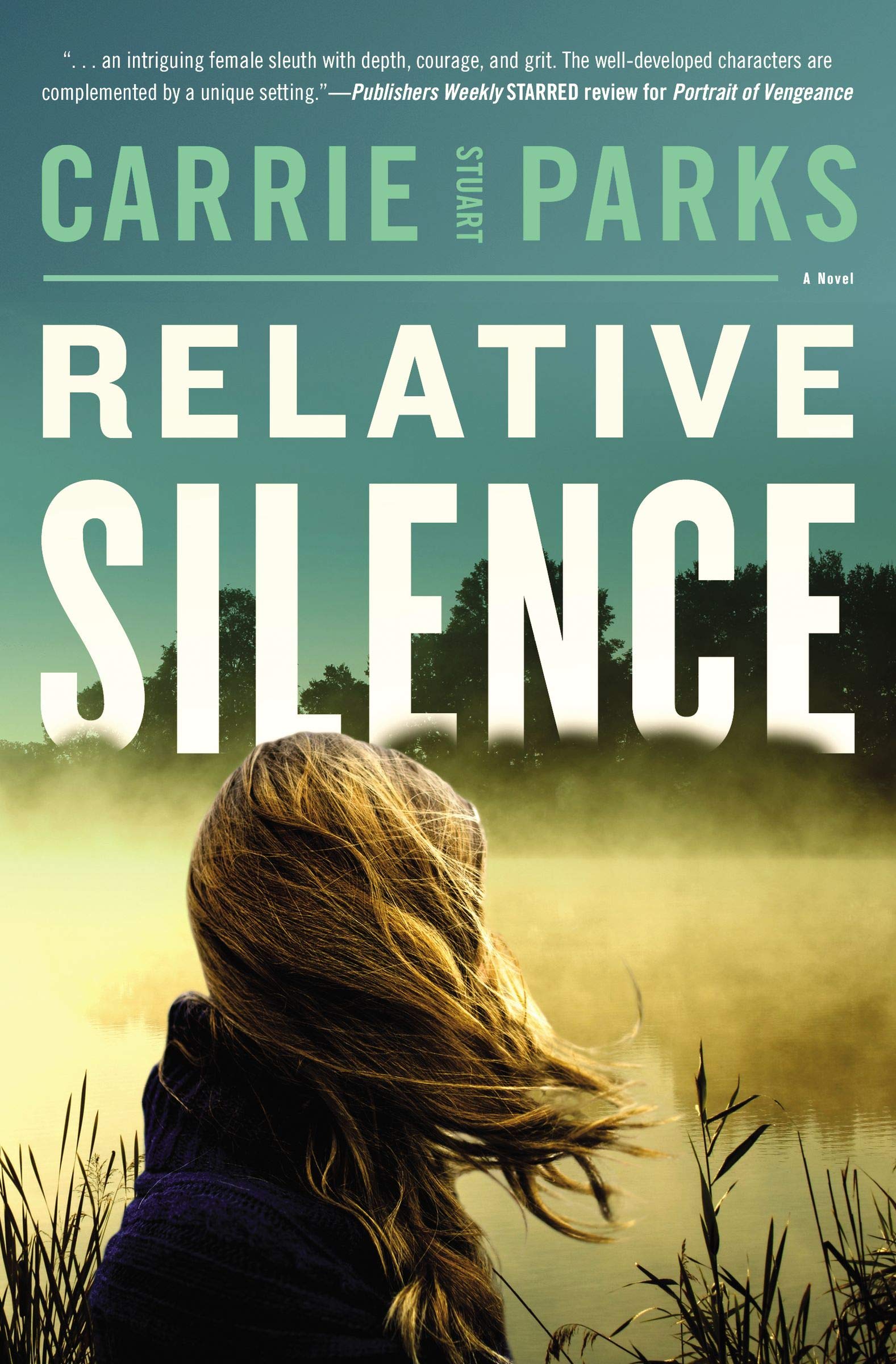
Fifteen years ago Piper Boone’s only child died in a boating accident, and Piper’s almost perfect life came to an end too. After living through a divorce and losing her job, she retreats to Curlew Island and her childhood home—a secluded mansion for the politically powerful Boone family, who are practically American royalty.
But Piper’s desire to become a recluse is shattered when a mass shooter opens fire and kills three women at a café where Piper is having lunch. The crisis puts her family in the spotlight by dredging up rumors of the so-called Curlew Island Curse, which whispers say has taken the lives of several members of the Boone family, including Piper’s father and sister.
Forensic artist Tucker Landry also survives the shooting and is tasked with the job of sketching a portrait of the shooter with Piper. They forge a bond over their shared love of movies and tragic pasts. But when police discover a connection between the shooting and two more murders on Curlew Island, they face a more terrible lineup of suspects than they could have imagined: Piper’s family.
Unraveling the family’s true history will be the key to Piper’s survival—or her certain death.
Piper no longer has a job so decides to return to her family home on Curlew Island. In spite of the rumored Curlew Island Curse.
Piper survives a shooting at a mainline cafe, primarily because a man at a nearby table table threw his body over hers.
Because Tucker is a forensic artist, Piper engages him to age progress a photo of her daughter who drowned as a toddler.
But attempts on her life continue as she works to find the true history of the Boone family.
Thank you, Carrie Stuart Parks. You had my full attention though this book.
Prologue
Curlew Island, South Carolina
Fifteen years ago
The piercing scream ripped up my spine. I dropped the spatula and spun.
My almost-three-year-old daughter, Dove, stood at the door to the kitchen and held out her favorite toy, a tattered stuffed bunny she’d named Piggy. Piggy’s ear was hanging by a thread with stuffing protruding from the opening.
“Mommy,” she sobbed. “P-P-Piggy’s hurt.”
I turned off the blender. I’d told Mildred, the housekeeper, I was going to make dessert and was elbow-deep in half-whipped meringue for the banana pudding now cooling next to me.
“Come here, Dove, and let Mommy see.”
Still crying, Dove launched herself at me.
I lifted her and checked my watch. No one was at the family’s Curlew Island home at the moment except my husband, Ashlee. He’d said he would look after Dove while I did some cooking. Yet here she was with a damaged toy and in need of comfort, while he, as usual, was absent.
“Sweetheart, Mommy will have to fix Piggy in a little bit. Where’s Daddy?”
She shook her head. Her sobbing settled into hiccups and loud sniffles.
Shifting her to my hip, I caught sight of movement in the foyer. “Ashlee?”
The front door clicked shut.
Still holding Dove, I charged through the house and opened the front door. Ashlee was just climbing into a golf cart, the only transportation on the island. “Just where did you think you were going? You’re supposed to be watching Dove.”
“Don’t give me a hard time, Piper.” His face was pale with beads of sweat on his forehead. “I have an errand to run on the mainland. Mildred can watch Dove.”
“Mildred’s getting groceries and I’m cooking. Take Dove with you. You don’t spend nearly enough time with your only child.”
“Look, Piper, this is important and I don’t—”
“So’s your daughter. Or maybe we should all go to the mainland together if something is that important. Better yet, you finish dessert and I’ll get to play with Dove.” I was heartily tired of Ashlee’s constant racing off to “something important.” His work as head of marketing at the family business, Boone Industries, was stressful and kept him busy, but this was getting ridiculous.
He took out a handkerchief and swabbed his sweaty brow. “N-no. I’ll take her.”
Dove had relaxed against my shoulder. “She’s overdue for her nap, and the boat always puts her fast asleep. Just be sure to put her life jacket on. There are snacks on the boat if she gets hungry.”
Ashlee opened his mouth, then shut it. A vein pounded in his forehead.
“Dove, sweetie,” I said. “Go for a boat ride with your daddy. I’ll take care of Piggy, okay?”
She nodded under my chin and allowed me to hand her over to Ashlee.
“Will you be long?”
“As long as I need to be.” Without another word he got into the cart and drove toward the dock. The late October day was pleasantly warm, and although Dove wore a white T-shirt and short skirt, she could always crawl under a blanket in the saloon if the boat ride was too cool.
I took poor Piggy back into the kitchen and placed her on the end of the counter, hoping the meringue was salvageable. I topped the banana pudding, stuck the dessert into the oven, set the timer, and moved to Dove’s room to change the sheets. Finishing just as the pudding was ready, I placed it on the counter to cool.
After washing the dishes and cleaning the kitchen, I still had laundry to do. How could I be washing more clothes than we’d packed?
Once a year the entire family would gather on the private island for a stockholders’ meeting and retreat, joining the year-round staff. I’d like to say that seeing my family together in this beautiful paradise was a special treat. Unfortunately, I was closer to the housekeeper than to my own mother. At least the beach was sandy, the ocean refreshing, and the house spectacular and spacious. Dove, of course, was perfect. And Ashlee? Back to the laundry.
After shifting a load from the washer to the dryer, I made my way past the workout and sewing room toward the kitchen. Could a rabbit ear be repaired on a sewing machine? Ha! I didn’t even know how to thread a bobbin. I found Mildred in the kitchen, checking a store receipt. “I didn’t know you’d returned. Do you need help with the groceries?”
“Already done.”
“Then I timed my offer perfectly. Do you know how to thread a bobbin?”
“Have you been out in the sun too long?”
“It’s a rabbit-ear question.”
“Next time wear a hat.”
I grinned at the older woman. “To thread a bobbin?”
“You are the oddest child,” she muttered, then nodded at my banana pudding. “But you do make the most beautiful desserts.” We busied ourselves preparing dinner. The stockholders’ meeting was tomorrow, and the remaining members of the family would arrive tonight.
“Strange,” Mildred said after the pot roast had been placed in the oven.
“What?”
“I’d have thought everyone would be here by now.”
I glanced at my watch. Ashlee and Dove had been gone for five hours. Dove would be starving. “I’m sure—”
The phone rang.
“That’s probably them now.” I picked up the receiver. “Boone residence.”
“Piper!” It was my older brother, Tern. “Oh, Piper, I’m . . . I’m at the hospital. It’s Ashlee.”
I squeezed the receiver tighter. “What’s going on? Is Dove okay?”
Tern groaned.
I reached for Mildred. She took my hand, then put her arm around me to keep my knees from buckling. “Tern? Tern!”
Tern didn’t answer. A male voice took over. “Mrs. Piper Yates? This is Officer Stan Gragg of the Marion Inlet Police. There’s been an incident involving your husband. He was attacked on the dock and your family’s yacht was stolen. He’ll be fine, but we’re having the doctor check him out—”
“What about my daughter, Dove?” I tried to keep my voice under control, but the words came out shrill.
“We believe she was still on the boat. I’m afraid she’s missing.”
Chapter 1
Marion Inlet, South Carolina
Present Day
I couldn’t breathe. A man’s weight across my body crushed me to the sidewalk. The grit of the cement and shattered glass dug into my cheek. My ears rang with the craack, craack of gunfire and the screams of the wounded. A thousand bees stung my ankle. I kept my eyes tightly shut. If I opened them, I knew I’d see the sightless gaze of my friend Ami, stretched out beside me. Even with my eyes closed, I could still see Ami’s face. I should be the one lying dead.
I tried to cover my ears.
“Don’t move.” The man’s voice whispered in my ear, his breath stirring my hair.
I froze.
A final craack!
The man jerked. The shooting stopped. Like the eye of a hurricane, silence. Then the screaming resumed. In the distance, a siren, then a second.
The man didn’t move.
My shoulder felt warm. Something wet slithered around my neck.
In spite of the man’s warning, I inched my hand upward and touched my shoulder. I opened my eyes and looked at my fingers. Blood.
Adrenaline shot through my body. I was boxed in, closed off. My claustrophobia took over, shoving aside my fear of the gunman. I shoved upward, shifting the man sideways.
He groaned.
Sliding from underneath him, I had a chance to see who’d knocked me from my chair and covered me with his body when the gunman opened fire. He was about my age—midthirties—dressed in a light-tan cotton sports jacket and bloody jeans. His gray-white skin contrasted sharply with his shaggy black hair. He opened his eyes briefly, revealing ultramarine-blue irises, before closing them again. Blood streamed from a gash on his forehead. More blood pooled around his right leg.
I was breathing with fast, hiccupping breaths. I wanted to put my hands over my ears to block the screaming, but they were covered in blood. Maybe this is a movie. Patriot Games. Harrison Ford . . . No. Movies don’t smell.
What year was Patriot Games made? I couldn’t remember.
The distant sirens grew overwhelming, then stopped. Police officers, guns drawn, swarmed the overturned chairs and tables of the outdoor café. Swiftly they checked the motionless dead, the sobbing survivors, the wailing injured.
“Help! Here! Over here!” I waved my arm to get someone’s attention. Sliding closer, I lifted my protector’s head onto my lap, smearing his cheeks with blood. Wait. Was his head supposed to be below his heart? “Please help me!” A female officer raced over. “He’s shot.” I cradled his head in my lap. “Hurry. Please hurry and get help.”
The officer spoke into the mic on her shoulder. “Dispatch? Where are those ambulances?”
The reply was a jumble of words and static.
“Okay, ma’am,” the officer said to me. “Stay calm. The ambulances are on their way. I need you to put your hand on your husband’s leg and apply pressure to slow the bleeding—”
Her mic squawked again. “Ten-four,” she said. “I’ll be right back.”
“He’s not my—” The officer raced off before I could finish. “Husband,” I whispered. I pressed a trembling hand on the man’s injury. Please, God, don’t let him die like this.
He moaned but didn’t open his eyes.
Another officer, this time male, came over. “Are you injured? You’re covered in blood.”
“It’s his. At least I think it’s his.” Was I hurt? I didn’t like this movie. It was filmed all shiny. Everyone moved in slow motion.
“Did you see the gunman?”
“Briefly.”
He nodded, then waved his hand to get someone’s attention. An EMT appeared and crouched beside me. “Are you okay?” His voice was distant and slow. “Laady, aarre yoouu ooookaaaaaayy?”
“Y-yes, I think so. He’s . . .” My vision narrowed. Blackness lapped around my brain. “Lunch . . . we were having lun—”
The blackness took over.
***
I opened my eyes. Above me was a green canvas umbrella. Did I have an umbrella in my bedroom? I didn’t think so.
What a strange dream.
My bed was hard. And gritty. And smelled of fried fish mixed with . . . the pungent stench of body fluids.
Turning my head, I blinked to make sense of what I was seeing. Overturned tables, chairs, a purse. Golden brown with the letter C forming a pattern. Coach purse. My purse. Spattered by a shattered bowl of creamy shrimp and grits.
Not my bed. Not a dream. Not a movie.
Sound finally registered. Talking, more sirens. Yelled directions.
I slowly pushed up to a sitting position. Uniformed officers were corralling witnesses, and EMTs were treating the wounded. Next to me was a pool of blood. The man—Harrison Ford? No, he was an actor. The man who’d saved me was gone.
When I looked the other way, Ami came into focus. Her eyes were open, looking beyond me. Beyond this life. A pool of her blood had reached the puddle from the man’s injury.
All my senses had returned, but I still felt . . . detached. Should I make a list? Write down what happened and make everything neat and tidy? I’d been having lunch. At a café. A gunman opened fire. That’s right. And my friend . . .
I reached over and took Ami’s hand. The warmth had already left it. She wore coral nail polish and an engagement ring. Did we talk about her engagement?
A giant lump in my throat made it difficult to swallow. She’s so still. Just a few minutes ago she was animatedly talking to me, like Téa Leoni in Spanglish. 2004. See, I remembered the year that movie was made. Why couldn’t I remember Patriot Games?
Why was I obsessing over movies now? And lists?
Movies and lists are safe.
My eyes burned, but no tears appeared. I hadn’t cried in more than fifteen years. “I’m so very sorry, m’friend. I . . .” I shook my head and placed Ami’s hand gently on the sidewalk.
The shooting. The blood. My dead friend. It was all real.
Looking away from her, I spotted the man being placed into an ambulance. He saved my life and I didn’t even know his name.
I started to get to my feet. An EMT raced over and gently placed her hand on my shoulder, easing me back down. “Easy there. It won’t be much longer. We’re just getting the badly wounded off first—”
“I’m fine,” I lied. “Harrison Ford—”
“What?”
You’re not in a movie. I pointed. “Um, that man, the one being put into the ambulance—who is he?”
The woman looked in the direction I was pointing. “I don’t know.” She called to the EMTs loading the man. “Hey, guys, what hospital are you going to?”
“Mercy.”
The EMT glanced at me. “Got that?”
“Thanks. Look, I’m not shot. I need to thank that man and make sure he’s going to be okay, then tell my family I’m not hurt.” I tried to stand again. “I promised I’d—”
“Sorry, honey.” This time the EMT pushed me down. “But you’re not going anywhere right now. You passed out. We don’t know if you sustained a head injury. You have a lot of blood on you, and your ankle is cut. And that officer”—she jerked her head—“said you’re a potential eyewitness. He said you can’t leave.”
“Please. I’m not injured—”
“We’ll decide that.” The EMT signaled the officer. “She’s awake. We’ll be moving her soon.”
The officer came over and squatted beside me. He looked to be in his early forties, lean and athletic. His name tag identified him as S. Gragg. “Miss Piper Boone? I’m Lieutenant Stan Gragg. I understand you may have seen the shooter.” His voice was soft and soothing.
“You know my name.”
“Yes, ma’am. Marion Inlet is a small town. Hard not to. And”—he looked away—“I was on the department here . . . before.”
“Oh. I’m sorry. I didn’t recognize you.”
“Long time ago.”
“Yes. Mr. . . . Lieutenant Gragg, I have to cover her face. It’s not right, her just lying there.” I started to take off my jacket.
The officer stopped me. “Now, Miss Boone, I know it doesn’t seem respectful to your friend, but this is a crime scene and we have to secure and preserve it until the crime-scene folks can process it.” He glanced over my shoulder. “Looks like your ride is here.”
“Really, you’re making a big fuss. All those other people—”
“Just being cautious.” He stood and stepped away.
An EMT took his place. I grabbed my heavy, oversized purse and clutched it while they arranged for my transport to the hospital.
The nearest medical center was normally a twenty-minute drive, but the ambulance cut the time in half. I was raced into a small room, placed on the examination table, questioned about my injuries, and prodded. They cleaned and bandaged my ankle. The last of the feeling of detachment left with the scrubbing of my ankle cut. That hurt.
During one of the lulls when the doctor or nurse wasn’t tending to me, I pulled a notebook and pen from my purse and started a list.
Look up the year Patriot Games was made.
I stared at that a moment. That didn’t matter. It was a movie, and it had a bombing, not a café shooting. I drew a line through it.
Call family and tell them I’m okay.
Contact Ami’s parents and offer condolences.
Take food to the house.
Order flowers.
Offer to help with funeral arrangements.
Retrieve car.
Lieutenant Gragg entered. “How are you doing?”
“A few bumps—nothing really.” I looked down at my list.
“Are you writing down what happened for me? Your statement?”
“Oh. No. Making notes on what I need to do. You know. With Ami and all.” Heat rushed to my face. “Writing things down keeps me . . . sane.”
“And Ami is . . . ?”
“Oh, sorry, Ami Churchill. The woman I was having lunch with.”
“I see. Maybe before you forget anything you could tell me what happened.”
I nodded. “Okay.” The blood had dried on my jeans, blouse, and jacket. I breathed through my mouth to not take in the metallic odor. I just want to get out of these clothes. I bit my lip at the uncharitable thought. The blood was from the man who saved my life.
Lieutenant Gragg took out a small notepad and pen, checked the time, jotted something down, then looked at me.
“So let’s start at the beginning. Your full name is Piper Boone?”
“Sandpiper Boone.”
He raised his eyebrows.
“Mother is an ornithologist, a bird-watcher. She named her children after birds.”
“So that’s why your brother, the senator, is Tern?”
“Yes. My sisters are Sparrow and Raven. I’m just happy Mother didn’t name me Albatross or Plover.” I smiled, then immediately looked down and tightened my lips. How could I make a joke when all those people were shot and Ami was still dead on the street? The police officer was taking the time to interview me when he had so much else to do, and all I could do was try to be funny. Unsuccessfully.
He quietly handed me a tissue. “Take your time.”
I took the tissue and crumpled it in my hand. “I’d agreed to meet Ami for lunch. I hadn’t seen her in years—since high school. Out of the blue, she called me up and asked to have lunch . . . I’m sorry, I’m not very organized in my thoughts right now.” The detached feeling was returning.
“And you were eating lunch?”
“Lunch. Yes. I mean no. We were finished. We were just talking and having a last glass of iced tea.”
“You were sitting facing the street?” he asked.
“No. I had my back to the street. Ami was facing me.”
Lieutenant Gragg paused and looked up from his writing. “You indicated you saw the shooter. If your back was to the street, how did you see him?”
“I . . . um . . . looked around when I smelled something . . . a homeless man. I caught a glimpse of the shooter then, but he wasn’t doing anything at that time. Later I could see his reflection in the window of the café. He’d moved behind me across the street and was watching the café. Something about him was . . . disturbing. I was about to mention him to Ami when he raised a rifle.” I started to tremble but dug my fingernails into my palms until it hurt. “Before I could say or do anything, the man at the next table grabbed me, threw me to the ground, and covered me with his body. Ami”—I took a deep breath—“Ami must have been one of the first people shot. She fell next to us as soon as the shooting started.”
“What happened next? What did the man do?”
“He saved my life.”
“Yes, but physically, what was going on around you?”
“I don’t know. I closed my eyes. I heard pop, pop, pop, screaming, the scraping of metal chairs and tables on the pavement, crashing dishes.” I took a shaky breath.
“Would you know the shooter again if you saw him?”
“I believe so, yes, if that would help you.”
A nurse entered. “Almost done? We need the room.”
“Almost.” The lieutenant gave her a quick smile.
She gave a curt nod and left.
“You said Ami was facing the street. Did she notice the man as well?”
“No. She was trying on my straw hat and was asking me if it looked good on her.”
“Piper! Thank the Lord you’re not hurt!” My brother, Tern, pushed into the room, followed by my mother, Caroline.
Mother stopped as soon as she spotted me. “Oh, Piper! You’re covered in blood! How badly are you hurt?”
“Okay, folks.” Lieutenant Gragg put his arm out to stop Tern. “We’re almost done here. She’s going to be fine. I need you to wait outside—”
“Do you know who you’re talking to?” Tern’s face was white. “That’s my little sister.”
“Yes, Senator Boone.” Lieutenant Gragg gently took Tern’s arm and turned him toward the door. “We’re taking good care of her.”
“Not as good as her family. We’re here to take her home and get the best possible care for her.”
“You will be able to, but we need to arrange for a forensic artist to meet with her as soon as possible—”
“Please, everyone, I’m fine. I have a slight graze on my ankle. That’s all.” I gripped the table. It’s Ami who needs family right now. And those other poor people. I looked down and allowed my hair to partially cover my face until I could get some modicum of control over my expression. “Could I call you about the artist?”
“Absolutely, Miss Boone.”
A strong arm wrapped around me and pulled me to my feet. I recognized the cherry-vanilla aroma of Tern’s pipe tobacco. “Come on, little sis,” he whispered. “Everything else can wait. You need to get home.”
“Tern!” my mother said. “She can’t go out in public looking like that.”
“She’ll have to.” Tern propelled me from the room, down the hall, through a set of doors, and into a chaotic nightmare.
Chapter 2
“Senator Boone!” Click, click, click.
“Senator, look this way!” Click, click.
The press was everywhere, yelling to get my brother’s attention, jamming microphones in my face, snapping digitals. “What do you have to say about today’s shooting?”
I kept my head down and wished I still had my hat to help conceal my face. Around me were milling legs and shoes—oxfords, pumps, cross-trainers, and one pair of Chloé Rylee cutout open-toed boots. Beyond cute. I glanced up at the boot wearer. A porcelain-complexioned redhead swiftly took my photo. Rats.
“Now that your own sister was shot, does this change your stance on gun control?”
“My sister wasn’t shot—”
“She’s covered in blood!”
“Now then, ladies and gentlemen.” Tern gave my arm a squeeze. “Please stand back and let my little sister and mother through, then I’ll give you a statement.”
The legs moved away. The press, particularly the female members, would be ecstatic for the chance to interview my strikingly handsome brother. And Tern knew how to use his good looks and charisma to charm even the most acerbic critic.
Tern ushered Mother and me into the back seat of the family’s silver Lexus LX, placed my purse on the floor, then bent down to talk to us. “I’m having Joel drive you home. I’ll put in an appearance at the children’s hospital fund raiser, then leave as soon as I can.” He shut the door.
Joel Christianson was the driver, handyman, and all-purpose help at the family estate on Curlew Island. He gave Tern a sketchy salute, put the car in gear, and slowly pulled out of the hospital parking lot. We drove up Highway 17 in silence. I rested my head against the car window. The blood, his blood, had stiffened on my jacket and blouse. Why did he risk his life saving me? I’m not worth the effort. I pulled out the list I’d started and added:
Find out man’s name.
Figure out how to thank him.
Joel took the exit to the picturesque hamlet of Marion Inlet. When my grandparents moved here, the town was little more than a fishing village. A row of white storefronts and historic homes faced the main street, and a fishing fleet anchored in the small harbor. In 1989, Hurricane Hugo made landfall just south of Marion Inlet, uprooting ancient trees and tossing the shrimping boats around the town as if they were children’s toys. The locals rebuilt and now the town was booming again.
Curlew Island, located less than a mile from the mainland, was almost entirely owned by the Boone family. It provided a seasonal home for vacations, retreats, and the annual family stockholders’ meeting in October. Normally the only permanent inhabitants were Joel and his wife, Mildred, the housekeeper. For the past year, I’d called the island home.
I’d often said I was dying to leave. Today I’d almost gotten my wish. I shook my head at the grim thought.
“What is it, Piper?” my mother asked.
“I suspect it’s what’s called gallows humor.”
“You always did have a strange sense of humor.” Mother patted me on the leg.
This from a woman who named me after a bird known for eating critters it plucked from the mud. “Mmmm.”
Mother brushed a stray lock of hair behind her ear. “Once we get to the house, you can take a shower and get cleaned up. I’m sure you’ll want to get out of those bloody clothes.” She gave a tiny shudder. “I’ll get Mildred to make you a pot of chamomile tea. She can add a spoonful of raw honey. Very calming. I’ll look up some organic pain medication so you can throw away those pills the doctor gave you.” She tapped her finger on her lips. “No. Don’t throw them away. That’s not safe. I’ll research how to dispose of them.” She gave me a slight smile.
I stared out the window, ignoring the twinges of pain from my scrapes and rapidly forming bruises, and tried not to think about Ami lying next to me at the outdoor café. Nineteen ninety-two. That was the year Patriot Games was released.
The SUV pulled in front of a small elevated house. The entire ground floor was open and served as a garage. The house was the original family home but had served as overflow guest quarters since my parents constructed the far larger house on Curlew Island. A day cruiser was tied up to the private dock waiting to transport the family to the island. Smaller boats, also owned by the family, were tied along one side.
I tapped the driver on the shoulder. “Joel, can you see that Mother gets to Curlew safely? I need to take the car.”
“Where are you going?” Mother asked.
“Ami”—I gulped some air—“was one of the victims murdered today. I need to talk to her parents—”
“The police will take care of that.”
“Shouldn’t they hear about it from me? I was the reason she was at the restaurant.” I held up the list. “If not for me, she’d be alive. Now I need to make things right.”
Mother patted my hand. “Really, Piper, you don’t know these people. You don’t know what they want or need right now. You need to let the family grieve in peace.”
“But I could tell them what happened—”
“What happened was that you were both in the wrong place at the wrong time. Now, I’m going out for my afternoon meditating session. I think you should join me. Let nature help you heal.”
Joel opened the door beside Mother and helped her out. I remained in the SUV.
“Come along, Piper.” Mother headed for the boat.
“I need to get my car. It’s still parked near the restaurant. I’ll have Joel drive me over.”
Mother stopped, turned, and looked at me. Her gaze flickered over to Joel. The message was clear. Don’t make a scene in front of the help.
I sighed and looked down. A weight settled across my shoulders.
“Give me your keys,” Joel whispered. “I’ll retrieve the car in a bit.”
Opening my purse, I handed him my key chain, then slipped from the SUV and slowly followed Mother. I wish it had been me killed today.
***
Tucker Landry opened his eyes. A nurse sitting behind a counter directly in front of him stood and walked over. “How are you doing?”
“Where am I?”
“Mercy Hospital. You got out of surgery and you’re in recovery. Do you have any pain?”
“No. What happened?”
“Do you remember getting shot?”
Tucker closed his eyes. Flashes of memory slid across his mind. Lunch at an outdoor café. A beautiful woman at the next table. The thunderous staccato of gunfire. “Yes.”
“The doctor will be by to talk to you soon.”
“When can I get out of here?”
She patted his hand. “Don’t be in such a rush. You lost a lot of blood.”
A woman in green scrubs with her hair tucked into a surgical cap appeared next to him. “Welcome to the land of the living, Mr. Landry. I’m Dr. Rice. You are one lucky man.”
“I don’t feel lucky.”
“You are. The bullet that just grazed your head and struck you in the leg was a .223. Nasty business. A different angle and you’d be dead.” She tilted his head slightly upward and checked his forehead. “This will heal fine with just these butterfly bandages. They come off on their own in about ten days. Your leg injury will take longer. No broken bones, but I want you to keep weight off it so it has time to heal. You’ll be on crutches, which you’ll need to use even if you feel better.” She folded her arms. “I’d usually comment about the scar you’ll end up with, but I noticed you have quite a few all over your body.”
He could hear the question in her comment. “I do, yes.”
She waited another moment as if hoping he’d elaborate, then continued. “Now you need to rest and heal. I’ll be back when you’re settled in your room.” She walked away before Tucker could ask her any questions.
Settled in my room? How long was he supposed to be in here? He had work to do.
***
I sat in the boat’s aft holding my long hair to keep it from whipping across my face and watched the small town of Marion Inlet recede.
I’d looked forward to having lunch with Ami. Now I was thinking about funeral plans and memorial wreaths. And blood. Think about something else. I could join Mother in meditation, but while she sat on a comfortable mat, I had to sit on the ground. All I ever got out of it was leg cramps, bug bites, and dirty pants. Maybe I could do a movie marathon. Lock myself in my room and not come out for a week. Would a week be enough to erase everything? What about the man who saved my life? Would he be around in a week?
After Silva, the boat captain, tied up on the island dock, I headed straight to the house and my room, not willing to wait for one of the golf carts used as transportation.
The two-story, elevated, low-country home had been designed to preserve the existing natural environment. A series of dunes separated the front of the house from the sandy beach. Except for a small partially enclosed foyer leading to the living quarters on the second floor, the space beneath the house was surrounded by lattice.
Unlike the rest of the house, my bedroom didn’t have an indifferent, model-home look. Stacks of books covered most of the surfaces, and the built-in shelves sagged under the weight of more books and journals. I’d taken down the bird prints found on all the other bedroom walls and replaced them with a framed photograph of my father from a magazine piece about his art. Two movie posters flanked it. Next to a flat-screen television was a media storage unit holding my collection of classic movies. A half-packed suitcase sat open on a cedar chest, where it had rested for the last six months.
I dropped my oversized purse onto a nautical-themed chair and dashed into the bathroom. I stared at my face in the mirror. Does it show? Everything else did. Every passing thought was clearly written on my features and reflected in my complexion. Does the presence of death etch into the face? A tightness around the mouth? Eyes narrowed, or worse, turning cold?
After peeling off my bloody clothes, I stuffed them into a plastic garbage bag, then jammed the bag into the trash container. I’d never wear that outfit again. I didn’t even want to see it in my closet. My thick watch band on my left arm was clean, but the wide leather bracelet I wore on my right arm was crusted in blood. Sliding it off, I tried not to stare at the parallel raised white scars across my wrist. In the shower, I scrubbed my skin until it turned red. I washed my hair twice. The pink-tinged water eventually drained clear. My conservation-conscious mother would say I was using too much water, but today I didn’t care.
Maybe today is my wake-up call. Once the stockholders’ meeting was over, in three days, I’d leave for good. Nothing held me to Curlew Island. Well, okay, free room and board. And a small rock cairn at the north end of the island.
I just needed to pack the last of my things in the suitcase and arrange for my books, journals, and movie collection to be shipped to . . . Where?
I stopped scouring my hands and leaned against the cool marble tiles.
Maybe back to Atlanta? I could see if any jobs had opened up.
Oh yeah. Who’d want to hire a washed-up, has-been editor from a now-defunct publishing house? Yet another failure in my mess of a life.
Maybe I should look at someplace new, where no one knew me. It’s this stupid indecision that keeps my suitcase half packed. Leaving here was not a destination, only a decision.
When I stepped from the shower wrapped in towels, Mildred was waiting for me. The older woman was slightly plump but solid, plain-faced but with a radiant smile that transformed it. She wore her long gray hair in a tight bun, and oversized tortoiseshell glasses mostly hid her hazel eyes. A floral print apron covered her blue-checked cotton housedress.
“Child, I just thank the stars you weren’t killed today.”
“Thank you, Mildred—” The words caught in my throat.
“Let me look at you.” She lifted my chin and inspected my face. “It was bad, wasn’t it?”
I didn’t have to answer. I could keep nothing from Mildred. My face would show it all, and she knew how to read it.
She patted my cheek and let go. “Be strong.”
“How did you hear about it?” I finally asked. “Is it on the news?”
“Probably, but I wasn’t watching the news. Tern called after putting you and your mother in the car. He said you’d had a close call. Your mother sent some tea.” She glanced toward the Wedgwood tea set resting on a tray on the dresser.
“That’s so thoughtful of both of you. Thank you.” I made a point of pouring a cup and taking a sip. I didn’t care much for tea but didn’t want to appear ungrateful. “I wouldn’t be here now if not for the man who saved my life.”
Mildred raised her eyebrows.
That’s one of the things I love about this woman—her quiet strength and serenity. And her intelligence. I gave Mildred a quick hug. “I think I’ll take a walk along the beach.”
Her gaze darted to my wrist.
“I’m okay. I . . . I need to be alone.”
“You sound like Marlene Dietrich.”
“Greta Garbo,” I said automatically. “Grand Hotel, 1932.”
“The same year Jesse Owens won four gold medals in the Berlin Olympics?”
“That was 1936 . . . Wait a minute! You knew that answer.”
“Just testing you.”
“Well then, ‘You want to know something, Leslie? If I live to be ninety, I will never figure you out.’ Giant, 1956. I just have to substitute ‘Mildred’ for ‘Leslie.’”
“Same year your mother was born. Good year all around.” Mildred patted my cheek. “You’ll be fine.” She hesitated a moment. “Ashlee’s here.”
Ashlee. My ex-husband of fourteen years. When we divorced, he’d stayed on at Boone Industries as head of sales. The only non–family member to have a financial interest in the company, he held on to the stocks he’d received when we married and once a year was present at the shareholders’ meeting. Although our divorce was amiable, or at least as civil as such things can be, I did my best to avoid him.
“Duly noted.”
“I’ve put him in his usual room at the far end of the house.”
“Perfect.” Ashlee’s usual room was my sister Raven’s old bedroom. As she hadn’t shown up for any meetings in years, Ashlee took over the space.
“He did mention he had something to tell you.” Mildred pursed her lips.
My stomach churned. Somehow I knew it wouldn’t be good. “I see.”
“And you got a call from Four Paws Rescue.”
“Let me guess. A blind hamster? An elderly goat?”
“A goose.” Her lips puckered in disapproval.
“A goose? Who keeps a goose for a pet? Don’t answer that. What’s wrong with the goose?”
“It needs medical attention. The owners kept it in a dog crate in the house. Walked it daily. Then they lost the lease on their home and had to surrender their pet.”
Four Paws Rescue was another reason the free rent came in handy. My income from the family business always seemed to be needed elsewhere. “How much?”
“They think two hundred would cover the vet and first month’s care.”
I nodded. “Make me—”
“A note to send a check. Already done. Now, what else can I do to help you?”
Find me a job that pays well enough to live on and support all my two- and four-legged projects? “Nothing. No . . . wait. Could you call Mercy Hospital and see if they’ll release the name of the man who saved my life? Black hair. Blue eyes. About my age or a bit older.”
“I can try. You know how such things can be.”
“Thank you, Mildred. If that doesn’t work, I’ll ask Lieutenant Gragg to find out.”
Mildred turned to leave, then turned back. “Gragg? Why does that name sound familiar?”
“He said he was on the department . . . before.”
“I see. Oh, before I forget. You also got a call from Joyce.” Joyce Mueller was our sole neighbor on the island. She kept a seasonal home on the northern end. “I posted it on the bulletin board in the kitchen, then figured you probably wouldn’t check for messages.”
“Did she call because she heard—”
“No. She called last night. She wanted to talk to you.”
“Did she say what about?”
“No. But there was something in her voice . . .”
I raised my eyebrows. “Like . . . ?”
“If I didn’t know better, I’d say she sounded scared.”
***
The adventure continues in Relative Silence by Carrie Stuart Parks.
***
Excerpt from Relative Silence by Carrie Stuart Parks. Copyright 2020 by Carrie Stuart Parks. Reproduced with permission from Thomas Nelson. All rights reserved.
Carrie Stuart Parks is Christy, Carol, and Inspy award-winning author, an award-winning fine artist, and internationally known forensic artist. Along with her husband, Rick, she travels across the US and Canada teaching courses in forensic art to law enforcement as well as civilian participants. She has won numerous awards for career excellence. Carrie is a popular platform speaker, presenting a variety of topics from crime to creativity.
Visit these other great hosts on this tour for more great reviews, interviews, guest posts, and giveaways!