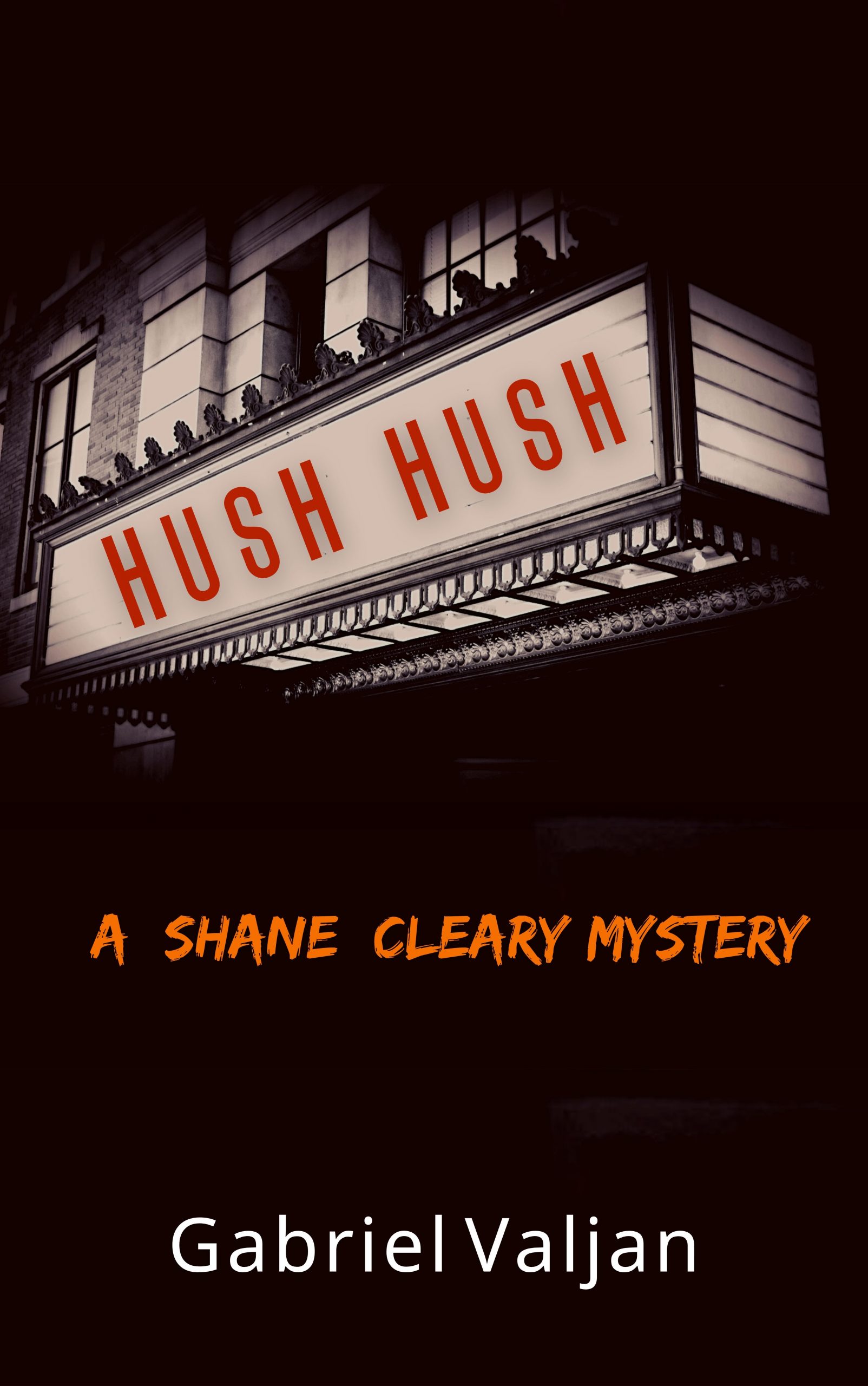
Hush Hush
April 5th, 2022Hush Hush
by Gabriel Valjan
March 21 – April 15, 2022 Virtual Book Tour
Synopsis:

Shane Cleary is living a comfortable life. He has money. He has a girl.
But a visit from a friend shakes up his status quo. Chess may be the metaphor, but the case is one that lifts the lid on problems nobody in Boston wants to talk about.
Murder. Race. Class. It’s all Hush Hush.
Neither the crime nor the verdict is simple, and yet it is Black and White.
Shane will need more than a suit of armor if he wants to play knight. Can Justice be found? And at what cost?
Praise for HUSH HUSH:
“HUSH HUSH is filled with biting wisdom, savory dialogue, and the authentic flavor of 70’s Boston.”
— Cheryl Head, author of the Charlie Mack Motown Mystery series
“Inspired by real events, ‘HUSH HUSH’ shines a harsh light on Boston’s seedy underbelly, exposing an ugly past on racial injustice and media coverage. And Valjan and his protagonist Cleary get better at every turn. With compelling characters, sharp prose and wit, and a slew of historical facts, Valjan weaves a clever and twisty mystery that will linger long after you turn the last page.”
— Marco Carocari, author of BLACKOUT
Book Details:
Genre: Mystery
Published by: Level Best Books
Publication Date: January 11th 2022
Number of Pages: 230
ISBN: 9781685120436
Series: Shane Cleary Mystery, #3
Purchase Links: Amazon | Barnes & Noble | Goodreads
ISLAND BREEZES
He’s a retired PI. At least that’s what he told himself and his girlfriend Bonnie. He even let his license lapse. But the lure is still there when an old friend gets him involved with someone who needs his expertise.
He decided he could help out by doing “research” instead of investigating. It turns out to be a very hot case. More than one person wants to do him bodily harm.
His research leads him to people who want him and his research to disappear. Bonnie’s not crazy about all of it either. How is he going to reconcile all this? You need to get involved and read this book to find out. You might also want to pick up the first two Shane Cleary books, Dirty Old Town and Symphony Road.
I’m ready for the next one. I hope Mr. Valnan is a fast writer.
***Book received without charge from PICT.***
Read an excerpt:
I pulled the door open to Charlie’s Sandwich Shoppe. The spelling might’ve been from Middle English and seemed as medieval as Robin Hood, but a Greek owned the place. On any given day, Arthur the proprietor was Art or Artie and, like his old man before him, he worked the grill. Charlie’s was open twenty-four a day, seven days a week, including all the major holidays, Jewish or Gentile.
I’ve eaten breakfast countless times at his counter. The place did have tables, but it was designed for food on the move, men on the job, and people on the make. Walk into the shop and it was sometimes cops on one side of the room, gangsters on the other. Peace was a meal until everyone returned to the pavement outside, and there was no one-way streets about it: the South End was trouble. Charlie’s eggs, hash, bacon, and stiff coffee worked harder than the UN.
Charlie’s dated back to the Twenties. Framed photographs, some of them signed and some not, hung on the wall and told a history most Americans had forgotten, and why I supported the place. The Negro Motorist Green Book in hand told jazzmen and other itinerant talent that Charlie’s was a safe haven. In all of Boston, this was the one place where they could eat and, for a time, one of the few places where they were allowed to eat. Segregation ruled Boston until 1973, when public housing and schools were desegregated.
Sammy Davis, Jr. hoofed outside Charlie’s door for change, and he performed with his family at The Gaiety Theatre, which is now in the Combat Zone. Barred from the vaudeville stages in town, black talent played the burlesque houses. Audiences in these naughty houses were integrated. Some of the acts were women-owned and they managed acts that toured the TOBA circuit. TOBA stood for Tough on Black Asses.
There were no police officers in the place when I sat next to a familiar face at the counter. People called him Charcoal. He was thin as a stick and dark as his nickname. We sat on stools covered in cracked vinyl, and opposite wooden refrigerators there since Charlie’s opened its doors in 1927. Eggs sizzled, bacon puckered and sputtered, and conversations tumbled in and out like the tide. Arthur could hear above the din and asked me what I wanted, and I told him. “Turkey hash.”
A waitress placed a cup and saucer before me and poured caffeine. Charlie’s coffee was unleaded, and dark as unchanged oil and stiffer than Niagara starch. While I waited, I sipped and stared out the window. Life on Columbus Ave was a steady traffic of folks to and from the trains at Back Bay station around the corner.
There was another slice of history. Back Bay was the epicenter of the Pullman Porter Strike, conducted and carried to victory by the first black union, the Brotherhood of Sleeping Car Porters. Their office was above Charlie’s Shoppe. Membership was comprised of black men from the south. They traveled throughout the homeland for the union’s cause for better wages and working conditions. I doubt they slept a wink on the train through Jim Crow territory.
I was two forkfuls into my turkey hash, and Charcoal was on his third cup of joe when a burgundy Cadillac, with all the trimmings, rolled up to the front of Charlie’s. The man driving it wore large sunglasses and passed for a thinner version of Isaac Hayes. He wore business threads, and his head was shaved and glistened like a chocolate bullet. He had his back to the car and was facing us when a car stopped parallel to his parked car. Boston Police.
Arthur stopped and worked a washcloth over his hands. Every head was turned to the spectacle. Our Isaac Hayes heard a cop call him out. There was glass between us and him, but it wasn’t hard to guess the conversation on the street. Patrons of Charlie’s had seen this Movie of the Week and they knew the script. The question was whether Isaac stuck to his lines or improvised. The cop was almost out of the car, his head visible over the roof of the patrol car. He yelled, “Hey, Boy.”
Isaac hadn’t heard him until he’d seen the reflection of the officer and the cruiser in Charlie’s window. He stopped, removed his glasses, and turned around. A customer leaving Charlie’s propped the door so we could eavesdrop.
“Hands where I can see them.”
“Is there a problem, Officer?”
“We ask the questions, not you.”
Isaac stood his ground. The cop, out of the vehicle now, walked around the back of his car. His partner exited the passenger side. I expected a citation for being double-parked.
The cop jabbed his finger. “What are you doing?”
There was distance between the officers and the young man, but they were closing in fast. I understood what they were doing. They were asserting dominance and they wanted to spark a reaction. With enough space between them, if Isaac ran, one of the policemen could sprint and catch him from an angle. They’d talk smack as they approached, looking for an excuse to cuff him. If Isaac answered wrong, used the wrong tone of voice, they would ride him.
“I asked you what you’re doing.”
Isaac was smart. He raised his hands. Now came the dilemma because nothing he said mattered.
“Did I tell you to put your hands up?”
“No.”
“You going to answer me?” The tone of voice was sharp as a knife’s edge. “I asked you what you’re doing here.”
“Here to pick up a sandwich before work, Officer.” He glanced over his shoulder.
I hear courtesy and respect in the answer. Cops heard sarcasm.
“A sandwich, is that right?”
“Yes. A sandwich before work.”
“You have a job?”
Another lure, an insult disguised as a question. When cops testified in court, they’d tell the jury that they repeated answers as a way to verify information, but nobody asked them how they asked their questions.
The partner walked around the Cadillac. He used his foot to test the fender. He aimed to test a man’s pride in his set of wheels. His hand touched the rear light and he ran his hand over the body as if he checked for dirt. “This your car?”
“Yes.”
The cop closest to Isaac said, “You sure about that?” He glanced over his shoulder. “We run those tags and we won’t hear it was stolen.”
“No.”
“No what? What are you trying to say? I don’t understand you when you mumble.”
Another classic strategy. Isaac spoke clear as sunlight and kept his answers trimmed to simple. The more you talked, the more your own words were used against you. If he denied mumbling, he’d look defensive, and the cops would consider Isaac as dangerous as the third rail.
I waited for them to ask Isaac what his job was and where. They’d look at the Cadillac while he talked. Their looking at the car implied they didn’t believe the job matched the income to purchase a luxury vehicle, or that a Cadillac was a pimpmobile. The two cops might then tag-team Isaac with questions. Cops counted on confusion and if Isaac so much as stuttered, they would accuse him of being drunk, drugged, or agitated.
Isaac answered, “The car is mine. Registration is in the glove compartment.”
“License?”
“On me, but you can reach into my breast pocket for it.”
“On you?” the lead cop said. The smirk showed teeth.
“In my wallet, where I keep my cash so I can pay for my sandwich.”
The partner chimed in. “Glove compartment include proof of insurance?”
“Registration and insurance are in the glove compartment, yes.”
Now the lead cop was less than a foot away from Isaac. “Now, let me understand you right. You’re giving us permission to search your car?”
“Registration and insurance are in the glove compartment.”
“That’s not what I asked you, son.” The officer was eye-to-eye with Isaac. Any closer and it was a date. He turned and pointed to the car. “We won’t find anything else inside?”
Charcoal next to me said. “I think young blood could use some help from the community, right about now.” He got off the stool and walked to the open door. Other men followed him and formed a line in front of Charlie’s Sandwich Shoppe. I joined them.
The cops’ disposition changed immediately when he counted us.
“You folks go on back inside. This doesn’t concern you.”
A long hard minute passed and not a word was said. There was nothing but hard, tired stares. Isaac had not put his hands down and he hadn’t moved from where he was standing. Arthur appeared, a brown bag in his hand. He handed it to Isaac. “Breakfast is on me, and I hope the experience doesn’t stop you from visiting Charlie’s again.”
“This is a police matter,” the cop said to Arthur.
“And this is my business, and this young man is a customer.”
The cop moved in on Arthur. “This does not concern you.”
Charcoal stepped forward. “I suggest you officers either search the car, or call it a day.”
“You suggest?”
“Indeed, I do—and I advise you to heed my advice.”
The cop approached. When he did, the men behind Charcoal took one step forward and held the line. The cop stared into Charcoal’s face. “Heed your advice, and who the fuck are you?”
Charcoal flinched a smile. “I’m an attorney, labor and civil rights among other things, and I’d be happy to provide you with my card.”
“You’re a lawyer?”
“What’s the matter, Officer? You’ve never met a Negro lawyer or thought a black man might have more education than you and your forebears combined.”
“You know nothing about my forebears.”
“Oh, but I do, son. I do.”
The senior cop reassessed the situation. He looked at each man behind Charcoal, including me. Cops did this to save face. The pair backpedaled and got into their car. Arthur stood next to the opened door and thanked each of his patrons as they entered his shop. Charcoal and I were the last in the long line. I asked Arthur if I could make change for a phone call.
Arthur said I could use the house phone and pointed me to where I could find it. I called John and he answered. I said I’d be down to his place to talk with his friend, the kid’s father. “You’ll take the case?”
“I didn’t say that. I want to talk the man first, and John?” He waited. “What was with the chess metaphor and all?”
“I wasn’t about to talk street, in front of your lady.”
“You showed up unannounced. How did you find me?”
John said Bill’s name and, “Did something change your mind?”
“Change, no. More like I saw something that made me reconsider.”
“Watched something on television?”
“That’s make-believe. I’m talking about real life.”
***
Excerpt from HUSH HUSH by Gabriel Valjan. Copyright 2022 by Gabriel Valjan. Reproduced with permission from Gabriel Valjan. All rights reserved.
Author Bio:

Gabriel Valjan is the author of the Roma Series, The Company Files, and the Shane Cleary Mysteries. He has been nominated for the Agatha, Anthony, Silver Falchion Awards, and received the 2021 Macavity Award for Best Short Story. Gabriel is a member of the Historical Novel Society, ITW, MWA, and Sisters in Crime. He lives in Boston.
Catch Up With Gabriel:
GabrielValjan.com
Goodreads
BookBub – @gvaljan
Instagram – @gabrielvaljan
Twitter – @GValjan
Facebook
Tour Participants:
Visit these other great hosts on this tour for more great reviews!
Get More Great Reads at Partners In Crime Tours
Put On the New
April 2nd, 2022Therefore, as God’s chosen people, holy and dearly loved, clothe yourselves in tender compassion, kindness, humility, gentleness, and patience–
bearing with one another and forgiving each other, if anyone has a grievance against another. Just as the Lord pardoned you, so also you must pardon others.
But above all these things put on love, which is the bond of perfect harmony.
Colossians 3:12-14 TLV
The Pilate Scroll
March 29th, 2022The Pilate Scroll
by M.B. Lewis
March 14 – April 8, 2022 Virtual Book Tour
Synopsis:

An artifact with untold power. An unlikely protector. Can she prevent the past from being used to destroy the future?
Kadie Jenkins lost her faith long ago. Traveling to Egypt as part of a research team battling a lethal virus, the talented scholar’s already weakened beliefs take a deadly dive when her colleague and mentor is murdered. With the man about to share a shocking finding before he met his demise, Kadie frantically gathers his papers… and barely escapes when the killer returns.
Fleeing by plane and forced into an emergency-landing in Israel, Kadie questions who in her group she can actually trust. And as the murderers close in, she’s stunned to discover they’re all hunting for an ancient relic that could change the course of history…
Will this headstrong academic lean on powers from above to keep the wicked from wreaking havoc on Earth?
The Pilate Scroll is a pulse-pounding Christian thriller. If you like complicated heroines, stunning twists, and divine light shining through the darkness, then you’ll love M.B. Lewis’s breakneck page-turner.
The Pilate Scroll Book Trailer:
Book Details:
Genre: Christian Thriller / Action-Adventure
Published by: Satcom Publishing
Publication Date: April 27th 2021
Number of Pages: 346
ISBN: 1733098917 (ISBN13: 9781733098915)
Purchase Links: Amazon | Kindle Unlimited | Barnes & Noble | Goodreads
ISLAND BREEZES
This is one of those books that I couldn’t turn the pages fast enough. And when I finally reached the end, I didn’t want it to end.
This book has it all. Action and adventure. Love and hate. Empathy and callousness. Spirituality and materialism. If you can think of it, it was probably in this book.
Kadie and her brother Brian are with a group that was supposed to be looking for a deadly virus and it’s cure, but the trip and group turned into something quite different.
This is one of those books that I’ll probably give away the plot if I keep talking about it. So, I won’t. Keep talking about it, that is.
Thank you Mr. Lewis, for this book. How soon can I expect another one from you?
***Book provided by PICT without charge.***
Read an excerpt:
Chapter 1
Port Said, Egypt
The Market District
Samuel Jacobson was a dead man. Or at least he thought so. His phone call had been erratic, anxious—almost in a panic.
“Brian, we have to go.” Kadie Jenkins stood and slid her iPhone back in the pocket of her tan 5.11 cargo pants. She grabbed her purse and rose from the table in the back of the tiny restaurant, dragging her nineteen-year-old brother out before they had a chance to order their dinner. The restaurant sat tucked between shops selling hookahs on one side and women’s clothes on the other. The aroma of fresh bread and grilled meats dissipated, replaced by the pungent scent of car exhaust and camel dung.
“It’s only a fifteen-minute walk back to the hotel,” Kadie said. “I bet we can make it in ten.”
Brian stumbled behind her as they hurried along dusty streets. They turned into the souk, or open-air market, the brick-laid section of the market that was pedestrian-only this time of night. While many of the shops had their “roll-up” metal security doors pulled down, the market bristled with life.
Vendors waved items in their faces, children tugged on their pant legs, and beggars held their palms up hoping for a handout. Her eyes studied everyone who came close, gauging their intentions in a moment’s glance. She was one of only a few women in the market not wearing a hijab.
“Kadie slow down,” Brian said. His breathing came deep and awkward, despite being a regular participant in the Special Olympics.
“Sorry, Brian. We could get a cab at the other end of the market. But by the time we find one, describe our hotel, and negotiate a price, we could walk to the hotel.” While she relished the exercise, she worried her pace was too much for him. He was fit for a young man with Down syndrome, but she moved swiftly.
Their team had been in Egypt for almost three weeks. Starting in Cairo, the small group of seven from GDI, the Global Disease Initiative, had been scouring the city for clues to an ancient cure. Their quest had led them from the United States to Cairo, then to Port Said. Their four days here had not yet proven fruitful.
The goosebumps on her skin reminded her of Samuel’s phone call. His message was brief yet concise: his life was in danger because he knew what they were really searching for. What did he mean? Their team was one of four positioned across the Middle East in search of their goal. Now, for some reason, Samuel questioned what that was.
GDI had been contracted by the United States government to locate an ancient cure for an even older virus—the hantavirus. Kadie researched the topic before they left for Egypt. Rodents generally spread it, and this strain was a particularly virulent “Old World” virus that had proven resistant to modern medicine.
The Central Intelligence Agency learned that ISIS weaponized the hantavirus in aerosol form and planned to unleash it across the West. The virus was known at the CDC to cause hemorrhagic fever with renal syndrome. Initial symptoms include fever, chills, blurred vision, back and abdominal pain, and intense headaches known to bring a grown man to his knees. Later, those exposed would experience shock, low blood pressure, kidney failure, and vascular leakage—all in all, a nasty virus to thrust upon any population. The logistics involved in treating the virus were obvious.
The unique thing about the “Old World” hantavirus, was that it had predominantly appeared in Europe and Asia. GDI discovered that the virus had been eliminated in the Middle East, which was odd, as rodents were prevalent throughout the region.
Through one of their many connections, GDI learned of a legendary cure developed in ancient Israel around 30 A.D. The virus had a different name back then, but the symptoms were the same. The cure was a simple combination of plants and minerals. The formula was stored in a vase with Aramaic writing on the side and lay hidden for millennia. That was why she was here. Kadie was fluent in Latin, Greek, and Aramaic. The executive vice president for the Science and Technology Division of GDI had contacted her personally, telling her she was “uniquely qualified” for this job. Kadie was enthralled to join the team when the offer came.
Samuel was in his early sixties, and he and Kadie had struck up a friendship at the beginning of their journey. He became her mentor and father figure, occasionally giving her advice on what to do with her career. Samuel was the team’s expert on carbon dating. His equipment was state-of-the-art, but other than testing its functionality the day after they arrived, he hadn’t used it. So, what did he discover? What did he know that was worth killing for?
Halfway to the hotel, she mumbled something she shouldn’t have as she pulled out her phone and dialed. Her eyes darted toward her brother.
“Do not c-cuss,” Brian said between heavy breaths.
Brian. Her moral compass there to steer her back on course. She squeezed her brother’s hand. Brian always kept her grounded. What would she do when he was gone? But he was here now, and she needed to make sure he would be safe, something she had done for him since the day he was born.
“Sorry, Brian. I just remembered I need to call Curt. He’s probably on his way to the restaurant to meet us.”
“He is probably s-still wor—king.” Brian’s eyes darted back and forth. His speech impediment that made his ‘r’s sometimes sound like ‘w’s wasn’t nearly as bad as it was when he was younger, and his stutter only showed up when he was nervous.
Kadie grimaced. Curt didn’t answer his phone. He was GDI’s security man and the only full-time employee on their team. Kadie left a message, telling him she was sorry, but she had to leave the restaurant. They’d talk later.
Next, she called Samuel. He didn’t answer either. She slipped her phone back in her cargo pocket and glanced at her brother. He was doing all he could to keep up with Kadie and avoid the distractions of the numerous shops in the marketplace. Gasping, his jaw jutted forward, brow furrowed, and his eyes bulged. He had been reluctant to leave the restaurant; he must be starving. She had to plead with him to get him to budge.
“We did not stay—for food. I am hungry,” Brian said.
“I know. I’m sorry. I am, too.” Her eyes darted back and forth in search of something they could eat. A few moments later she smiled. Near the end of the market, a vendor baked and sold bread. They stopped next to the giant metal oven that extended back into a yellowing mud-brick building. The bread rolled out of the front like doughnuts at Krispy Kreme, and two men placed the warm food on a rack woven out of sticks to cool. Her limited vocabulary in conversational Arabic helped her in situations like this. Kadie bought two loaves of Aish Baladi, an Egyptian flatbread made with whole wheat flour, similar to a pita. Handing the bag of bread to Brian, they continued on their way.
The dust of the market peeled away as they rounded the corner, and their hotel came into sight. Well-lit against the black sky, it sat on the edge of the water where the Suez Canal merged into the Mediterranean Sea. An outdoor restaurant sat to her left; the numerous tables had their umbrellas open, lit candles centered on each table. To her right, a small mosque lay nestled amongst other buildings. This street was far less crowded than the souk.
“What do you think about Curt?” Her chestnut-brown hair bounced as she slowed her pace so Brian could keep up. She needed a conversation to take her mind off Samuel.
“He is okay.” Brian looked away when he answered. Kadie knew what that meant. Brian’s instincts on people were spot on, and he wasn’t very fond of Curt. She wasn’t sure why; she was still trying to figure him out herself. Curt was a few years older than her. He was handsome, dashing, and brave—former Delta Force. There was something to be said for that.
They entered the newly renovated hotel, leaving the Third World atmosphere behind them. Kadie sighed as they weaved through the crowded lobby and lumbered up the stairs to their room on the second floor. She dropped Brian off in their room before she went to check on Samuel.
“Don’t leave,” she said. “I’ll be back in a minute.”
“Okay.” Brian moved to the couch and pressed the big green button on the television remote.
Kadie closed the door; the hairs on the back of her neck bristled, and her heartbeat raced higher than usual. She hurried down the hall to Samuel’s room. Inside, she heard a loud crash and the sound of something hitting the wall, followed by a solid thud.
That’s not good, she thought.
Kadie tried the door handle. Locked. She pulled a small FOB out of her pocket. It was called a Gomer, a new device that opened almost any electronic lock. It had wreaked havoc on the hotel industry, but she had picked one up back in the States knowing she’d be living in hotels abroad for three months.
She was hesitant to use it. She shouldn’t just barge into his room. Then came a second thud, followed by a muffled cry.
Kadie swiped the FOB across the lock and pushed hard against the door. The door cracked open about two inches and abruptly stopped; the chain secured on the inside.
“Samuel?” She peered through the gap; a body lay on the floor. Oh my, he’s had a heart attack. Kadie lowered her shoulder and bulldozed the door. It started to give way. On the second try, the chain burst free from the wall and the door flew open.
Kadie gasped. In the center of the room, a large man stood over Samuel’s body, wearing a faded brown futa, the traditional Yemini male shirt, and black pants. A black keffiyeh covered his face, with only his eyes exposed.
The man stood over Samuel, the bloody knife in his hand dripping on the floor.
***
Excerpt from The Pilate Scroll by M.B. Lewis. Copyright 2022 by Michael Byars Lewis. Reproduced with permission from Michael Byars Lewis. All rights reserved.
Author Bio:

Michael Byars Lewis is an Amazon #1 International Bestselling Author, and his books have also been on the Bestseller lists on Barnes and Noble Nook and Kobo platforms. The author of the award-winning Jason Conrad Thriller series has been on numerous author panels at writer’s conferences such as Thrillerfest, The Louisiana Book Festival, The Pensacola Book and Writers Festival, and Killer Nashville. ? A 25-year Air Force pilot, he has flown special operations combat missions in Bosnia, Iraq, and Afghanistan in the AC-130U Spooky Gunship. Michael is currently a pilot for a major U.S. airline. ? A proud Christian active in his community, Michael has mentored college students on leadership development and team-building and is a facilitator for an international leadership training program. He has participated as a buddy for the Tim Tebow Foundation’s “Night to Shine” and in his church’s Military Ministry program. Michael has also teamed with the Air Commando Foundation, which supports Air Commando’s and their families’ unmet needs during critical times. ? While his adventures have led to travels all around the world, Michael lives in Florida with his wife Kim.
Catch Up With M.B. Lewis:
www.MichaelByarsLewis.com
Goodreads
BookBub – @MichaelByarsLewis
Instagram – @michaelbyarslewis
Facebook – @mblauthor
Plus, join in the Twitter chat – #MichaelByarsLewis!
Tour Participants:
Visit these other great hosts on this tour for more great reviews, interviews, guest posts, and giveaways!
ENTER OUR GIVEAWAY:
This is a giveaway hosted by Partners in Crime Tours for M.B. Lewis. See the widget for entry terms and conditions. Void where prohibited.
Get More Great Reads at Partners In Crime Tours
Peace
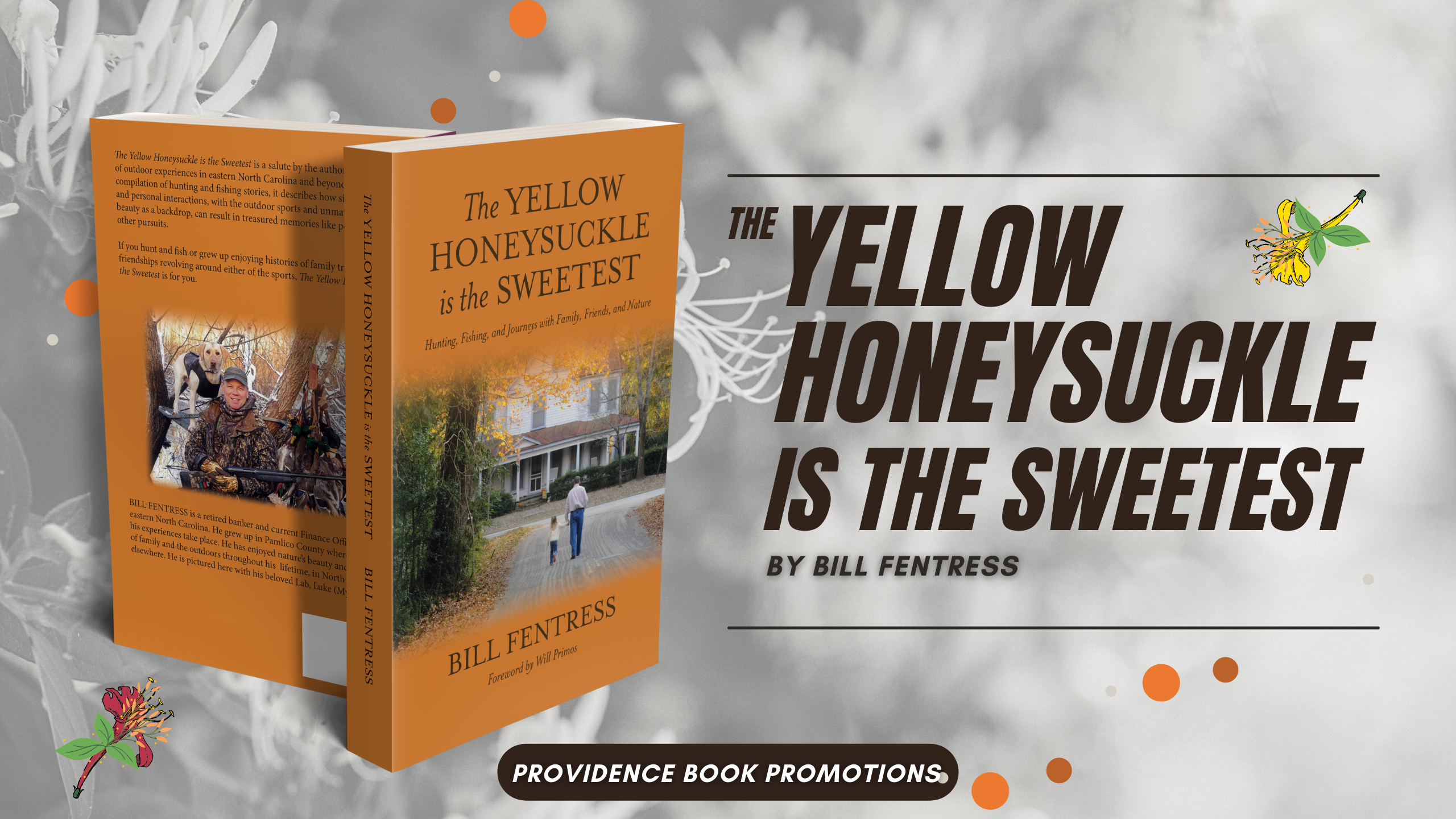
March 26th, 2022The Yellow Honeysuckle is the Sweetest
March 22nd, 2022The Yellow Honeysuckle is the Sweetest
by Bill Fentress
March 14 – April 8, 2022 Virtual Book Tour
Synopsis:

If you hunt and fish, or grew up enjoying histories of family traditions and friendships revolving around the outdoors – whether it be in North Carolina, or elsewhere – THE YELLOW HONEYSUCKLE IS THE SWEETEST is for you.
Book Details
Genre: Sports, (as in Hunting and Fishing), Nature, Family, Memoir
Published by: Indie
Publication Date: February 3, 2022
Number of Pages: 257
ISBN: 979-8-9855598-1-1
Purchase Links: Amazon | Goodreads
ISLAND BREEZES
This book is for everyone who ever spent time outdoors in the woods. Even if it was only to hunt mushrooms or sit by a wooded stream with a book. Actually, it’s for everyone who just likes the great outdoors.
If you ever grew up around honeysuckle,you’ll understand the title. If not it will be explained in one of the chapters.
By the end of this book I wanted to be one of Bill’s friends. I wanted to traipse through wooded areas with him and his dogs.
Thank you, Mr. Fentress, for taking me back to my youthful times in the woods.
***Thank you to Providence Book Promotions for providing this book without charge.***
Here’s a word from our author:
Read an excerpt:
Like many boys, my first hunting partner was a dog, Pepper. I wish I could say Pepper was the granddaughter of King Rothschild’s Sire of Pepper Creek, but I cannot. Pepper was a fittingly, albeit not uniquely, named black and white pointer-mix stray who took up at Miss Jo’s house in Bayboro. Somehow, through either constant brow beating with her pathetic brown eyes or via her constant hanging around the back door looking for food, Pepper convinced Miss Jo to call me—not my mother, her friend—but me.
“Billy,” she commanded, “I have a beautiful dog you would just love!”
Of course, I immediately got off the phone and begged Mom to take me to Bayboro. “Miss Jo’s got a dog she says I need!” I always thought Miss Jo should have led many of the sales classes I attended in my banking career. Let me tell you, she talked directly to the buyer, and went right around the secretary. While I’m not sure how long it took for Mom to talk to her again, we came home with Pepper in the Chevy wagon and me with a smile as broad as the cuff on my dungarees. Pepper was one of the smartest dogs I ever owned. She followed me everywhere—from our store to Grandmamma’s house to the woods behind our house to the tractor shelter woods across the road, down Swan Point Road, and of course behind our neighbor’s house. Pepper was smart enough to look both ways before she crossed the road. Don’t smirk; I saw her do it a hundred times. She also knew how to be quiet as I planned a sneak-up strategy on the local robins and wrens. But her mind absolutely took the day off when it came to our neighbor’s chickens.
—
Excerpt from The Yellow Honeysuckle is the Sweetest by Bill Fentress. Copyright © 2021 by William C. Fentress. Reproduced with permission from Bill Fentress. All rights reserved.
Author Bio:

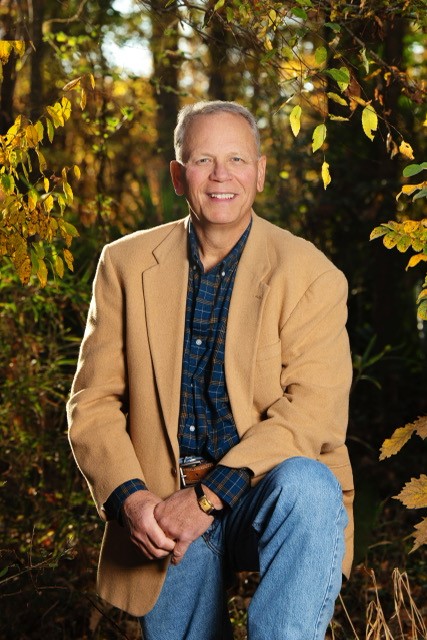
Bill Fentress is a retired banker and current Finance Officer in eastern North Carolina. A current resident of New Bern, NC, Bill grew up in Pamlico County, North Carolina, where many of his hunting and fishing experiences in The Yellow Honeysuckle is the Sweetest take place. He has enjoyed nature’s beauty and God’s gifts of family and the outdoors throughout his lifetime, in North Carolina and elsewhere.
Learn More About Bill Online:
Tour Host Participants:
Visit these other great hosts on this tour for more great reviews, interviews, guest posts, and giveaways!
ENTER TO WIN:
This is a giveaway hosted by Providence Book Promotions for Bill Fentress. See the widget for entry terms and conditions. Void where prohibited.
Find Your Next Great Read at Providence Book Promotions!
Are You Being Deceived?
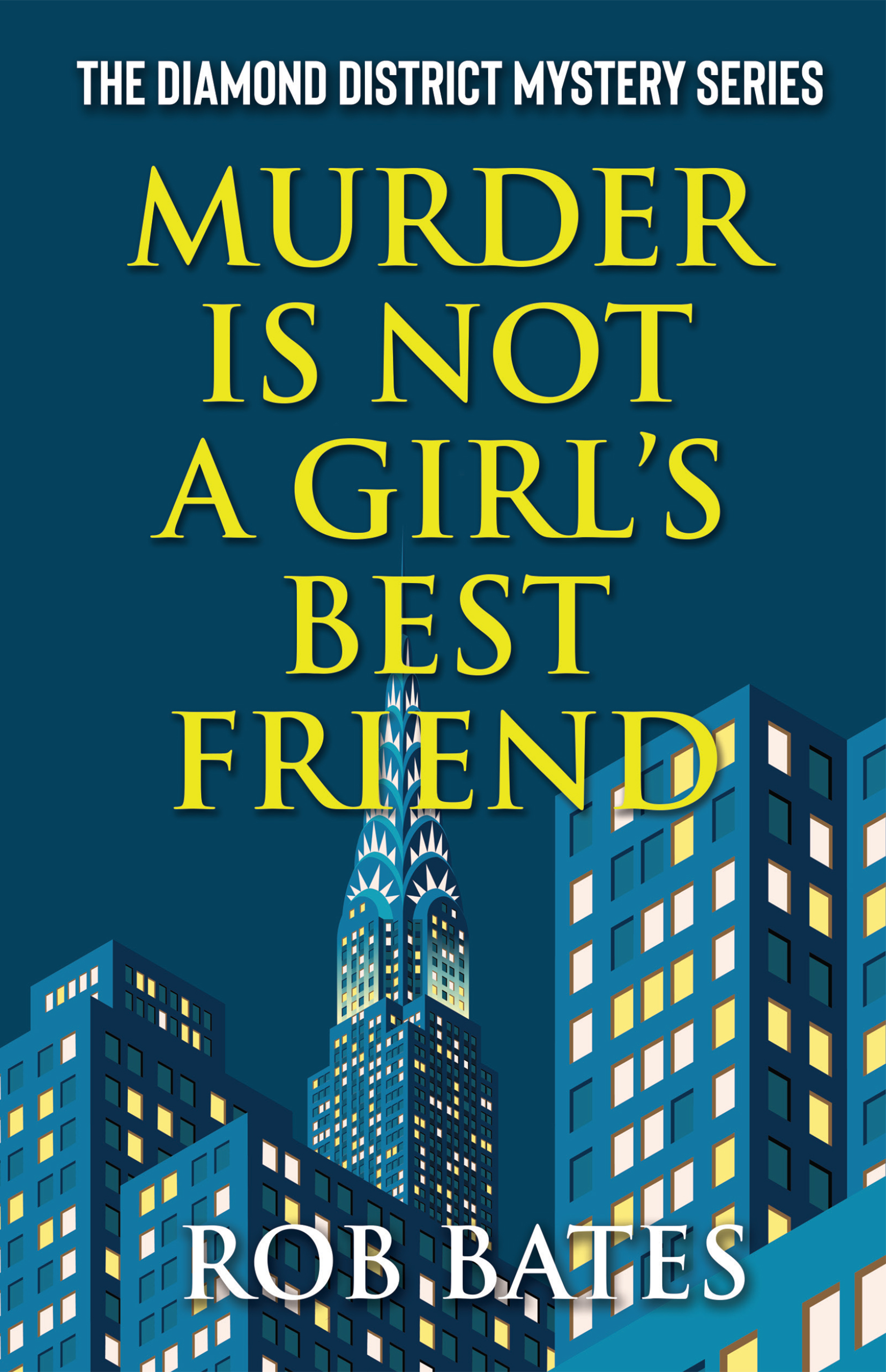
March 19th, 2022Murder is Not a Girl’s Best Friend
March 18th, 2022Murder is Not a Girl’s Best Friend
by Rob Bates
February 28 – March 11, 2022 Virtual Book Tour
Synopsis:

Journalist-turned-amateur-sleuth Mimi Rosen is back with her father Max for another action-packed tale of murder and intrigue in New York City’s Diamond District.
A Reverend from Africa has found a sparkling $20 million diamond that he hopes will free his continent from the scourge of blood diamonds. But this attempt to do good soon turns very bad. After the diamond is stolen and leads to a series of murders, Mimi discovers both the diamond and the Reverend have a less-than-sparkling history.
Soon, Mimi is investigating a web of secrets involving a shady billionaire, a corrupt politician, Africa’s diamond fields, offshore companies, as well as an activist, filmmaker, computer genius, and police detective who may or may not be as noble as they appear. Is the prized gem actually a blood diamond?
Book Details:
Genre: Mystery
Published by: Camel Press
Publication Date: February 8th 2022
Number of Pages: 218
ISBN: 1942078188 (ISBN13: 9781942078180)
Series: Diamond District, #2 || Each is a Stand-Alone Mystery
Purchase Links: Amazon | Barnes & Noble | Goodreads
ISLAND BREEZES
They say diamonds are a girl’s best friend. Maybe yes. Maybe no. One thing is for sure. Murder is not a girl’s best friend.
Once again Mimi is putting herself in danger. Doesn’t she ever learn? She keeps telling herself and others that she won’t do any investigating. Ha! She just can’t leave it alone.
There are many twists and turns in this book. So many that you’ll probably not figure out who the bad guys are. There just appear to be so many of them.
Thank you, Mr. Bates, for another trip through the Diamond District and through the eyes of Mimi Rosen. I enjoy the way she just keeps on muddling through and look forward to her next adventure.
***Book provided by PICT without charge.***
Read an excerpt:
CHAPTER ONE
Mimi Rosen felt terrible. She felt like crap. She was overcome by guilt—the kind that gets lodged in your throat and stays there. Her day at the “Social Responsibility and the Diamond Industry” conference had been draining and dispiriting, as one speaker after another grimly recited the industry’s ills. They acknowledged that conflict diamonds—which fueled civil wars in countries like the African Democratic Republic, or the ADR—were far less of a problem, and many diamond mines benefited local economies.
Then came the “but.” As Mimi’s father said, “in life, there’s always a but.”
“Beautiful gems shouldn’t have ugly histories,” thundered Brandon Walters, a human rights activist known for his scorching exposés of the ADR’s diamond industry. “This—” he aimed his finger at the screen behind him, “is how ten percent of the world’s diamonds are found.”
Up popped a photo of an African boy, who couldn’t have been older than sixteen. He was standing in a river the color of rust, wearing nothing but cut-off jeans, bending over with a strainer. Mimi could see his vertebrae under his skin, feel the sun beating down on him, sense the stress and strain on his back.
“That kid is paid two dollars a day for his labor,” Walters declared. “If you sell diamonds, this may not be your fault.” He paused for emphasis. “But it is your responsibility.”
Walters had sandy-blonde hair, high cheekbones, a perfectly trimmed goatee, a ponytail that flopped as he talked, and a South African accent was so plummy it sounded affected. He looked to be in his mid-twenties but had the bearing and confidence of someone ten years older. Unlike the other activists, who delivered their speeches in whispery monotones with their eyes glued to the podium, Walters planted his feet firmly at the center of the stage and stood on it like he owned it. He peppered his talk with splashes of theater, dropping his voice to signal despair, or cranking it up to roar disapproval.
Mimi didn’t want to close her eyes to his message, but knew she might have to, to preserve her sanity. Diamonds were now how she made her living. She had been working at her father’s company for over a year—a fact she sometimes found hard to believe. She occasionally dreamed of again working as a reporter—the only thing in life she had ever wanted to be. But journalism had become an industry that people escaped from, rather than to.
She had hoped the conference would inspire her. She had even convinced her father, Max, to come. Instead, the sessions made her feel depressed and sorry for herself—which didn’t feel right, as she was hearing about extreme poverty in a plush New York City auditorium with the air conditioning cranked, while the summer sun broiled the streets outside.
She also knew the industry’s problems weren’t so easy to fix. When Mimi started working at her dad’s company, Max seemed intrigued by her idea of a socially-responsible diamond brand. She was excited to help change the industry.
Then the project ran into roadblocks. She never quite determined what a “good” diamond was. What if it was unearthed by one of the diggers Brandon Walters talked about, who earned two dollars a day? Human rights activists condemned that as exploitive. Yet, they also admitted those workers had few other sources of income and would be far worse off if the industry vanished. They didn’t want to kill the business; they wanted to reform it. Mimi wasn’t an expert on any of this—and even those who were didn’t always agree.
Mimi spent many nights and weekends researching these issues, and ended up frustrated, as the answers she sought just weren’t there.
When her project began losing money, her father started losing patience. Mimi hoped that dragging her father to this conference would reignite his interest. Nope.
“These people act like everything is our fault. All minerals have issues.” Like many in the diamond business, Max believed his industry was unfairly picked on. He fixed his yarmulke on his bald head, so it stayed bobby pinned to one of his side-tufts of hair. “I haven’t done anything wrong. I’m only trying to pay my rent.”
Max spent most of the conference with his arms crossed, his face toggling between bored and annoyed. If he had a phone, he’d probably spend the day staring at it. But he didn’t, which was another issue.
Following Walters’ talk, he leaned over to Mimi. “I should call Channah for my messages.”
Mimi gave him her mobile and a dirty look. He had already borrowed her phone six times that day. She considered lecturing her father to get over his stupid aversion to buying a cell phone, so he didn’t constantly pester the receptionist to see who called. But she’d also done that six times that day.
Besides, she was intrigued by the day’s final speaker.
Abraham Boasberg grabbed the crowd’s attention the moment he stepped on stage. “I believe there is a reason that God put diamonds in the poor countries and made rich countries desire them,” he bellowed, puffing out his barrel chest. “And I’m going to prove it.”
Mimi sat up and thought, who was this guy?
She soon found out. Boasberg was six feet tall, stocky, bearded, with a bright red yarmulke capping a salt-and-pepper mop of curly hair. He worked in the diamond business, and his words came fast and forceful. Like Brandon Walters, he seemed to savor being the center of attention. He had a mike clipped to his suit and prowled the stage like a panther. His presence filled the auditorium.
“This whole conference, we have heard about the problems of our trade. They are real. The people who dig diamonds are part of our industry. They deserve to be treated fairly.
“But we must do more than just complain,” he declared, holding up his index finger. “We need solutions!
“What if diamonds, which once helped rip the African Democratic Republic apart, could put it back together? What if they built new roads, schools, and hospitals?” He stopped and took a breath, his chest heaving. “What if diamonds became symbols of hope?”
Max returned to his seat and handed Mimi back her phone. She was so entranced with Boasberg, she barely noticed.
“A few months ago,” Boasberg proclaimed, “a local Reverend in the African Democratic Republic found a one-hundred-and-seventeen-carat piece of rough on his property. It has since been cut into a sixty- six-carat piece of polished, about the size of a marble. It has been graded D Flawless, the highest grade a diamond can get. It’s the most valuable diamond ever found in the ADR. It’s worth twenty million. Easy.”
A giant triangular gem appeared on the screen behind him, gleaming like a sparkly pyramid.
Max’s eyebrows shot up. This guy was talking diamond talk, a language he understood.
“But that is more than a beautiful diamond.” Boasberg declared, sweat beading on his forehead. “That is the future.”
“Here’s what usually happens with diamonds in the ADR. In most cases, miners hand them over to their supporter, who’s basically their boss who pays their bupkis. Or, if they’re freelance, they’ll sell them to a local dealer, who pays them far below market value. The miners don’t know how much the diamonds are worth, and they’re usually hungry and just want a quick buck.
“And since the ADR has no money to police its borders, most dealers smuggle diamonds out of the country to avoid taxes. As a result, the ADR gains little from what comes out of its soil. Its resources are being systematically looted.
“When I met Reverend Kamora, I told him, consumers are turning away from diamonds because they believe they don’t help countries like yours. That further hurts your people. Now, instead of working for two dollars a day, they’ll do the same work for even less.
“But what if we can flip the script? What if this diamond helps your country? And what if we let people know that? That will increase its value. It’s documented that people will pay extra for products that do good, like Fair Trade Coffee. It’s the same reason kosher food is more expensive. It’s held to a higher standard.
“If we get more money for this diamond, soon every gem from the ADR will be sold this way. We’ll do an end run around the dealers who have robbed the country blind. We’ll turn ADR diamonds into a force for good.” He pivoted to the screen. “Let’s talk about this gorgeous gemstone.
We wanted to call it the Hope Diamond. That name was taken.” A few members of the audience tittered.
“We’re calling it the Hope for Humanity Diamond. Four weeks from now, we’ll auction it from my office, live on the Internet. We want the whole world to watch. We’ll even sell it in a beautiful box produced with locally mined gold.” On screen, a glittering yellow box appeared. The diamond sat inside it, perched like a king on a throne.
“What celebrity wouldn’t want to wear a diamond called the Hope for Humanity?” Boasberg asked. “It will make them look glamorous and morally superior.”
The audience laughed.
“This diamond—” he exclaimed as spit flew out of his mouth, “will transform a continent.” He stretched out his arms, revealing pit stains the size of pancakes.
“So many conferences talk about Africa, but you never hear from people who actually live there. And so, I’ve flown in the Reverend who found the diamond, to talk about what it can do for his country. Reverend Kamora, can you come here, please?”
The auditorium grew quiet as small middle-aged Reverend Kamora shuffled to the front. He walked slowly, gripping the guardrail as he climbed the stairs to the stage. When he finally arrived at the microphone, Mimi could barely hear him; his voice was low and delicate, with the soft cadence of a bell.
“For years,” he began, “blood diamonds were a curse on my country. Things happened that were hard to describe. They haunt us still.” He paused, as he momentarily got choked up.
“The African Democratic Republic has known two decades of peace, but not one minute of prosperity. Like many people in my country, I dig for diamonds for extra money. It’s hard work. I don’t make much from it. But I have no choice.
“Many people who work in my country’s diamond fields don’t understand why people in the rich countries buy diamonds. Some believe they are magic. And when I found this gem in a riverbed, sparkling in the sun, I thought God had blessed me with a bit of magic.
“But God’s real gift came when I met Mr. Boasberg. He told me that we could hold an auction for this diamond, receive a better price for it, and ensure the proceeds benefit the people of my country.
“I hope you tune into the auction of the Hope for Humanity Diamond four weeks from today. Together, we can change my country’s diamonds from a curse to a blessing. That will really be magic.”
After a tough day, Mimi felt a smidgen of optimism. When Reverend Kamora finished speaking, her eyes were filled with tears. She peered at her father. He was asleep.
After Reverend Kamora toddled from the stage, Boasberg bounded back to answer questions.
A man approached the microphone in the middle of the audience. “Mr. Boasberg,” he asked, “what are you getting out of this?”
“Nothing,” Boasberg smiled. “I’m not even taking a commission. I see this as the way forward for the business that I love, and a country I care about.”
“Mr. Boasberg,” a second person asked, “how do we know the money will go where you say it will?”
“Our accounts will be posted online and completely transparent.
We’ll account for every penny.”
On it went, Boasberg swatting back every question with the grace of a tennis pro. Maybe it was the journalist in her, but Mimi was growing skeptical. Boasberg’s almost-Messianic tone struck her as too good to be true.
Just then, she heard a familiar voice at the microphone. It was Brandon Walters, the activist who spoke earlier.
“Mr. Boasberg, I’m intrigued by your new initiative,” he said. Mimi braced herself for the “but.”
“But when you talk about dealers who’ve robbed the country blind, you didn’t mention you were once partners with the worst offender.”
Boasberg’s nostrils flared. He looked down at Walters like he wanted to kill him.
The young activist plucked the mic from its stand and spun around to address the audience.
“For those unaware, Mr. Boasberg used to own a company with Morris Novak. During the civil war in the African Democratic Republic, Morris Novak was one of the biggest dealers in blood diamonds. He remains a significant player in the industry, though his main business today is money laundering. Diamonds are kind of a sideline.
“For years, I’ve sought to expose Morris Novak’s corruption. In response, he has repeatedly threatened to sue me. Our friend Mr. Boasberg could help by supplying information about Novak’s business dealings. He won’t.”
He circled back to Boasberg. “So, while it’s admirable you want to play a role in the ADR’s future, maybe first, you should come clean about your past.”
There was a smattering of applause.
Throughout Walters’ speech, Boasberg appeared ready to erupt, and when it ended, that’s what he did. “First of all,” he boomed, “you are correct, Morris Novak is my former partner. Let me emphasize former. I haven’t worked with him in six years. Is that long enough for you?
“Second, who the hell cares? This is old news. The problem with you non-government organizations, you NGOs, is you’re always pointing fingers. Maybe if you stop the holier-than-thou B.S., you could help do something good.”
Walters seemed to relish this reaction. “I’m just saying,” he shot back, “that given your history, and that of certain of your, shall we say, ‘associates,’ you’re an unlikely savior for the ADR.”
This sent Boasberg into a fury. The bickering grew so loud, even Max woke up.
The moderator—a middle-aged woman with silvering hair wrapped in a bun—hurried to the stage and declared question time was over.
“Thank you, Mr. Boasberg for that inspiring presentation,” she said, with a jittery squeak. “The conference organizers would like to present you this humanitarian award for your efforts.”
The award was likely pre-arranged and came off as awkward with Walters’ question hanging in the air. The moderator rushed through her praise of Boasberg, while he impatiently fingered the marble statue. When she finished, he stormed off the stage.
The moderator gamely tried to end the meeting on an upbeat note, saying it had many “impactful takeaways” and “urgent calls to action,” and reminding everyone to attend the post-conference cocktails in the next room. No one listened. They were digesting that final spectacle.
So was Mimi. Walters’ question had transformed Boasberg from a passionate plain speaker to another defensive diamond dealer, like her dad. Maybe he was too good to be true.
***
Excerpt from Murder is Not a Girl’s Best Friend by Rob Bates. Copyright 2022 by Rob Bates. Reproduced with permission from Rob Bates. All rights reserved.
Author Bio:

Rob Bates has written about the diamond industry for close to 30 years. He is currently the news director of JCK, the leading publication in the jewelry industry, which just celebrated its 150th anniversary. He has won 12 editorial awards, and been quoted as an industry authority in The New York Times, The Wall Street Journal, and on National Public Radio. He is also a comedy writer and performer, whose work has appeared on Saturday Night Live’s Weekend Update segment, comedycentral.com, and Mcsweeneys He has also written for Time Out New York, New York Newsday, and Fastcompany.com. He lives in Manhattan with his wife and son.

Catch Up With Rob Bates:
RobBatesAuthor.com
Goodreads
BookBub – @robbates922
Instagram – @robbatesauthor
Twitter – @robbatesauthor
Facebook – @robbatesauthor
Tour Participants:
Visit these other great hosts on this tour for more great reviews!
Get More Great Reads at Partners In Crime Tours
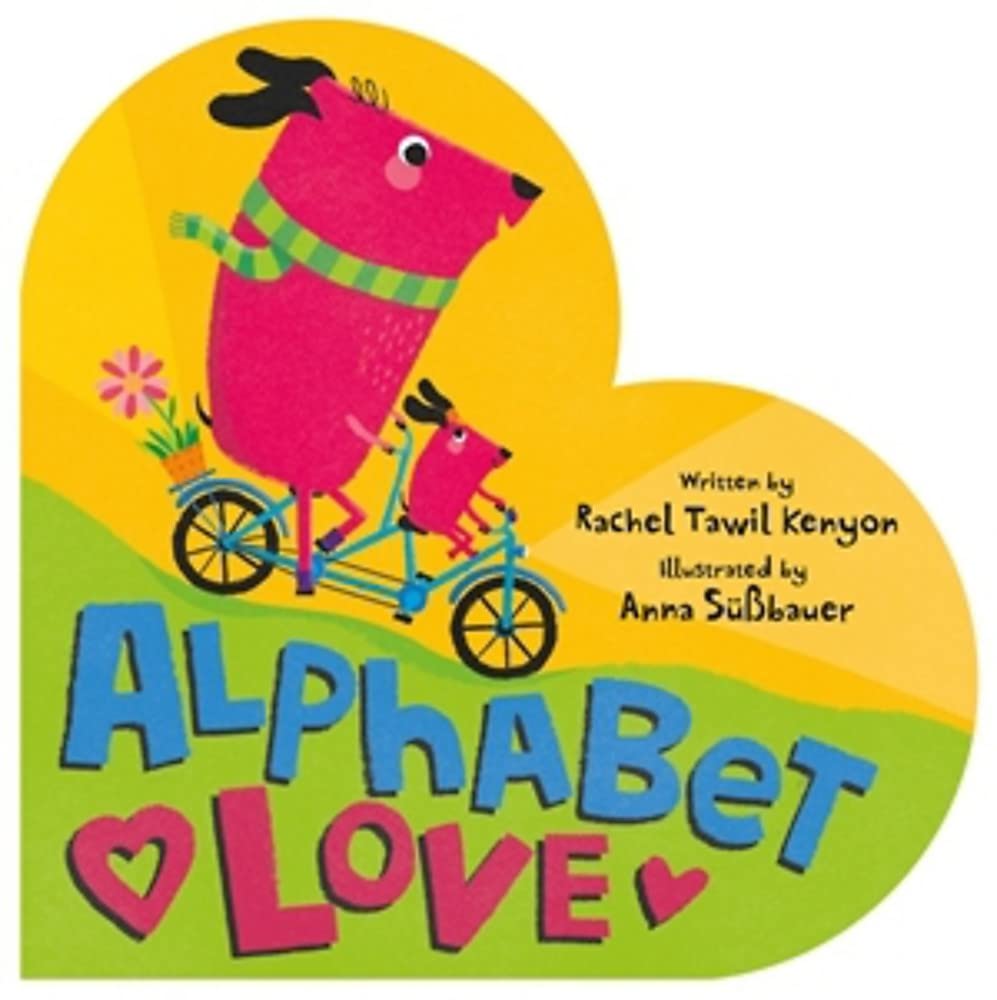
Alphabet Love
March 16th, 2022Tell little ones just how much you love them with Alphabet Love—a heart-shaped board book that introduces children to the alphabet and celebrates everyday moments of love.
“C is for cuddle, wrapped up so tight. D is for dancing, twirling all night.” If you are looking for an alphabet book to give you the warm fuzzies, look no further. This sturdy board book highlights all the little moments that toddlers share with their loved ones throughout the day, from blowing bubbles, to exploring outside, to reading a book before bed. With cheerful, rhyming text and bright, playful illustrations, Alphabet Love makes it easy and fun to learn the ABCs.
ISLAND BREEZES
This sweet little board book is a good bedtime read. All the alphabet letters are illustrated by animals.
This book gave me the “warm fuzzies” and made me smile.
***Book provided without charge by Canaan of the Hatchette Book Group.***

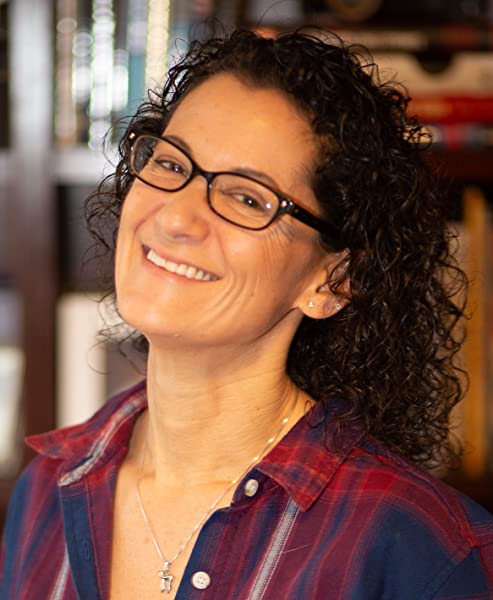
Rachel Tawil Kenyon was born in Brooklyn, New York, and spent her teen years in Hollywood, California. Bringing her diverse experiences with her, she moved with her family to Nashville, Tennessee, where she writes, reads, and teaches. Rachel is known in her community for her enthusiasm working with young children and teenagers. She writes from the heart and encourages the kids she works with to do the same.
Anna Süßbauer grew up in Cologne, Germany, surrounded by art books, picture books, comics, and her father’s typewriter, on which she typed her own stories. Her decision to become a picture book illustrator was driven by a passion for graphic design and a love of clear structures and bright colors. Anna’s work is inspired by a whimsical sense of humor and her love for all kinds of animals, including her two dogs Eddie and Patsy.