A New Home for Lily

February 8th, 2013

A New Home for Lily


By Suzanne Woods Fisher & Mary Ann Kinsinger

The second novel in the charming Adventures of Lily Lapp series,?A New Home for Lily?gives children ages 8-12 a fascinating glimpse into the life of the Amish with lots of fun and laughter along the way. It combines the real-life stories of growing up Amish from Mary Ann Kinsinger and the bestselling writing of Amish fiction and nonfiction author Suzanne Woods Fisher. With line illustrations throughout, this series is sure to capture the hearts of readers young and old.
Lily Lapp is moving with her family to Pennsylvania to join a new Amish community. In this small town where changes – and newcomers – are greeted with suspicion, Lily must adjust to a new school, new friends and Aaron Yoder, an annoying boy who teases her relentlessly. Still, there are exciting new developments, including an attic full of adventure and a new baby brother. But why, Lily wonders, can’t God bring her just one sister?
ISLAND BREEZES
Our darling, little Lily is back, but no longer in New York. Her family has moved to Pennsylvania.
Everything is different, and Lily’s not sure very much of it is better. Each chapter is a delightful little story about Lily’s adjustments to changes in her life. Changes that include a new baby brother. (Why can’t it be a sister?)
This is a book that any young girl or boy will enjoy. Big people, too.

***A special thanks to Donna Hausler for providing a review copy.*** 

Mary Ann Kinsinger?was raised Old Order Amish in Somerset County, Pennsylvania. She met and married her husband, whom she knew from school days and started a family. After they chose to leave the Amish church, Mary Ann began a blog,?A Joyful Chaos, as a way to capture her warm memories of her childhood for her own children. From the start, this blog found a ready audience and even captured the attention of key media players, such as the influential blog AmishAmerica?and The?New York Times. She lives in Pennsylvania.

Suzanne Woods Fisher is the bestselling author of?The Choice,?The Waiting,?The Search,?The Keeper and?The Haven, as well as nonfiction books about the Amish, including?Amish Peace. Her interest in the Anabaptist cultures can be directly traced to her grandfather, who was raised in the Old Order German Baptist Brethren Church in Franklin County, Pennsylvania. Suzanne is a Christy Award finalist and a Carol Award finalist. She is the host of internet radio show Amish Wisdom and a columnist for?Christian Post?and?Cooking & Such?magazines. She lives in California. For more information, please visit www.suzannewoodsfisher.com and connect with her on Twitter @suzannewfisher.

Available February 2013 at your favorite bookseller from Revell, a division of Baker Publishing Group.”


What You Need to Know About Healing

February 7th, 2013

It is time for a FIRST Wild Card Tour book review! If you wish to join the FIRST blog alliance, just click the button. We are a group of reviewers who tour Christian books. A Wild Card post includes a brief bio of the author and a full chapter from each book toured. The reason it is called a FIRST Wild Card Tour is that you never know if the book will be fiction, non~fiction, for young, or for old…or for somewhere in between! Enjoy your free peek into the book!

You never know when I might play a wild card on you!

Today’s Wild Card author is:


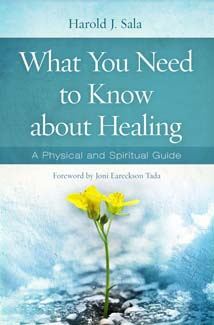
Harold J. Salas


and the book:


What You Need to Know About Healing:
A Physical and Spiritual
B&H Books (January 1, 2013)
***Special thanks to Rick Roberson for sending me a review copy.***


ABOUT THE AUTHOR:


Harold J. Sala is founder and president of Guidelines International, Inc., a ministry communicating the message of Jesus Christ so that people come to faith in the Lord and believers are discipled and strengthened. Sala has written dozens of books and is the featured speaker on “Guidelines: A Five-Minute Commentary on Living,” a daily radio program broadcast on 1,000+ radio stations worldwide and translated into more than 15 languages.

Visit the author’s website.

SHORT BOOK DESCRIPTION:

Combining careful research, biblical narratives, and personal stories of physical and spiritual healing, internationally known Bible teacher and counselor Dr. Harold Sala points to how trusting God yields lasting and eternal rewards in What You Need to Know About Healing. While no one is promised tomorrow, you will receive true encouragement for whatever circumstance may be yours, and you will better understand the compassionate nature of our Heavenly Father and how to find healing His way.

Chapters include “Is the Great Physician Still Practicing?” “Jehovah Rapha (the God Who Heals) in the Old Testament,” “Healings that Defy Rationale,” and “Redemptive Healing–Transforming Pain into a Life Purpose.”

This dynamic resource is suitable for those who need physical or spiritual healing as well as for their family members, friends, caregivers, and other health or ministry professionals.

Product Details:

List Price: $14.99

Paperback: 256 pages

Publisher: B&H Books (January 1, 2013)

Language: English

ISBN-10: 1433678896

ISBN-13: 978-1433678899

ISLAND BREEZES

Many need and want healing. This book will give you Biblical background into God’s healing through the ages.

Healing can come through God’s touch, through the hands of the doctors and from medical science. Often His healing comes through a combination of these ways.

Included are testimonials and examples of both integrative and redemptive healing.

If you are in need of healing, the last chapter tells you what to do.

this book can be a blessing to you and your family. Read and believe.

 
AND NOW…THE FIRST CHAPTER:

Is the Great Physician

Still Practicing?

When Larry and Alice Parker visit a nondescript cemetery in Barstow, California, and stand beside the grave of their son, their eyes mist with tears. They undoubtedly think, If only we had known. You see, their eleven-year-old son, Wesley, tragically died in their home on the warm morning of August 22, 1973, three days after a traveling evangelist, at a Sunday service, had pronounced him healed. In my file is a yellowing article from The Los Angeles Times telling about the family’s ordeal.
Having struggled with diabetes for five years, Wesley and his parents had believed that God could heal him. When the evangelist prayed for the boy and asked, “Wes, do you believe you are healed?” he replied, “Yes.” “I believe that you are, too,” said the evangelist. Then the parents decided to fast and pray for their son and do what proved to be a tragic mistake—no longer give him insulin. They reasoned that if God had indeed healed him, there was no longer any need to continue with the medication.
When Wes died, the world of his parents collapsed. Not only did Larry and Alice deeply grieve the loss of their son, but they were

also deeply confused and heartbroken. Their friends severely criticized and abandoned them. Then the district attorney filed charges of involuntary manslaughter against them. The police came and took them to jail. Anticipating this turn of events, the Parkers had arranged for friends to care for their remaining children. The child protection authorities, however, came to their home, took the children, and sent them to juvenile hall with hardened delinquents.
Imprisoned separately in the San Bernardino jail, Larry and Alice wondered if they would ever see each other again. The guards taunted them, saying, “There’s no way they’re going to let you guys out.” The court found them guilty as charged, and they were placed on probation for five years.
Before you get overly critical, realize that at the time of Wesley’s death, Larry, then age thirty-nine, had already served three years in the armed forces as an electronics technician. Larry was an electronics engineer with Bendix Field Engineering and was praised by his superiors as “an excellent employee.” The Parkers were a typical middle-class family, taking their children to church and living the California dream.
Did Larry and Alice realize at that time that Wesley’s dependence on insulin was so severe? No! Would they have withheld insulin had they known of the consequences? Absolutely not! So what, then, had truly caused Wesley’s death? Unsound theological teaching and misconceptions about God and healing—convictions about biblical teaching that were sincere but misaligned, convictions held and sincerely believed by many, even today, who teach that because God wants you healed, you should trust Him exclusively and avoid medicine because it is of the devil.
The Parkers eventually authored a book entitled We Let Our Son Die, where they admitted that they had made a “tragic error” in with- holding insulin from their son.
The Parkers are not alone in wreaking unintentional suffering and even death on minors. John O’Connor, writing for The New York Times, says, “Over the last 15 years, at least 125 children in the United States have died because their parents belong to Christian Science churches or fundamentalist sects that believed prayer alone could cure illness.” What Jesus told the religious leaders of His day aptly applies to these groups: “You are in error because you do not know the Scriptures or the power of God” (Matt. 22:29 NIV).
W here is t he Truth of Scripture?
C. S. Lewis said that when Satan sends errors into the world, he sends them in pairs—extremes. Christians today are confronted with t wo positions regarding healing that stand in juxtaposition to each other. On the one hand, dispensationalists teach that the miracles of healing wrought by Christ, those we read about in the Gospels, were only temporal displays of His might and power, certifying His divinity, calling attention to His message, but they gradually lessened during the era of the early church. Dispensationalism teaches that after the work of redemption had been completed, after Jesus ascended to heaven and God’s Word was recorded in the Bible, to give us a full understanding of His purpose and plan, miracles gradually ceased.
On the other hand, there are segments of Christendom—extreme charismatics and Pentecostals (such as the evangelist who insisted that Wesley Parker had been healed)—who believe that it is God’s will that every Christian be healed because healing is part of the atonement. To validate their belief, they point to Isaiah 53:5 that states, “But he was pierced for our transgressions, he was crushed for our iniquities; the punishment that brought us peace was upon him, and by his wounds we are healed” (NIV). These words were affirmed by Peter in 1 Peter

2:24: “He himself bore our sins in his body on the tree, that we might die to sin and live to righteousness. By his wounds you have been healed.” Those who hold to this belief assert that, if you as a Christian are not healed, it is because you have unconfessed sin in your life or you simply do not have enough faith.
In her book A Place of Healing, Joni Eareckson Tada, a quadriplegic as the result of a diving accident, tells of one incident after a church service when she was wheeling herself across the parking lot toward her van. A young man stopped her and asked, “Are you Joni?” He explained that he was visiting her church and was hoping that he could personally pray for her healing. “I can’t tell you how many people I’ve met over the years who’ve done the same thing,” she told him. Assuring him that she never refused a prayer for healing, she listened as the young man brought up an obviously scripted statement:
Have you ever considered that it might be sin standing in the way of your healing,” he began, quickly adding, “or that you’ve disobeyed in some way?” Before Joni could answer, he opened his Bible to Mark 2, to the story of the paralytic brought to Jesus by four men. The four companions had broken through the roof and lowered the paralyzed man into the room where Jesus was.

After reading the brief passage, the stranger pointed out that if Joni would only confess her sin and have faith, then she, too, like the paralytic, would be healed. Clearly he was putting the blame on the one who was in need of healing. He said, “Joni, you must have a lack of faith. I mean, look at you. You’re still in your wheelchair.” Explaining that it was not the faith of the paralyzed man but the faith of the four companions that Jesus honored, Joni bounced the ball back in his court, suggesting that if he had

the faith he thought she should have, then God would heal her.
Then Joni writes, “Does He always heal? Does He heal everyone who comes to Him in faith? Does He miraculously intervene in the lives of all who pray for release from migraine headaches . . . multiple sclerosis . . . prostate cancer . . . a bad case of the flu . . . or in my case, chronic pain? And if not, then why not? And why does He heal some and not others?
These questions echo the heart cries of many people who also ask: “Is the Great Physician still in business? Does He keep office hours? Is Jesus Christ really the same yesterday, today, and tomorrow? If Jesus healed when He walked the earth two thousand years ago, can He not do the same thing today?”
We are confronted with an issue: If the dispensationalists expect too little of God and the charismatics expect too much, where is God in relation to my need, my pain, and my need for healing in my broken life?
Let God Be God
What you believe about God profoundly affects your life, your marriage, your morality, your purpose in life, your worldview, and certainly your view as to whether or not you can count on God to walk with you through the dark valleys of life, take you out of the pit when you fall, and be your Healer in the time of need.
While nature, history, science, or philosophy tell us little about God—who He is, what He does, how much He cares about us—there is a trustworthy source of knowledge about Him: the Bible. In my book Why You Can Have Confidence in the Bible, I make the case for its authenticity, credibility, and trustworthiness. I cited the abundance of manuscript evidence, the fulfilled prophecies that defy human explanation, the compelling testimony of archeology, the collation of what the Bible says with the facts of science, and the remarkable manner in which this book changes the lives of people.
I, therefore, accept at face value what the Bible tells us about God, about ourselves, and about Jesus. He walked the shores of Galilee, teaching as no other person has ever done, healing the sick, the lame, the suffering, even raising the dead on three occasions, among many other acts of love and power. I believe the four biographers—Matthew, Mark, Luke, and John—who wrote about how Jesus Christ was crucified at the hands of roman soldiers, placed in a tomb for three days, but rose again and showed Himself alive beyond reasonable doubt.
Accepting the fact that God is God puts Him in a category above humankind, above time and space, and certainly above all the human logic that defines what He can do and what He cannot do. If God is God, then you and I can accept the fact that He is supernatural— period!
I also acknowledge that this book, the Bible, which countless numbers of individuals have died for rather than repudiate, tells us much about God that has been borne out by human experience down through the centuries. If God is God, then you can accept the fact that He is supernatural—period! What He does cannot always be defined in terms that I can either understand or explain; otherwise, God would simply be a ref lection of ourselves—not the divine Creator who placed the stars in the firmament, the planets in orbit, and created Earth and those who live on it.
The supernatural, of course, embraces miracles, something many scientists and even a few theologians deny. What is a miracle? If you need a definition, you haven’t seen one; if you have seen one, you don’t need a definition.
Nonetheless, I like Lewis Smedes’s definition. He wrote:
In the biblical view a miracle is a signal that God is, for a moment and for a special purpose, walking down paths he does not usually walk. A miracle is

not a sign that a God who is usually absent is, for the moment, present. It is only a sign that God who is always present in creative power is working here and now in an unfamiliar style.4
A miracle is the suspension of the laws of cause and effect—not a denial of them. And, yes, miracles defy human explanation. If, however, God is supernatural, on occasion He may choose to do that which is entirely outside your experience and even history itself. Never forget that the greatest miracle is that God—He who is from everlasting to everlasting—should become human flesh, born of the virgin Mary, should live a sinless life, be crucified and rise from the dead the third day. From the act of creation to the closing chapters of the book of revelation, the Bible asserts the miraculous simply because God is God, and, furthermore, the writers of Scripture assert that God is sovereign in what He does and chooses not to do.
W hat Does t he Sovereignty of God Mean in t he

Context of Life in t he Twenty-first Century?
Over the centuries theologians have attempted to explain what God is like, defining the attributes of God. Thus we say God is eternal, unchangeable, all-knowing, wholly good, completely and absolutely just, all-powerful, faithful, compassionate, holy, among many. Yet if there is one attribute or observation about God that you need to remember especially when your body needs physical healing, it is that God is sovereign!
The first known use of the English adjective sovereign was in the fourteenth century. This Anglo-French word was used in the Vulgate and means “over,” “above,” or “supreme.” The Greek word usually translated as sovereign is despota, which gave us the English word despot. It was used in the first century to refer to a slave owner or the master of a household. It was found in ancient manuscripts known as papyri, referring to someone who owned a ship.
Today some forty-four countries in the world are ruled by monarchs, and in these countries royalty, in various and different capacities, are considered sovereigns. Kings and queens are esteemed and enjoy rights of succession usually based on descendancy. Countries where royalty is acknowledged are considered to be kingdoms as opposed to republics, which are governed by democracy and the votes of citizens.
In order to marry the love of his life, King Edward V II of Britain abdicated the throne to marry a divorced woman, Mrs. Wallis Simpson; but normally kings and queens are there for life, unlike politicians who sometimes think the same but in reality are elected officials who can be voted out of office in the same manner they were initially elected. It is generally understood that while royalty are keenly aware of the political ramifications of what they do, they are not accountable to any save the Almighty in the same way that other government officials are.
But what of God, who has neither beginning nor end, who is the uncreated Creator, the one described as eternal God? To whom is He accountable? Have we any right to blame Him or make any demands when we don’t like what He does?
Should you have the privilege of ever being invited to have an audience with Queen Elizabeth of Britain, you would be advised of protocol—how you should approach her majesty, the proper manner in which you should bow or curtsy, the fact that you should not touch even her hand unless she first offers it to you, and how you should make your exit. You wouldn’t expect to give her a bear hug like you would a friend or indulge in trivial nonsense as you might with an old classmate you had not seen for some time. You do not sit down and negotiate with someone who is a sovereign, suggesting, “Let’s make a deal!” as many people do with God.
In the days of the patriarchs—Abraham, Isaac, and Jacob—there were two kinds of covenants, or legal contracts as we would think of them today. One kind reflected an agreement between two equals— say, neighbors resolving a dispute over property boundaries, or merchants agreeing on the terms of doing business together—stipulations and consequences of failure. The other kind of covenant was that of a sovereign who blesses his subjects, giving them what they neither deserve nor could purchase. This latter kind comprises the covenants God made with Israel.
There is, however, one significant difference between your relationship with the Triune God, who sent His Son to Earth, and how you would approach a king or queen who is sovereign of an earthly kingdom. If you have been adopted into the family of God, you are God’s child. You are a new person. Your sins have been forgiven. Your past is covered with the blood of Christ; and, according to Hebrews 4, you can come boldly, unannounced, and enter into His presence any- time, anywhere. In his book Miraculous Healings, Henry Frost writes, “There are two words which would bring to me the assurance that God, from time to time, will give healing to His children, even if there was not another word in the Bible concerning the matter. I refer to the Lord’s Prayer and the words, ‘Our Father’ (Matt. 6:9).”6
An incident I watched on TV in 1962 well illustrates the privilege of God’s children in relation to our Father. The United States was then engrossed in a ferocious struggle with the USSR over the issue of Russian missiles being planted in Cuba, within easy reach of cities on the eastern seaboard. President John F. Kennedy was in the Oval Office meeting with key advisors when a side door opened and four- year-old John-John, the president’s son, came in. The president, seeing the little boy, walked over and picked him up. He sat him on his knee for a few minutes, then put the lad down, who exited as he came in, and the discussion of the serious affairs of the state continued. So, too, can we who are His children have access at any time to our Father’s presence.
But even going beyond the warmth of the term “father,” the apostle Paul uses an expression for God as Father, the Aramaic word Abba. Aramaic was the Hebrew dialect spoken in Jesus’ day. With no direct English equivalent of the word Abba, the closest term for Abba is what little children often use for their father—Daddy or Papa.
If God is your heavenly Father, then you can come into His presence as Jesus taught, praying, “Our Father in heaven.” However, does this mean you can demand of the Sovereign God, ordering Him to do your will, holding Him accountable when you ask for something— perhaps healing—and you don’t get what you want? Do you hold Him accountable for all sickness, suffering, and injustice in the world? Are you then entitled to think of Him as being indifferent, impotent, or far removed from your need?
Benefits of Acknowledging t hat God Is Sovereign
“Dear Teacher,” read the message on a get-well-soon card a teacher received from her class. “We wish you a speedy recovery by a vote of

14 to 13.” Yes, indeed. That’s a democracy, where the majority decides what happens. But with God no votes are taken. Public opinion doesn’t cause Him to change His mind or thinking. His kingdom has no elected officials. Because God is sovereign, what He wills is absolute.
Since God is sovereign and I am His child, what are the benefits of believing that He—not fate or chance—rules the day? Allow me to focus on several benefits for you:
Benefit 1: The burden of bearing the responsibility for running the world—even the circumstances of your own personal life—has been lifted from your shoulders. A pundit once said if you want to get along with the king, stay off his throne. The day you resign from being the CEO of the universe will be the best day of your life. That good news is exactly what Paul was driving at when he wrote, “And we know

that in all things God works for the good of those who love him, who have been called according to his purpose” (rom. 8:28 NIV). Underline the words “we know.” Notice that the verse does not say “we hope,” not “we think,” or even “we believe.” Also underline the phrase, “God works.” The outcome isn’t dependent on your clever manipulation of the circumstances. You are not the one who has to make it happen; God is! And you can trust the Father.
This also means that the circumstances that confront you are a matter of God’s sovereign will—not His failure, weakness, or indifference—and they have been allowed in order to accomplish what may never be fully understood. The British-born evangelist and Bible teacher Allan Redpath knew both illness and deep depression. Understanding that nothing happens to us apart from the Father’s hand, he wrote, “There is no circumstance, no trouble, no testing, that can ever touch me until, first of all, it has gone past God and past Christ, right through to me. If it has come that far, it has come with a great purpose.”
Benefit 2: You will receive a sense of wholeness and peace as your inheritance. You may not understand everything God does. Whether or not you understand everything isn’t important because God has not given you the burden of understanding but the yoke of simple obedience. When we think, as we sometimes do, that nothing is happening, something of which you may be totally unaware is happening as God is quietly working in ways you cannot see. Knowing that He’s sovereign and in charge allows you to rest in the confidence that because He is in control, you can turn off the light at night and say, “God, You take over the night shift. I’m going to sleep.” I take great heart in the phrase that God neither slumbers nor sleeps (see Ps. 121:4).
The daughter of an engineer, who works in a power plant in one of Norway’s fjords, used to ride an open cable car up the steep incline of the face of the fjord to get to school. One day a visiting stranger, having been to the power plant on business, rode up with the little girl. He clutched his seat tightly. The little girl, on the other hand, appeared nonchalant. “Aren’t you afraid?” he asked her. “Oh, not at all,” she replied, adding, “Father is at the controls; and when he’s in charge, I know that everything will be all right.”
Accepting the truth that God is sovereign gives you confidence that our world is not under the control of mad men, no matter what the media tell us.
Benefit 3: A sense of security both spiritually and emotionally. Jesus told His disciples that they did not choose Him; rather, He chose them. How does that translate? If you are a believer, this means drawing from Ephesians 1—God chose you before the foundation of the world. You are no chance of fate, no accident of your parents. You are a unique person made in the image of God, and He chose you to be His son or daughter.
Benefit 4: You will have confidence that God listens to you when you pray. Because you are God’s child, you can come boldly into the presence of the Father. He sorts out the foolish things you and I ask for and gives us what we really need. He does this because of His great love for us as His children. Take time to read romans 8, especially the last portion where Paul so beautifully says that nothing can separate us from the love of this sovereign, caring God, neither now nor for all eternity.
Benefit 5: You will have the potential of becoming the person God intended you to be. As His child you are a unique individual who can discover that your weakness can become God’s strength. Consider George Washington Carver (1864 –1943), the son of slave parents, and an American botanist who became famous for discovering more than three hundred uses for the lowly peanut. The story goes that Carver once asked God, “Lord, what is the universe?” God said, “George, that’s too big for your little head. Suppose you let me take care of the universe.” Greatly humbled, the scientist asked, “Then, Lord, if the universe is too big for me to understand, please tell me, what is a pea- nut?” And then the Lord answered, “Now George, you’ve got some- thing your own size. A peanut can understand a peanut; go to work on the peanut while I run the universe.”7
Carver was a gifted and unique individual who overcame tremendous obstacles—race, prejudice, and environmental and physical challenges. Like him each of us is confronted with different challenges, yet knowing that you are God’s child and nothing is beyond His power—no person, no situation, no disease, no evil—allows you then to concentrate on fulfilling His purpose for your life.
Carver discovered that if farmers would grow peanuts on the soil that had been depleted of nutrients by years and years of growing cot- ton, indispensable nitrogen would be put back into the soil. Then he went to work finding uses for the crop in order to make the growing of peanuts financially rewarding. From peanuts Carver made cheese, milk, butter, flour, ink, dyes, soap, stains, and many other substances.
Ethel Waters was right when she said, “God don’t make no junk!” As His child you are a unique individual who can discover that your weakness can become God’s strength
Benefit 6: You will have increased faith that God will honor the promises of His Word and bring healing and wholeness to your brokenness. God wills healing and restoration for your broken life—emotionally, spiritually, and physically.
The will of the Father was lived out in the life of the Son of whom John wrote, “In him was life, and the life was the light of men. The light shines in the darkness, and the darkness has not overcome it” (John 1:4 –5). Satan, God’s archenemy, is described as a destroyer; but God is always associated with life and healing. In John 10:10, Jesus says, “I came that they may have life and have it abundantly.” He also tells us, “I am the way, and the truth, and the life. No one comes to the Father except through me” ( John 14:6).
It is God’s nature to bring healing to our brokenness, whether it is emotional, spiritual, or physical. A crimson thread of healing is woven throughout Scripture, beginning with the skins of animals that were slain by God Himself in the garden to provide a covering for our first parents’ nakedness, to the closing chapters of revelation—all of which reveal that healing is reflective of God’s nature and character. He stands in marked contrast to Satan, described throughout Scripture as apollyon or the destroyer.

Jesus Christ— God in t he Flesh—Is A lso Sovereign

In his seminal book Life in the Trinity, Don Fairbairn, a Ph.D. from

Cambridge, points out that what is true of the Father is true of the Son,

And what is true of the Father and the Son is true of the Holy Spirit as the third person of the trinity. We do not worship three gods but one, and the life that was lived by Jesus for some thirty-three years on Earth was a ref lection of the Father’s heart and character. “Whoever has seen me,” Jesus told Philip, “has seen the Father” ( John 14:9).
Christ’s sovereignty in healing was expressed in various ways, such as the following:
1. He chose whom He healed. No, Jesus did not heal everyone who was sick during His brief ministry of thirty-six to forty-two months, yet several times we are told that He healed everyone who came to Him. More about this in subsequent chapters.

2. He chose the manner in which the healings took place and the conditions attached to them. “Go, wash in the pool of Siloam,” He told the blind man ( John 9:7). He healed this man by applying mud on his eyes but healed another by spitting on his eyes and laying His hands on them. Why? Most responses to that question are simply conjectures. Because Jesus did nothing without reasons, what He did not reveal cannot always be explained.
3. He healed sicknesses physicians of the first century could not cure. (Yes, there were doctors in Jesus’ day, including Luke the physician, the author of the Gospel that bears his name as well as the book of Acts.) There are no records of Jesus healing illnesses such as a cold or the flu, toothaches, bruises, or upset stomachs. It wasn’t that He could not, but the writers of Scripture focused on His bringing healing to ailments for which there were no human cures, thus demonstrating that He cured what only God could cure.
4. He chose a total of eighty-four individuals—twelve disciples and the seventy-two who were empowered to heal the sick and cast out demons. Then in the book of Acts we find four more who were thus empowered—Stephen, Barnabas, Philip, and Paul.9 Mark tells us that when Jesus began His ministry, He “called to him those whom he desired” (Mark 3:13). The Greek text is even more emphatic, stating that “he called unto himself those whom he himself wanted.” Then again in the Upper room, immediately before His crucifixion Jesus reiterated, “You did not choose me, but I chose you” ( John 15:16).
So W ho Is Really In Charge—You or God?
Ask yourself a question: “Which of us, Lord, shall really be sovereign—You or me?” I seriously doubt that you will ever hear someone voice that line in his prayers, yet this issue has confronted almost everyone at some point in his or her spiritual walk. It is the issue of control, the question of who really is in charge—God or you?
Jesus, praying in the Garden of Gethsemane, sweating as it were great drops of blood, struggled with this tremendous issue. Never before had He been separated from the presence of the Father. Seeing the black cloud overshadowing the cross, He prayed, “Let this cup pass from Me; nevertheless, not My will but Yours be done!”

Some contend, mistakenly I believe, that because God is sovereign, He is going to do exactly what He pleases. To pray, therefore, about a situation would be an exercise in futility. They believe that even before the world was created, God had decreed that certain things would happen and those things will happen regardless of my prayers or my human will. This thinking can have a chilling effect on my health and happiness, especially when I am on the receiving end of illness.
Others believe that by pleading and even demanding, they can get their way. Both beliefs are incorrect. Do you want to be like Jesus? Then pray as though everything depends on God, and live as though everything depends on you. Understand that God is a good God and He wills His best for you as His child. remember that Jesus asked, “What father among you, if his son asks for a fish, will instead of a fish give him a serpent; or if he asks for an egg, will give him a scorpion?” (Luke 11:11–12). When you understand God’s nature and His design and plan for your life, the issue of “which of us is going to be in control—you or me?” dissipates in the light of His love and care.
Prayer doesn’t change God’s mind, but it changes our minds, bringing our stubborn, rebellious, sometimes selfish wills into harmony with the will of a sovereign Father so that we can pray with faith and fervency: “Lord, may Your will be done.”
W hat You Need to K now
• Acknowledge that God is God, but along with that an understanding of what His Word says is vital. Sincerity is not the issue—truth is! Today Larry and Alice Parker, the couple described at the beginning of this chapter, would surely acknowledge that if they had not been influenced by erroneous teaching, they would have handled their son’s physical need differently.
• Accepting the fact that God is sovereign is not implying that He is disinterested, impotent, or out of touch with the needs of your life. The compassion of the Father was lived out in the life of the Son who touched the untouchables, who lifted up the fallen, who treated the down-and-out with dignity and respect. The fact that He is sovereign means He is greater than any need you shall ever experience.
• Because God is sovereign, you do not order Him to do your will; rather you yield your will to His, understanding that doing the will of God is the highest form of faith.
• Keep in mind that supernatural miracles, while they may be rare, reflect the consistency of an all-knowing, loving, and compassionate God. Supernatural miracles go far beyond the lame walking or the deaf hearing but also extend to the orderly process by which our world and our bodies function.

Don’t Tell a Soul

February 6th, 2013

Don’t Tell a Soul


By Tiffany L. Warren

In this powerful new novel, the trio of faithful friends from Tiffany L. Warren’s inspirational bestseller What a Sista Should Do are older-but are they wiser?…

Once successful, Pam Lyon’s husband, Troy, has blown their fortune. Now he’s hustling to make a comeback. But his partner, Logan, is more interested in connecting with Pam-and soon he crosses a line that will challenge Pam’s marriage…

Taylor Oldman’s ex, Luke, is finally out of prison and wants a relationship with their eleven-year-old son. But newly remarried Taylor doesn’t want Luke in her life. The problem is, the boy is acting out-and Luke is the only one who can reach him. Can Taylor forgive Luke for the sake of their child?…

Recently divorced, Yvonne Hastings is lonely for the first time in years. She finds solace by befriending new church member Eva Logan. Eva is trying to leave behind her scandalous past, but it seems she can’t let go of everything. And when her behavior starts to affect Yvonne, she’ll have to reflect on what it means to be a good friend in and out of church…

As their personal lives test them like never before, can these three women find a way to keep the faith-and their friendship?…

ISLAND BREEZES

Okay. We’ve got some ladies with issues here. Big time issues. We’ve also got three sub-plots working with these three friends.

Pam’s husband has gone through their money like water while chasing his dream. Throw in a gorgeous songbird and a handsome hunk, and watch this marriage deteriorate.

Taylor has recently remarried and now has to deal with her ex who just got out of prison and is now in her face. He wants to have a relationship with their eleven-year-old son. That’s a not so pleasant triangle of one angry woman and two macho men.

Then there’s divorced and lonely Yvonne and her friendship with Eva. Eva’s past shocks the devil out of Yvonne and tests the faith of both.

It’s a good stand alone read, but now I’m not only anxious to read Ms Warren’s next book, but also to read What a Sista Should Do which introduced these three friends.

***A special thank you to Adeola Saul for providing a review copy.***

Tiffany L. Warren is an author, playwright, songwriter, mother and wife. Her debut novel What a Sista Should Do, was released in June of 2005. Her second book, Farther than I Meant to Go, Longer than I Meant to Stay was a national bestseller. She is also the author of The Bishop’s Daughter and In The Midst of It All. In 2006, Tiffany and her husband, Brent, founded Warren Productions and released gospel musicals, What a Sista Should Do and The Replacement Wife. Tiffany is the visionary behind the Faith and Fiction Retreat. Tiffany resides in northern Texas with her husband, Brent, and their five children.

A Quilt for Jenna

February 6th, 2013

It is time for a FIRST Wild Card Tour book review! If you wish to join the FIRST blog alliance, just click the button. We are a group of reviewers who tour Christian books. A Wild Card post includes a brief bio of the author and a full chapter from each book toured. The reason it is called a FIRST Wild Card Tour is that you never know if the book will be fiction, non~fiction, for young, or for old…or for somewhere in between! Enjoy your free peek into the book!

You never know when I might play a wild card on you!

Today’s Wild Card author is:


Patrick E. Craig


and the book:


A Quilt for Jenna
Harvest House Publishers (February 1, 2013)
***Special thanks to Ginger Chen for sending me a review copy.***


ABOUT THE AUTHOR:

Patrick E. Craig is a lifelong writer and musician who left a successful songwriting and performance career in the music industry to follow Christ in 1984. He spent the next 26 years as a worship leader, seminar speaker, and pastor in churches, and at retreats, seminars and conferences all across the western United States. After ministering for a number of years in music and worship to a circuit of small churches, he is now concentrating on writing and publishing both fiction and non-fiction books. Patrick and his wife Judy make their home in northern California and are the parents of two adult children and have five grandchildren.

Visit the author’s website.


SHORT BOOK DESCRIPTION:

Amish + Quilts = readers delight! And in this first book in Patrick Craig’s Apple Creek Dreams series, readers will follow master quilter Jerusha Springer’s journey out of tragic circumstances to a new life of hope. A beautiful story of loss…and redemption.

Product Details:

List Price: $13.99

Paperback: 304 pages

Publisher: Harvest House Publishers (February 1, 2013)

Language: English

ISBN-10: 0736951059

ISBN-13: 978-0736951050

ISLAND BREEZES

This is a beautiful, heartbreaking  story. You are definitely going to need that box of tissues.

You’ll cry because of the love and fear, the pain and joy, and the agony and horror of war.

You’ll cry because of the misunderstandings and the separations, the going away and the coming home, the loss of faith and the heartrending sadness.

And there will be times you’ll cry because of the peace that settles on hearts.

Don’t tell me a man doesn’t know how to touch a woman’s heart with his stories. I’m looking forward to the second book in this series.

 
AND NOW…THE FIRST CHAPTER:

Jerusha Springer reached behind the quilting frame with her left hand and pushed the needle back to the surface of the quilt to complete her final stitch. Wearily she pulled the needle through, quickly knotted the quilting thread, and broke it off.

Finished at last. She leaned back and let out a sigh of satisfaction. It had taken months to complete, but here it was—the finest quilt she had ever made.

Thousands of stitches had gone into the work, seventy every ten inches, and now the work was finished. It had been worth it. The quilt was a masterpiece. Her masterpiece…and Jenna’s.

She grabbed a tissue and quickly wiped away an unexpected tear.

If only Jenna were here with me, I could bear this somehow.

But Jenna wasn’t there. Jenna was gone forever.

Jerusha glanced out the window as the November sun shone weakly through a gray overcast of clouds. The pale light made the fabric in the quilt shimmer and glow. A fitful wind shook the bare branches of the maple trees, and the few remaining leaves whirled away into the light snow that drifted down from the gunmetal sky.

Winter had come unannounced to Apple Creek, and Jerusha hadn’t noticed. Her life had been bound up in this quilt for so many months—since Jenna’s death, really—that everything else in her life seemed like a shadow. She stared at the finished quilt on the frame, but there was no joy in her heart, only a dull ache and the knowledge that soon she would be free.

She had searched without success for several months to find just the right fabric to make this quilt, and then she stumbled upon it quite by accident. A neighbor told her of an estate sale at an antique store in Wooster, and she asked Henry, the neighbor boy, to drive her over to see what she could find. The Englisch had access to many things from the outside world, and she had often looked in their stores and catalogs to find just the right materials for her quilting.

On that day in Wooster she had been poking through the piles of clothing and knickknacks scattered around the store when she came upon an old cedar chest. The lid was carved with ornate filigree, and several shipping tags were still attached. The trunk was locked, so she called the proprietor over, and when he opened it, she drew in her breath with a little gasp. There, folded neatly, were two large pieces of fabric. One was blue—the kind of blue that kings might wear—and as she lifted it to the light, she could see that it seemed to change from blue to purple, depending on how she held it. The other piece was deep red…like the blood of Christ or perhaps a rose.

The fabric was light but strong, smooth to the touch and tightly woven.

“I believe that’s genuine silk, ma’am,” the owner said. “I’m afraid it’s going to be expensive.”

Jerusha didn’t argue the price. It was exactly what she was looking for, and she didn’t dare let it slip through her fingers. Normally, the quilts that she and the other women in her community made were from plainer fabric, cotton or sometimes synthetics, but lately she didn’t really care about what the ordnung said.

So, pushing down her fear of the critical comments she knew she would hear from the other women about pride and worldliness, she purchased it and left the store. As she rode home, the design for the quilt began to take form in her mind, and for the first time since Jenna’s death, she felt her spirits lift.

When she arrived home, she searched through her fabric box for the cream-colored cotton backing piece she had reserved for this quilt. She then sketched out a rough design and in the following days cut the hundreds of pieces to make the pattern for the top layer. She sorted and ironed them and then pinned and stitched all the parts into a rectangle measuring approximately eight and a half feet by nine feet. After that she laid the finished top layer out on the floor and traced the entire quilting design on the fabric with tailor’s chalk. The design had unfolded before her eyes as if someone else were directing her hand. This quilt was the easiest she had ever pieced together.

The royal blue pieces made a dark, iridescent backdrop to a beautiful deep red rose-shaped piece in the center. The rose had hundreds of parts, all cut into the flowing shapes of petals instead of the traditional square or diamond-shaped patterns of Amish quilts. Though the pattern was the most complicated she had ever done, she found herself grateful that it served as a way to keep thoughts of Jenna’s absence from overwhelming her.

Next she laid out the cream-colored backing, placed a double layer of batting over it, and added the ironed patchwork piece she had developed over the past month.

On her hands and knees she carefully basted the layers together, starting from the center and working out to the edges. Once she was finished, she called Henry for help. He held the material while she carefully attached one end to the quilting frame, and then they slowly turned the pole until she could attach the other end. After drawing the quilt tight until it was stable enough to stitch on, she started to quilt. Delicate tracks of quilting stitches began to make their trails through the surface of the quilt as Jerusha labored day after day at her work. The quilt was consuming her, and her despair and grief and the anger she felt toward God for taking Jenna were all poured into the fabric spread before her.

Often as she worked she stopped and lifted her face to the sky.

“I hate You,” she would say quietly, “and I’m placing all my hatred into this quilt so I will never forget that when I needed You most, You failed me.” Then she would go back to her work with a fierce determination and a deep and abiding anger in her heart.

And now at last the quilt was finished—her ticket out of her awful life.

“I will take this quilt to the Dalton Fair, and I will win the prize,” she said aloud. “Then I will leave Apple Creek, and I will leave this religion, and I will leave this God who has turned His back on me. I will make a new life among the Englisch, and I will never return to Apple Creek.”

She stared at the quilt. I will call this quilt the Rose of Sharon. Not for You, but for her, my precious girl, my Jenna. The quilt shone in the soft light from the window, and Jerusha felt a great surge of triumph.

I don’t need You—not now, not ever again.

And Jerusha turned off the lamp and went alone to her cold bed.

The Color of Light

February 4th, 2013

It is time for a FIRST Wild Card Tour book review! If you wish to join the FIRST blog alliance, just click the button. We are a group of reviewers who tour Christian books. A Wild Card post includes a brief bio of the author and a full chapter from each book toured. The reason it is called a FIRST Wild Card Tour is that you never know if the book will be fiction, non~fiction, for young, or for old…or for somewhere in between! Enjoy your free peek into the book!

You never know when I might play a wild card on you!

Today’s Wild Card author is:


Nancy Thelen


and the book:


The Color of Light
Amazon Digital Services, Inc.
***Special thanks to Nancy Thelen for sending me a review copy.***


ABOUT THE AUTHOR:

I am a life-long resident of a small town in Northeastern Wisconsin. I work full-time, and dedicate my spare hours to writing. I’m a member of a small country church, where I am responsible for our church library. I am widowed, and I do not have any children. I enjoy cooking and baking, and am working diligently on down-sizing recipes to just one or two servings. I have additional books in the works for my Rivers Run Cottage Series, as well as a cookbook.
Visit the author’s website.

SHORT BOOK DESCRIPTION:

Jackie O’Reilley preferred her tranquil life on the shores of Sunset Lake, where she could create her stained glass artwork. Not even winning a room makeover on a popular TV show could change her mind. She asked to pay it forward to a friend who was in greater need, and was informed that her help would still be needed to complete the project. That meant working with Doug Sterling, one of the show’s hosts. She would never admit to anyone that she watched every episode just to see him. But that was just a silly girl’s crush on a star. He would be leaving after they were finished with the show, and she would never see him again. Or would she?

Product Details:

Kindle Edition

List Price: $2.99

File Size: 404 KB

Print Length: 193 pages

Simultaneous Device Usage: Unlimited

Sold by: Amazon Digital Services, Inc.

Language: English

ASIN: B009EG6R8U

Text-to-Speech: Enabled

X-Ray: Not Enabled

Lending: Enabled

ISLAND BREEZES

No way did I want this book to end. The end is practically still the beginning. Besides, I want to live in Rivers Run and be a part of this wonderful community.

Please write as quickly as you can, Ms Thelen. There’s still at least a half dozen books trying to jump out and come to live here.

 
AND NOW…THE FIRST CHAPTER:

Heat waves shimmered in the air as Jackie O’Reilly and her cousin Tom finished loading the cupboard doors into Jackie’s delivery van. It was only eight o’clock in the morning, but already the day promised to be unbearable. Tom’s t-shirt sported dark areas of perspiration; his face glistened with drops of moisture.

“Drive careful today Jackie. With the fourth this coming week, there are a lot of tourists on the road.”

Jackie swiped at her forehead as she got into the van and started the engine. She switched on the air conditioning before she hopped out again and closed the door behind her to trap the cool air inside.

“I will. I need to get these delivered to the Hammer and Saw Home Center. They’re waiting for the doors so that they can get the cabinets finished. Annie called last night to let me know the contractors are ready and waiting.” Jackie reached behind her head to pull up the long thick braid of hair, and anchored it with a few well-placed pins. The hot sun turned her hair into a glowing red halo around her head, making her deep blue eyes sparkle like sapphires in her freckle-dusted face.

“I wish this heat wave would break. It’s too hot to work during the day in my shop, and I need to get in there soon. Whispering Pines will be looking for their windows for the new sanctuary, and I haven’t even started working on them yet.”

Jackie had earned quite a reputation in the area for her glass work. Just last fall she had made cabinet door-fronts for Ray and Annie Sanchez, after they had bought the old Clydesdike Cottage on the south shore of Sunset Lake. Annie and her friend, Jellie, who were starting a decorating business together, had sent one of their clients to Jackie, when the client mentioned that they were interested in special glass cabinet doors. At the same time, Whispering Pines Church had asked Jackie to clean and repair the priceless stained glass windows from their old sanctuary. They were in the process of building a new one, and the windows would hold a place of honor, the old mingling with the new.

Jackie felt truly honored to be asked to take care of the old windows. They were dull and in need of some TLC at the moment, and she couldn’t wait to get started on them. The Helping Hands organization was camped out at the site, and construction was moving along rapidly, following a late start due to a wet and rainy spring. She couldn’t afford to be the cause for any further delays.

She bent down to give Sadie a quick pat on the head before getting into the van. “You be good, and stay here with Tom and Checkers,” she told the golden lab pup. Sadie whined softly, leaning against Tom’s bare leg as she watched Jackie get into the vehicle. “I should be back in a couple of hours, Tom. Maybe I’ll take the cruiser out, if Maggie’s back from her mail run.”

Tom reached down to ruffle Sadie’s soft fur. “We’ll be fine, won’t we Sadie girl? Checkers is inside waiting for you. It’s nice and cool inside, and there’s a dish of cold water, and a biscuit for you as well.” Sadie’s ears perked up at the word ‘biscuit’, and she did an about-face and trotted to the door of the Marina. Tom’s deep chuckle rumbled in his chest, and Jackie shook her head in mock despair.

“I see where her loyalty is at. Whoever has a biscuit is the winner.” She grinned at Tom before closing the door and heading out to Ice Bay.

The heat wafted in waves above the surface of the highway as Jackie drove to the Hammer and Saw to make her delivery. The heat and humidity had been unbearable the past two weeks, barely cooling off enough at night to allow air conditioners to take a breather. Sadie would lay stretched out on the rug near Jackie’s bed, trying to catch the cool air that the ceiling fan provided. Jackie didn’t have central air in the old cottage she lived in. None of the O’Reillys had central air, all of them relying on ceiling and floor fans to try to keep them cool. Drapes and shutters, as well as the windows, were kept closed during the day, in an attempt to keep the oppressive heat at bay. But after the last two weeks, it was getting on everybody’s nerves. Just last night Ray and Annie had paddled by the Marina in their canoe, trying to cool off on the water. Ray, who was the chief of police in Rivers Run, mentioned that tempers were flaring more easily, and people were getting testy over the simplest things, like a parking spot, or a seat at the Flip It Grill.

Keeping her van at a safe speed to insure she would reach her destination with her cargo intact, her mind drifted to her home. Jackie, along with her three sisters, had been raised by their Uncle Pepper and Aunt Josie, after their parents had abandoned them. Tom, Pepper and Josie’s only child, was like a big brother to the girls. After both Pepper and Josie had passed away, the Sun Fish Bay Marina, referred to as the Marina by the locals, and the surrounding cottages, had been willed to Tom and the four sisters. How fortunate for each of them to have been allowed to make their homes so close together. Jackie’s home was a quaint cottage with a large workshop behind it. It was there that she was able to work every day, enjoying the peace and quiet of country life. She couldn’t imagine having to live in Ice Bay, or even drive the half hour to go to a job. What else could she possibly do, other than her glass work and rug weaving?

When Jackie turned into the Hammer and Saw Home Center’s parking lot, she saw that it was quite full already. Apparently everyone had the same idea, get your errands done early. She pulled around to the side alley leading to the loading dock, easing to a halt when she saw that it was blocked by a couple of large vans.

“Darn it, now I’m going to have to lug these into the place myself.” She blew out a deep breath, ruffling the wispy bangs that hung down her forehead. “Just great, you can fry a steak on the pavement, it’s so hot, and I’m stuck here in the parking lot.” She wheeled into a parking space as close to the front door as she could get, thumping her hand on the steering wheel in frustration. She spied a large push cart, left sitting haphazardly in another parking spot, and snagged it before anyone else could get to it. The metal handle was already hot to the touch, stinging her hands as she grabbed onto it. She maneuvered it to the back of her van, sliding it up tight to the rear bumper as she swung open the doors. Tom had helped her stack and brace the cupboard doors, which she had previously enclosed in cardboard, so that they could easily be pulled out. She didn’t like the fact that the cart didn’t have sides on it. She would have to be extra careful going over any bumps so that she didn’t jar any of the wrapped packages. She managed to load all of the pieces onto the cart without mishap before pocketing the keys for the van and swinging the cart toward the front doors.

As she bumped along, keeping a close eye on her cargo, she felt some resistance when she tried to take a step. She eased to a stop and glanced down at her favorite pair of Mickey Mouse flip-flops to see what the problem was.

“Oh for the love, can anything else possibly go wrong here?” she muttered to herself. A large wad of gooey green gum was stuck to the bottom and side of her flip-flop, picking up sand and debris from the hot surface of the parking lot. She bent down and removed the footwear, standing on one foot while trying to scrape the mess off on the pavement.

“Maybe if I pick up enough crud from the pavement, it won’t stick so much,” she mumbled to herself. The sun was beating down on her, making her feel like a piece of fatty bacon sizzling in a pan. She slipped the flip flop back on after managing to scrape some of the goo off. Each step provided a small spray of sand and dirt against the back of her leg as she marched along, clutching the hot handle of the cart. Her tank top and jean shorts were starting to stick to her. All in all, the quick, cool shower she had taken this morning seemed like a waste of time and water right about now.

Six more feet to the front door of the center, and she would feel the blessed relief of an air conditioned building. She carefully swung the cart around the hand rail and through the automatic doors. She would stop at the first checkout and see if she could do something with her flip flop. At the rate she was going, the back of her leg would soon look like she had painted it with that paint textured with sand that everyone was crazy about.

As the doors swung open and she pushed her cart inside the building, lights flashed in her eyes and waves of applause reached her ears. The lights startled her, causing her to swing the cart over to one side, bumping an empty shopping cart someone had left parked where it didn’t belong.

Trust

February 3rd, 2013

Trust in the Lord with all your heart,

and do not rely on your own insight.

In all your paths acknowledge him,

and he will make straight your paths.

Proverbs 3:5 & 6

What Did He See?

February 2nd, 2013

Down here on the island we nearly always have sunny days, and that means shadows.

The Tutor’s Daughter

January 31st, 2013

The Tutor’s Daughter


By Julie Klassen

Emma Smallwood, determined to help her widowed father when his boarding school fails, accompanies him to the cliff-top manor of a baronet and his four sons. But soon after they arrive and begin teaching the two younger boys, mysterious things begin to happen. Who does Emma hear playing the pianoforte at night, only to find the music room empty? And who begins sneaking into her bedchamber, leaving behind strange mementoes?

The baronet’s older sons, Phillip and Henry Weston, wrestle with problems-and secrets-of their own. They both remember the studious Miss Smallwood from their days at her father’s academy. But now one of them finds himself unexpectedly drawn to her…

When suspicious acts escalate, can Emma figure out which brother to blame and which to trust with her heart?

ISLAND BREEZES

Emma seems destined to become a spinster. She spends her time assisting her father in his boarding school. Then the school begins to fail.

Emma’s letter writing campaign to gain new students takes her and her father to the manor of a baronet to tutor his two youngest sons.

Life there becomes a little too interesting as danger enters the picture. Threats and suspicious acts soon turn into attempts on lives.

Romance, mystery, ghostly acts and lots of suspense. You will even find piracy here. This book has it all.

***A special thanks to litfuse for providing a review copy.*** 

Julie Klassen loves all things Jane–Jane Eyre and Jane Austen. A graduate of the University of Illinois, Julie worked in publishing for sixteen years and now writes full time. She has won the Christy Award: Historical Romance for The Silent Governess (2010) and The Girl in the Gatehouse (2011) which also won the 2010 Midwest Book Award for Genre Fiction. Julie and her husband have two sons and live in a suburb of St. Paul, Minnesota.

http://litfusegroup.com/author/JKlassen

The Juice Lady’s Big Book of Juices and Green Smoothies

January 29th, 2013

It is time for a FIRST Wild Card Tour book review! If you wish to join the FIRST blog alliance, just click the button. We are a group of reviewers who tour Christian books. A Wild Card post includes a brief bio of the author and a full chapter from each book toured. The reason it is called a FIRST Wild Card Tour is that you never know if the book will be fiction, non~fiction, for young, or for old…or for somewhere in between! Enjoy your free peek into the book!

You never know when I might play a wild card on you!

Today’s Wild Card author is:


Cherie Calbom


and the book:


The Juice Lady’s Big Book of Juices and Green Smoothies
Siloam (January 8, 2013)
***Special thanks to Althea Thompson for sending me a review copy.***


ABOUT THE AUTHOR:


Cherie Calbom, MS, is the author of The Juice Lady’s Turbo Diet, The Juice Lady’s Living Foods Revolution, and Juicing for Life, which has nearly two million books in print in the United States. Known as “The Juice Lady” for her work with juicing and health, Cherie has taped HealthWatch for CNN and scores of TV and radio shows and has appeared in Shape, First for Women, Women’s World, Men’s Journal,Vogue, Quick & Simple, Marie Claire, and Elle Canada. Cherie earned a master’s degree in nutrition from Bastyr University, where she now serves on the Board of Regents, and has practiced as a clinical nutritionist at St. Luke Medical Center in Bellevue, Washington.

Visit the author’s website.

SHORT BOOK DESCRIPTION:


Juice and smoothies are sweeping the nation! Why? They’re fruity, delicious, easy to make, and packed with powerful nutrition. It’s no wonder everyone is enjoying the convenience and great taste of these healthy meal and snack alternatives. Bring your blender or juicing machine into the twenty-first century with the most updated versions of Cherie’s recipes to be found anywhere—more than just refreshment, these recipes enhance your energy and boost your mental and physical health.

Product Details:

List Price: $17.99

Paperback: 208 pages

Publisher: Siloam (January 8, 2013)

Language: English

ISBN-10: 162136030X

ISBN-13: 978-1621360308

ISLAND BREEZES

The Juice Lady’s done it again. I don’t know how she comes up with all these delicious drinks. She certainly knows how to give your blender and juice a workout.

If you’re a beginner, Ms Calbom starts you with the basics of how to juice. Then you’re on to all the glorious recipes followed by a chapter of juice remedies and rejuvenators. These not only taste good but are also targeted to specific needs.

I wasn’t sure about the green smoothie chapter.  It just sounds slimy. I was visualizing a big green Slurpee and that just turned my stomach a bit. Then I started reading the recipes and they started sounding really good. It’s not just blending up a big handful of grass or kale and drinking it down while holding your breath. These smoothies both look and taste yummy.
AND NOW…THE INTRODUCTION AND A FEW GREAT RECIPES! CLICK ON RECIPE PICTURES TO SEE THEM LARGER:

The Juice Lady’s Big Book of Juices and Green Smoothies

Introduction

MORE AND MORE celebrities, athletes, and people of all ages and walks of life are turning to juicing and green smoothies to lose weight and to improve their overall health. Why? Because they have found that juicing is changing their lives—giving them more energy, better sleep, stronger immune systems, brighter skin, and a younger appearance. It’s even helping their bodies heal from a variety of ailments. Below is a testimony I received recently from someone who has read my books and come to me for counseling.

It’s been about a month since you last spoke with me. You may not remember me because you talk with so many people. But I will never forget you. I told you about the more than fifty pounds of fluid I had retained. Using both natural and medical prescriptions, I had not been able to get rid of that fluid. I have also not been absorbing my food. You told me not to worry about my diet because I already had a healthy one but to add a green juice drink with every meal. About three weeks before I spoke with you I started drinking pure cranberry juice every day, and that was helping with the fluid. Over the three weeks I lost fifteen pounds, but I would bounce back and forth with my weight. When I added the green juice drinks, it put my body in high gear. I have lost thirty pounds. The water weight is literally just falling off of me.

You have no idea how much better I am feeling. I have energy and can physically work. I have not had energy or felt good since my last baby was born twenty-five years ago. I have not been able to push my body to work for the last five years. Now I am splitting firewood and stacking it. I shoveled rock for our drainage system in our yard. I can clean my own house again. Yesterday I cleaned house and stacked two cords of firewood. If you haven’t stacked firewood, let me tell you, that’s a lot of wood. And I can walk again. For the last two years I have been fighting just to walk up and down my short driveway, feeling totally exhausted and in pain afterward. Now I am easily walking a mile and have energy to burn. I feel great and have no pain when I’m finished. And my fibromyalgia pain is almost gone.
For the last five years I have been fighting to stay alive.

Now for the first time in years I feel alive. I am no longer on Lasix and have cut back most of my nutritional supplements. I was taking over $500 worth of supplements a month, and it was bankrupting us. Last year my doctor told me to apply for disability because my body was dying. I could no longer function. The naturopathic physician I used to work for told me that my husband and I needed to accept the fact that my body was dying. He told us to purchase better health insurance and prepare for the worst. I wish he could see me now.

Long story short, Cherie, I am so grateful to you for taking the time to talk with me. I know you probably hear stories like mine all the time, but for me it’s new and life saving. Thanks for pointing me to the path of life. You have been one of God’s blessings and a lifesaver in the most literal sense of the word.

I hope her story encourages you to juice every day. With more than four hundred delicious recipes, The Big Book of Juices and Green Smoothies can help you change your life, just as juicing has changed the lives of thousands of people who have adopted this plan for themselves—people just like me. My life changed years ago when I discovered the healing, vitality-producing power of freshly made juices and raw and whole foods.

Sick, Tired, and Completely Toxic

I sat by the window in my father’s home in Colorado staring at the snow-topped mountains in the distance, imagining that people were enjoying the hiking trails; perhaps someone was climbing the mountain that day. It was early June and a beautiful, sunny Colorado day. I wished I had the strength to just walk around the block. But I was too sick and tired—I could barely walk around the house. I had been sick for a couple of years and just kept getting worse. “Would I ever be well again?” I wondered.

I had to quit my job when I turned thirty. I had chronic fatigue syndrome and fibromyalgia that made me so sick I couldn’t work. I felt as though I had a flu that just wouldn’t go away. I was lethargic and constantly feverish with swollen glands. I was also in nonstop pain. My body ached as though I’d been bounced around in a washing machine.

I had moved back to my father’s home in Colorado to try and recover, but not one doctor could tell me what I should do to improve my health. So I browsed around some health food stores, talked with employees, and read a few books. I decided that everything I’d been doing was tearing down my health rather than healing my body. When I read about juicing and whole foods, it made sense. So I bought a juicer and designed a program I could follow.

I began my health program with a five-day vegetable juice fast. On the fifth day my body expelled a tumor the size of a golf ball. I was totally surprised that in five days this amazing result could take place. I never did have the tumor tested because I was too taken back and overwhelmed by the event. I just flushed it away.

I then continued to juice every day and ate a nearly perfect diet of live and whole foods for three months. There were ups and downs throughout. On some days I felt encouraged that I was making some progress, but on other days I felt worse. Those days made me wonder if good health was an elusive dream. I didn’t realize I was experiencing detox reactions—no one had told me about them. I was very toxic, and my body was cleansing away all the stuff that had made me sick.

But one morning I woke up around 8:00 a.m., which was early for me, without an alarm sounding off. I felt like someone had given me a new body in the night. I had so much energy I actually wanted to

exercise. What had happened? This new feeling of good health and vitality had just appeared with the morning sun. Actually, my body had been healing all along; it just had not manifested fully until that day. I felt such a wonderful sense of being alive! I looked and felt completely renewed.

With my juicer in tow and a new lifestyle fully embraced, I returned to Southern California and my friends a couple weeks later to finish writing my first book. For nearly a year it was “ten steps forward” with great health and more energy and stamina than I’d ever remembered. Then all of a sudden I took a giant step back.
The Night I’ll Never Forget

The Fourth of July was a beautiful day like so many others in Southern California. I celebrated the holiday with friends at a backyard barbecue. That evening we put on jackets to insulate against the cool evening air and watched fireworks light up the night sky. I returned just before midnight to the house I was sitting for vacationing friends, who lived in a lovely neighborhood not far from some of my family members. After such a full day I was in bed shortly after I arrived at the house.

I woke up shivering some time later wondering why it was so cold. I rolled over to see the clock. It was 3:00 a.m. That’s when I noticed that the door was open to the backyard. “How did that happen?” I thought as I was about to get up to close and lock the door. That’s when I saw him. Crouched in the shadows of the corner of the room was a shirtless young man in shorts. I blinked twice, trying to deny what I was seeing.

Instead of running out the open door, he leaped off the floor and ran toward me. He pulled a pipe from his shorts and began beating me repeatedly over the head and yelling, “Now you are dead!” We fought, or I should say, I tried to defend myself and grab the pipe.

Finally it flew out of his hands. That’s when he choked me to unconsciousness. I felt all life leaving my body. In those last few seconds I knew I was dying. “This is it, the end of my life,” I thought. I felt sad for the people who loved me. Then I felt my spirit leave. It felt as though it just popped out of my body and floated upward. Suddenly everything was peaceful and still. I sensed I was traveling through black space at what seemed like the speed of light. I saw what looked like lights twinkling in the distance.

But all of a sudden I was back in my body, outside the house, clinging to a fence at the end of the dog run. I don’t know how I got there. I screamed for help with all the energy I had. It was my third scream that took all my strength. I felt it would be my last breath. Each time I screamed, I passed out and landed on the cement. I then had to pull myself up again. But this time a neighbor heard me and sent her husband to help. Before long I was on my way to the hospital.

Lying on a cold gurney at 4:30 a.m., chilled to the bone, in and out of consciousness, I tried to assess my injuries, which was virtually impossible. When I looked at my right hand, I almost passed out again. My ring finger was hanging on by a small piece of skin. My hand was split open, and I could see deep inside. The next thing I knew I was being wheeled off to surgery. Later I learned that I had suffered serious injuries to my head, neck, back, and right hand, with multiple head wounds and part of my scalp torn from my head. I also incurred numerous cracked teeth, which led to several root canals and crowns months later.

My right hand sustained the most severe injuries. Two of my knuckles were crushed to mere bone fragments and had to be held together with three metal pins. Several months after the attack I still couldn’t use my hand. The cast I wore, which had bands holding up the ring finger that had almost been torn from my hand and various odd-shaped molded parts, looked like something from a science fiction movie. I felt and looked worse than hopeless. The top of my head was shaved, and my eyes were totally red and swollen. I had a gash on my face, a weird-looking right hand, terrorizing fear, and barely enough energy to get dressed in the morning.

I was an emotional wreck. I couldn’t sleep at night—not even a minute. It was torturous. I was staying with a cousin and his family, so there was no need to worry about safety from a practical point of view, but that made no difference to me emotionally. I’d lie in bed all night and stare at the ceiling or the bedroom door. I had five lights that I kept on all night. I’d try to read, but my eyes would sting. I could sleep only for a little while during the day.

But the worst part was the pain in my soul that nearly took my breath away. All the emotional pain of the attack joined with the pain and trauma of my past to create an emotional tsunami. My past had been riddled with loss, trauma, and anxiety. My brother died when I was two. My mother died of cancer when I was six. I couldn’t remember much about her death—the memories seemed blocked. But my cousin said I fainted at her funeral. That told me a lot.

I lived for the next three years with my maternal grandparents and father. But Grandpa John, the love of my life, died when I was nine. That loss was very hard. Four years later my father was involved in a very tragic situation that would take far too long to discuss here, but to sum it up—it was horrific. He was no longer in my daily life. I felt terrified about my future. My grandmother was eighty-six. I had no idea how much longer she would live. The next year I moved to Oregon to live with an aunt and uncle until I graduated from high school.

As you can probably imagine, wrapped in my soul was a huge amount of anguish and pain—it felt like gaping holes in my heart. It took every ounce of my will, faith, and trust in God; deep spiritual work; alternative medical help; extra vitamins and minerals; vegetable juicing; emotional release; healing prayer; and numerous detox programs to heal physically, mentally, and emotionally. I met a nutritionally minded physician who had healed his own slow-mending broken bones with lots of vitamin-mineral IVs. He gave me similar IVs. Juicing, cleansing, nutritional supplements, a nearly perfect diet, prayer, and physical therapy helped my bones and other injuries heal.

After following this regimen for about six months, what my hand surgeon said would be impossible became real. My hand was fully restored and fully functional. He had told me I’d never use my right hand again, and that it wasn’t even possible to implant plastic knuckles because of its poor condition. But my knuckles did indeed re-form primarily through prayer, and my hand function returned. A day came when the surgeon told me I was completely healed, and though he admitted he didn’t believe in miracles, he said, “You’re the closest thing I’ve seen to one.”

It was a miracle! I had a useful right hand again, and my career in writing was not over as I thought it would be. In the end it seemed my inner wounds were the most severe and the hardest to heal. Nevertheless, they mended too. I experienced healing from the painful memories and trauma of the attack and the wounds from the past through prayer, laying-on of hands, and deep emotional healing work.

I call them the kitchen angels—the ladies who prayed for me around their kitchen tables week after week until my soul was restored. It seemed I cried endless buckets of tears that had been pent up in my soul. It all needed release. Forgiveness and letting go came in stages and was an integral part of my total healing. I had to be honest about what I really felt and be willing to face the pain and toxic emotions confined inside, and then let them go. Finally, one day after a long, long journey—I felt free. A time came when I could celebrate the Fourth of July without fear.
A New Beginning

When I look back to that first day in the hospital after many hours of surgery, it’s amazing to me that I made it. My hand was resting in a sling hanging above my head. It was wrapped with so much stuff it looked like George Foreman’s boxing glove. My face had a big cut running down the left side, and my eyes were red—very little whites. A maintenance man came into my room for a repair and did a double take. He asked if I’d been hit by a truck! He was serious. I felt like I had. As I lay there alone with tears streaming down my face, I asked God if He could bring something good out of this horror. I needed something to hang on to.

My prayer was answered. Eventually I knew my purpose was to love people to life through my writing, juicing, and nutritional information— to help them find their way to health and healing. If I could recover from all that had happened to me, they could too. No matter what anyone faced, there was hope.
Juice Recipes for Health and Healing

In the pages that follow, you’ll discover a wide variety of juices for every possible need and occasion. I have basic juice recipes for those who are getting started and want something simple. There are yummy fruit juice recipes for those with picky palates who want the sweet taste of fruit. Green juices are my favorite and offer the most nutrition; you’ll find a big selection of green juice recipes to choose from.

Check out the chapter on juice remedies and rejuvenators for juice combos that address what ails you. And I think you’ll really like the gourmet juice chapter that has a lot of unique combinations and delicious drinks. There’s also the green smoothie chapter with one hundred smoothie recipes and great combinations. And I also included my old favorites from The Juice Lady’s Turbo Diet and The Juice Lady’s Living Foods Revolution. Have fun trying some new and unusual combinations. There’s a lot to choose from with more than four hundred recipes.

And if you’re struggling with your health, there is hope for you, no matter what health challenges you face. Never, ever give up. There’s a purpose for your life, just as there was for mine. You need to be healthy and strong to complete your purpose. To that end, The Juice Lady’s Big Book of Juices and Green Smoothies can help you live your life to the fullest. My hope is that this book of delicious recipes will truly inspire you to juice each and every day and that you will experience firsthand the healing, rejuvenating power of fresh juice and green smoothies.


The Skinny Budget Diet

January 28th, 2013

It is time for a FIRST Wild Card Tour book review! If you wish to join the FIRST blog alliance, just click the button. We are a group of reviewers who tour Christian books. A Wild Card post includes a brief bio of the author and a full chapter from each book toured. The reason it is called a FIRST Wild Card Tour is that you never know if the book will be fiction, non~fiction, for young, or for old…or for somewhere in between! Enjoy your free peek into the book!

You never know when I might play a wild card on you!

Today’s Wild Card author is:


Linda Goff


and the book:


The Skinny Budget Diet
Siloam (January 8, 2013)
***Special thanks to Althea Thompson for sending me a review copy.***


ABOUT THE AUTHOR:

Linda Goff was obese for more than 20 years. She was told by a professor at one of the top journalism schools in the nation that her “look” wasn’t professional enough for television. When Linda left the university, she believed she had wasted four years of her life and thousands of dollars on an education that she could never use because of her size. God had other plans.

After her 155-pound weight loss, Linda quietly began writing again. She was hooked. A blog grew into a talk show on the CTN network and a weekly newspaper column – reaching thousands of readers every week with her message of healthy weight loss. Now Linda speaks with groups around the country and runs a comfort food test kitchen with her family and friends as official “tasters.” To get her latest low-cal comfort recipes, visit www.theskinnybudgetdiet.com.


SHORT BOOK DESCRIPTION:
Get the strategy that was created in the kitchen of a 300-pound wife and mother who couldn’t afford another expensive weight loss plan. There was no more room in the family budget for ordering diet foods and supplements through the mail, no money to buy ongoing weekly support, and no way to pay for a high-priced weight loss surgery. Linda Goff had to find budget-friendly way to lose half of her body weight and keep it off for good. The Skinny Budget Diet was born.

Read the secrets Linda shared with the Today Show, the Doctors, on the cover of Woman’s World Magazine, the HuffingtonPost, and Prevention Magazine. Inside this book, she will give you the step-by-step tools that allowed her to lose 155 pounds with sanity instead of starvation. You can eat normal meals with your family, drop the weight, and lower your monthly food budget.

Product Details:

List Price: $16.99

Paperback: 256 pages

Publisher: Siloam (January 8, 2013)

Language: English

ISBN-10: 1621360016

ISBN-13: 978-1621360018

ISLAND BREEZES

This book certainly hit home.  How did she know what my life’s been like? Oh, yes. She’s been there; done that.

This book has a really good concept for someone who wants to be skinny but has a budget that’s already skinny.

You won’t just read about dieting and food choices here. If you have an overweight spouse or frindes, you may haveto deal with a diet saboteur. Learn why and how. You’ll also learn things like how to navigate the grocery store, deal with wardrobe malfunctions and stay at your goal weight when you finally arrive.

If you want to get the skinny on getting skinng and have a fatter wallet in the process, read this book.
AND NOW…THE FIRST CHAPTER:

Wasting Time on a Growing Waist

I WROTE THIS BOOK for you. And throughout these chapters you and I are going to get very close. There will be no such thing as TMI. I am happy to provide “too much information” on every page of this book if it will give you your life back. Want to hear about the roller coasters I couldn’tfit into or the lawn chairs I broke when I weighed three hundred pounds? You got it. I’ll even give you the blow-by-blow of how I shaved my legs every day without the ability to see my feet.

It may not be pretty stuff, but I think it is important for you

to understand that there is no such thing as “too broken” or “too

far gone.” And while I’m not a fan of beating myself up over bad

choices, you can learn from my twenty years of mistakes. I wasted thousands of dollars trying to buy my way out of obesity. It left me with a heavier body, heavier debt, and some heavy lies in my head: “I really shouldn’teat the rest of these cookies. Oh, go ahead. You are so fat . . . what’s a few more pounds? But what if I can’t find clothes that fit anymore? This little plate of cookies won’t make any difference. You work hard. You deserve a treat.”

I wish I could claim that underlying mental scars or repressed

abuse led to my constant cycle of overeating and guilt. It didn’t. I

could tell you that I was obese because of past pregnancies and

post-baby weight. My youngest son weighed more than twelve

pounds at birth. Twelve pounds! But that wasn’t the reason for my

obesity.

Goff-Skinny.indd 1
I ate when I was happy—to celebrate friends and family, to

reward myself after a stressful day of work, even to enjoy my

favorite TV shows. I ate because food tasted good. When I left my

mom’s healthy table and went to college, I gained my “freshman

fifteen” and kept on going. I can’t blame my obesity on a thyroid

problem or even a slow metabolism. I ate myself to morbid obesity through daily, unhealthy choices—each seeming so small and insignificant at the time.

There are as many reasons for overeating as flavors at Baskin-

Robbins. You may have a story that is similar to mine, or your

story may be filled with true sadness. I understand that food can

be an anesthesia to make the world seem less painful or a weapon

to keep the world a safe distance away.

It is not my intention to minimize the underlying causes of obesity. We’ll get into some of these reasons in more detail as we work through this book. At the moment simply understand that your reasons for overeating can no longer be used as excuses to stay obese. Excuses (even excuses that seem valid) won’t make you one pound lighter. They serve no purpose for good.

Two Decades of Weight-Loss “Practice”

“Honey, you have such a pretty face. Have you tried losing weight?” I’m generally not a violent person, but questions like that made me see red. If I could have lifted my foot above my waist, I would have kicked these well-meaning, skinny people in the gut . . . or the ribs . . . or whatever thin people have around their waists in the place of fat. Have I tried losing weight? You can’t be serious!

I had more failed weight-loss plans in my past than candy wrappers on the bottom of my purse. Each one had a price tag. At the time did I understand the science of losing weight? You bet. I was an obese woman living in the United States. As a group we are probably more informed about calories and exercise than the general public. Ironic, isn’t it? I’ve spent hours watching people “sweat

Goff-Skinny.indd 2

to the oldies” and sculpt “buns of steel.” I have vivid memories of

spreading cream cheese on a bagel while watching Tony Horton

sell his latest exercise plan.

I think the biggest myth going is that obese Americans don’t

understand how they became overweight and have no idea how to

lose it. Here is one lie that I always told myself: “I’m so confused.

I don’t know whether to count calories, carbs, or fat.” That excuse

was a great way to start a heated debate in any crowd and kill my

dieting plans before lunch.

The results of all these failed diet attempts were damaging—not

only physically but also spiritually. I began to truly believe that:

1. Losing weight the “old fashioned way” with diet and

exercise is too hard and takes too long.

2. People who lose weight and keep it off obviously

have more willpower than I do. “Face it, Linda.

There must be something wrong your character. You

are just too weak to lose weight.”

3. Maybe it is God’s plan for me to be this big. After all,

He created each one of us to be unique and different.

I’m supposed to be three hundred pounds.

Most of us are obese because we eat more food than our bodies

can burn, and we’ve been doing it for years. Mystery solved! What’s not as easy to understand is the role that the brain plays in this behavior. I’ve tried to honestly examine the choices I made at three hundred pounds, and the constant dialogue that ran through my brain. I think some of my daily thoughts about food may sound familiar to you. And so I present . . .

Goff-Skinny.indd 3
Goff-Skinny.indd 4
Goff-Skinny.indd 5

Looking at my “Day in the Life of” menu, I don’t know whether

to laugh or cry. It is a true account of the crazy, internal battles of

an obese woman. Being this honest may not be easy for you, but

here is what I learned by writing down my daily menu:

1. I had no idea at the time how many calories I was

eating. If you quizzed me as I was brushing my teeth

before bed, I would have guessed that I’d eaten about

three thousand calories, not a button-popping fivethousand-

plus in just one day. I’d skipped the Coke,

potato chips, ranch dressing, and whipped cream.

That’s healthy, right?

2. Most of my food was coming from restaurants and

not grocery stores. This is an important thing to

realize . . . both in regard to maintaining a healthy

weight and a healthy wallet. More on this later.

3. I often ate while doing other things such as driving,

working, and watching television.

4. Frustration about dieting and weight loss was often

my first thought of the day and the last thing in my

head before falling asleep. So many precious hours

that I gave away to my obesity.

5. My size was changing my life: the clothes I wore, the

people I ate with, and the intimacy I had with my

husband.

As I was starting diet number forty-seven (or maybe it was diet

number forty-nine), I caught an interview with NBC weatherman

Al Roker in which he talked about his gastric bypass surgery. It

was a fascinating idea to me. You just make your stomach smaller

and force yourself to eat less food. If you screw up, you throw up.

Genius!

Goff-Skinny.indd 6

I was now a woman on a mission, searching the web and reading

every magazine article I could find with details on the procedure.

The before and after pictures for celebrities such as Carnie Wilson, Roseanne Barr, and Al Roker were amazing. They had lost hundreds of pounds in a short amount of time. Gastric bypass surgery was going to be my answer, my quick escape from morbid obesity.

My Gastric Bypass Obsession

I contacted a surgical weight-loss center in 2002 and began the

long, pre-surgical process that included a consultation with a psychologist, an exam with my local doctor, and blood work. My primary physician went over the risks for gastric bypass surgery in great detail, and I’m sure that I smiled and nodded back when she told me that:

1. The procedure has a death rate that some doctors

estimate to be as high as one in one hundred. What

went through my head: “Those are still pretty good

odds, right?”

2. The surgery can lead to vitamin and mineral deficiencies

requiring daily supplements and B12 shots at

least once a week. My thoughts: “Maybe Flintstone

vitamins will come out with B12 in a gummy fruit.

That would be cool.”

3. There is a syndrome called dumping where your

food can move too quickly through the small intestine

causing nausea, diarrhea, and vomiting. Inside

my head: “Did she just say something about a dump?

What?”

There was a big disconnect between the information given to

me by my doctor and what I was focused on. When you believe

that gastric bypass is your only ticket out of morbid obesity, the

Goff-Skinny.indd 7

risks don’t matter. I was willing to live with almost anything to be

thin . . . especially if the solution didn’t require a lot of willpower

on my part.

From all of my research I knew that qualifying for gastric bypass

surgery wasn’tgoing to be easy. I had to show my insurance company that I was unhealthy enough to need the procedure but healthy enough to live through the surgery. My weight wasn’t a problem. With a BMI (body mass index) between 47 and 48, I met that requirement. A healthy BMI range is between 18.5 and 24.9. I also had to show a history of failed dieting attempts. That was an easy requirement after two decades of being obese.

I was happy (practically giddy) the day I mailed my huge stack

of forms back to the surgical weight-loss center. Clearance from my doctor and psychologist? Check. Blood work proving that I didn’t have thyroid issues? Check. The name and policy number for my insurance company? Check. I was cleared to have the surgery and ready for takeoff.

Unfortunately my insurance company didn’t agree. My calls to

the surgical weight-loss center became more frequent as the weeks went by. A very patient lady in the admissions department gave me updates about her discussions with my insurance company. Even with gallbladder disease, occasional chest pains, and a scale at three hundred pounds, my insurance company said I didn’t have enough risk factors to justify the surgery. I wasn’t diabetic— yet. I didn’t have high blood pressure or breathing problems—yet. Basically I was too healthy.

From Little Control to Out of Control

The day I received the final no from my insurance company is

one I will never forget. I was crushed. I believed my insurance

company had just sentenced me to a lifetime of morbid obesity. I

was so angry inside I gave up on the idea of ever trying to diet or

exercise. If I needed to be “sick” to qualify for the surgery, fine.

Goff-Skinny.indd 8

Diabetes is common in my family, so I’ll just keep eating. Maybe

my insurance company will pay for the procedure if I weigh three

hundred fifty pounds. And I’m sure I will get the green light if I

weigh four hundred pounds.

Looking back, my daily plan to add another hundred pounds

was nearly flawless. It could have been called a personal weight-

gain plan. I ignored food labels, lived in the drive-through lane,

and ate whatever was put in front of me. I even stopped going to

the doctor so that I could skip that awkward “let’s get your weight” moment. I went three years without a yearly exam or checkup of any kind.

There are very few “before” pictures of me during this time. I

remember sitting in my car and going through stacks of developed

pictures. Before letting anyone else see the pictures, I would

throw away any photos showing my body (especially from the side). When my boys look back at their childhood photo albums, they are going to wonder if their mother ran off with the circus during this period of their lives. My kids loved disposable cameras and knew that they could take pictures of their dad, the dog, even our half-dead cat, but never, never take a picture of mom.

I was hiding from my appearance, and I honestly have no idea

how much I weighed at my heaviest. I do know that I didn’t fit in

airplane seats, roller-coaster seats, theater seats, or even the seats

at some of my favorite restaurants. How is that for irony? I was

wearing a size 4X, and buying clothes was a horrendous experience.

There are a few things in the world that I’ve always found impossible: folding a fitted sheet, safely clipping my cat’s claws, and finding size 26 clothes that made me “look skinny.” At three hundred pounds, shopping for jeans was an aerobic activity that often left me sweating. I’d walk into the dressing room, turn away from the mirror, and do the dance.

Do you know the one? You start by jumping up and down to

get the denim around your lumpy parts. Follow that up by lying

flat on the ground to get the jeans buttoned. If you are successful

Goff-Skinny.indd 9

with the first two steps, it’s time for the final challenge. You must

get back on your feet without popping a button or ripping out the

seams in your seat.

It was generally in these dignified moments that I asked myself,

“When did I get this large? What am I going to do when even the

plus size clothes are too small? How did I let myself get this out of control?”

I enjoy living in a small town, but the closest mall is more than

one hour away. I remember being so relieved when a local clothing store expanded their sizes beyond a 3X. It can be terrifying when

your body is too large to wear anything in the store. Forget about

dressing fashionably, I was just worried about dressing at all.

When My Bottom Hit Bottom

The stages of obesity are strangely similar to the stages of grief. If

you’ve struggled with your weight for a long time, you may see

yourself in one of the phases below. Because I’m such an overachiever, I had to hit all five stages before my bottom hit bottom. It was a twenty-year spiral down.

1. Denial: “I’m not obese. I just have a lot of curves.

This can’t be happening . . . not to me. Gaining a few

extra pounds is simply a part of getting older, right?

I don’t have the metabolism I had in high school, but

it’s not like I have a serious problem.”

2. Anger: “It’s not fair. If my spouse (children, friends,

coworkers, and so on) didn’t sit around eating

so many high-calorie foods, I wouldn’t have this

problem. How could anyone lose weight with this

many temptations? They are to blame.” Once we are

in the second stage, we recognize that denial cannot

continue.

Goff-Skinny.indd 10

3. Bargaining: “I know I have a problem. I’m going to

lose the weight but not today. My schedule is just

too hectic, and I’m too stressed out. I’ll start the diet

on Monday.” In this stage we want more time before

confronting the tough work we see ahead of us.

4. Depression: “Why even bother to try anymore?

What is the point of starting another diet? This isn’t

going to work anyway. I might as well eat whatever

I feel like. I’m always going to be fat.” This was

the stage for me where I gave up on weight loss and

exercise completely. I stopped going to the doctor

so I didn’t have to get on the scale, and I started

making fat jokes at my own expense to cover my

pain.

5. Acceptance: This is the hour, the minute, the second

when you finally hit bottom. If you’ve ever fought an

addiction and won, acceptance is a moment in time

you will never forget. Mine was a Saturday morning

in March 2007 at about 7:30 a.m. Oh yes, I can be

that specific.

I think the world has a misconception about acceptance. We

imagine people standing up, dusting off their hands, and working

to fix their problems. There is actually more to it than that.

Acceptance is when you are willing to put your trust in something

beyond yourself. It is an attitude that “I will do whatever it takes,

no matter how hard, because I can’t live like this anymore. I will

no longer value pride over health. I need help, and I’m not going to be afraid to ask for it.”

For the first fifteen years of my obesity I bounced from anger

(when a weight-loss plan didn’t work) back to bargaining (before I started the next diet). After being told no to gastric bypass surgery

Goff-Skinny.indd 11

by my insurance company, I finally slid into the depression stage. I gave up on weight loss and ate whatever was in front of me.

When I travel and speak with groups, I get these questions more

than any other: What happened in 2007? Why did you lose the

weight? That question makes me sweat! For more than a year I

gave the safe, comfortable answer that I wanted to be healthier

and set a good example for my children. And while that is true, it

wasn’t a part of my “bottom hitting bottom” moment.

I’m going to be honest here because I believe it is important for

other married people to understand that they aren’t alone. One

weekend in March of 2007 it became clear to me that the awesome man I married couldn’tpretend to find me attractiveanymore. Our intimacy was precious to me, and we were losing it. I was daring him to find me attractiveat two hundred pounds, two hundred fifty pounds . . . OK, how about three hundred pounds? It was like my weight was a third person lying in our bed between us. I saw a day coming when we would live together “just as friends,” and it broke my heart.

I have to stop for a moment and tell you a little bit about my

husband. When we said our marriage vows in 1992, the man was

serious. I never worried for one minute that he would cheat on me

or want a divorce. Every day he told me he loved me. It was just a

problem that there seemed to be a lot more of me to love every day.

I don’t believe that wives should torture themselves trying to

look like models. Let’s be honest. Even a supermodel doesn’t really look like a supermodel when you take away the hour of expert makeup and the magic of Photoshop. I do think we owe it to our spouses, however, to take care of ourselves. At three hundred pounds I stopped getting haircuts, considered makeup a waste of time, and avoided mirrors like the plague. Men are visual. God created them that way, and I can only imagine how tired my husband must have been seeing me in baggy sweatpants every day.

I think my “bottom smacking” moment went back to those

marriage vows we had said to each other fifteen years earlier. My

Goff-Skinny.indd 12

husband promised to love me in sickness and in health, but I was

choosing sickness over health. It wasn’t fair to him. My out-of-control eating habits and lack of exercise were hurting my marriage and slowly killing me. I was ready to lose weight like a grown-up.

Does this mean that I lost 155 pounds for my husband? No. I

didn’t lose the weight for him. I lost the weight for us. I think if

my only motivation had been to make my husband happy, my diet

wouldn’t have lasted a week. This is at the core of why we can’t nag, badger, or beg our spouses to be healthier. A guilt trip or mean comments from my husband would have sent me to the nearest buffet line with a battle cry of, “You think I’m fat? I’ll show you fat!”

Your parents may be worried sick about your growing size. Your

spouse may be secretly throwing away your snacks. Your kids may dream of having a parent who is active and involved. That alone won’t be enough. A healthier you is a gift to those who love you, but it is a gift that must be given of your own free will. Has your bottom touched bottom?

From Willpower to “Thy Will ” Power

“I tell you the truth, if you have faith as small as a mustard seed,

you can say to this mountain, ‘Move from here to there’ and it will move. Nothing will be impossible for you.”1

I did a little bit of research about the mustard seed. It is generally

about three millimeters in diameter and is one of the smallest

seeds on the planet. What I found interesting is that the tiny mustard seed can grow to be one of the largest plants in the garden. But in March of 2007 all I knew about mustard was that it tasted great on a hot dog.

Looking back, the mustard seed really was the perfect symbol

for where I was at in my head. Because of so many past diet failures I had almost no faith that I would ever lose weight. I had

almost no faith that God would listen to my prayers. I had almost

no faith that He could give me the strength to try again . . . almost.

Goff-Skinny.indd 13

It turns out that the three millimeters of faith that I had in my

heart was enough. Actually it was more than enough.

To say that I probably didn’t look my best on that day in March

of 2007 would be an understatement. I want you to give you clear

picture of my “before” photo—no touch-ups. It was early on a

Saturday morning, so you have to picture an obese woman with

her hair standing straight up, not a lot of clothes on, and teeth that

probably needed to be brushed. My eyes were practically swollen

shut from my tears, and an occasional snot-bubble is not outside

the realm of possibility. I looked rough. God didn’t care.

He listened to me make an ugly, honest confession. I had allowed

food to be my god. It had become my comforter and my crutch.

And if you’ve struggled with your weight or with any addiction,

you know that it can be an angry and unforgiving god. The very

day I cried out and prayed for help, God (with the big, capital G)

gave me a no-thank-you muscle I never had before.

Here is the best way I can describe it. When an obese person

sees something delicious on a plate, the “must have it” meter is off the charts. A piece of warm apple pie with vanilla ice cream would be an eighteen for me on a scale of one to ten. It was impossible to resist. On the Saturday I asked God to carry me, my “must have it” meter for the foods I loved was immediately dialed down. The food still looked delicious, but I didn’t feel as if I would die if I simply said, “No, thank you.”

That feeling of strength has never left me. It gave my soul the

courage to try again even after two decades of failure. It gave my

brain the opportunity to put the science of weight loss into action.

God took my faith (the size of a mustard seed) and moved a mountain; a 155-pound mountain of fat to be exact.

If you can take away just one thing from my story, I hope it is

this. God is still in the miracle business. I learned in a very real

way that God has plans for us. Plans to prosper us and not to harm

us. Plans to give us hope and a future.2 The Father who created you and can count every hair on your head is not a deadbeat dad.

Goff-Skinny.indd 14

We’re going to talk about the role that faith and support can

play for you, but our first hour class is science. Don’t worry. You

won’t need a periodic table of the elements or a Bunsen burner. In

the next chapter I want to give you some basic facts about how

our bodies work, use calories, and store fuel. There is a measurement tool called the body mass index and my own creation called a brain mass index. Both can be eye opening.

House Call With Rita Hancock, MD

House Call With Rita Hancock, MD

Question:_ I have a long list of diets in my past. Many of them

were all about restrictions and what foods I could and couldn’t

eat. Do you ever wonder what God thinks about our constant

dieting?

Dr. Hancock: I think it breaks God’s heart to see us suffer

with the consequences of obesity, but I also think it breaks

His heart to see us chronically diet and fail. Our failures just

compound the feelings of helplessness and hopelessness that

lead to emotional eating. Plus, dieting fuels our obsession

with food. It makes us want the food we think we shouldn’t

eat even more. It’s a vicious, self-defeating cycle.

Because each of us is so different (for example, for some of

us restricting dieting backfires), I don’t believe God would advocate

a single, one-size-fits-all diet for all Christians. No doubt

God would give each of us an individualized diet if we lived

in an ideal world where we could hear His instructions clearly.

Unfortunately we don’t live in an ideal world. Being that

we’re all unique, individual creations, and being that we’re all

imperfect, God gave us only general guidelines to follow in

Scripture. Let’s look at those general guidelines here:

1. You shouldn’t be gluttonous (Prov. 23:2, 20–21).

2. You shouldn’t worry about or think too much

about what you will eat (Matt. 6:25).

Goff-Skinny.indd 15

3. You can eat any type of food (Mark 7:15–19).

4. You should eat to the glory of God (1 Cor. 10:31).

Let’s take a minute to talk about each of these scriptures

specifically. First, think about the meaning of gluttony. Generally

most would agree that it means, “overeating.” But how

much is too much? Are you gluttonous if you eat twenty

cookies? Most would say yes. How about if you eat two

cookies? And can you be gluttonous in ways other than

eating? The exact definition of gluttony can be hard to pin

down, if you ask me.

Second, do you worry too much about food and eating?

A long time ago I was in bondage to food. I was either on a

diet or off a diet, as if I was on a dieting roller coaster. My first

thought in the morning was either, “Feed me!” or “I hope I

don’t overeat today,” depending on which part of the roller

coaster I was on.

I most definitely thought about food more than I thought

about God. In fact, my obsessive thoughts about food actually

drove a wedge between God and me. That’s why I think it was

bondage.

Eventually, by the grace of God and using methods I discuss

further in The Eden Diet, I was able to break free from this

bondage and reestablish the right pecking order. Jesus was

Lord over me, and I was lord over the food.

Third, Scripture says you can eat any type of food. Notice

that God didn’t say carrot sticks are morally superior

to cheesecake. At the same rate Paul pointed out that just

because something is allowable, it isn’t necessarily advisable.

People with fat-clogged arteries ought to avoid eating more

than a few bites of cheesecake, lest they have heart attacks and

die. The point is, you must use common sense and eat potentially

unhealthy food in small amounts, especially if you’re

trying to lose weight or if you have unique medical needs that

require you to follow a strict diet.

Goff-Skinny.indd 16

Fourth, you should eat with an attitude of thankfulness

and reverence to God. Eating with the proper attitude, that is,

without anxiety and guilt, leads to greater satisfaction with the

eating experience so that less food equals more joy.
Rita Hancock, MD, is a Christian physician with Ivy League nutrition training and studies of obese psychology. She draws upon her faith and her personal success overcoming

childhood-onset obesity to help those in bondage to food, eating, and dieting. To learn more about

Dr. Hancock’s work or purchase The Eden Diet or other resources developed by Dr. Hancock, visit her

website at www.theedendiet.com.

Goff-Skinny.indd 17