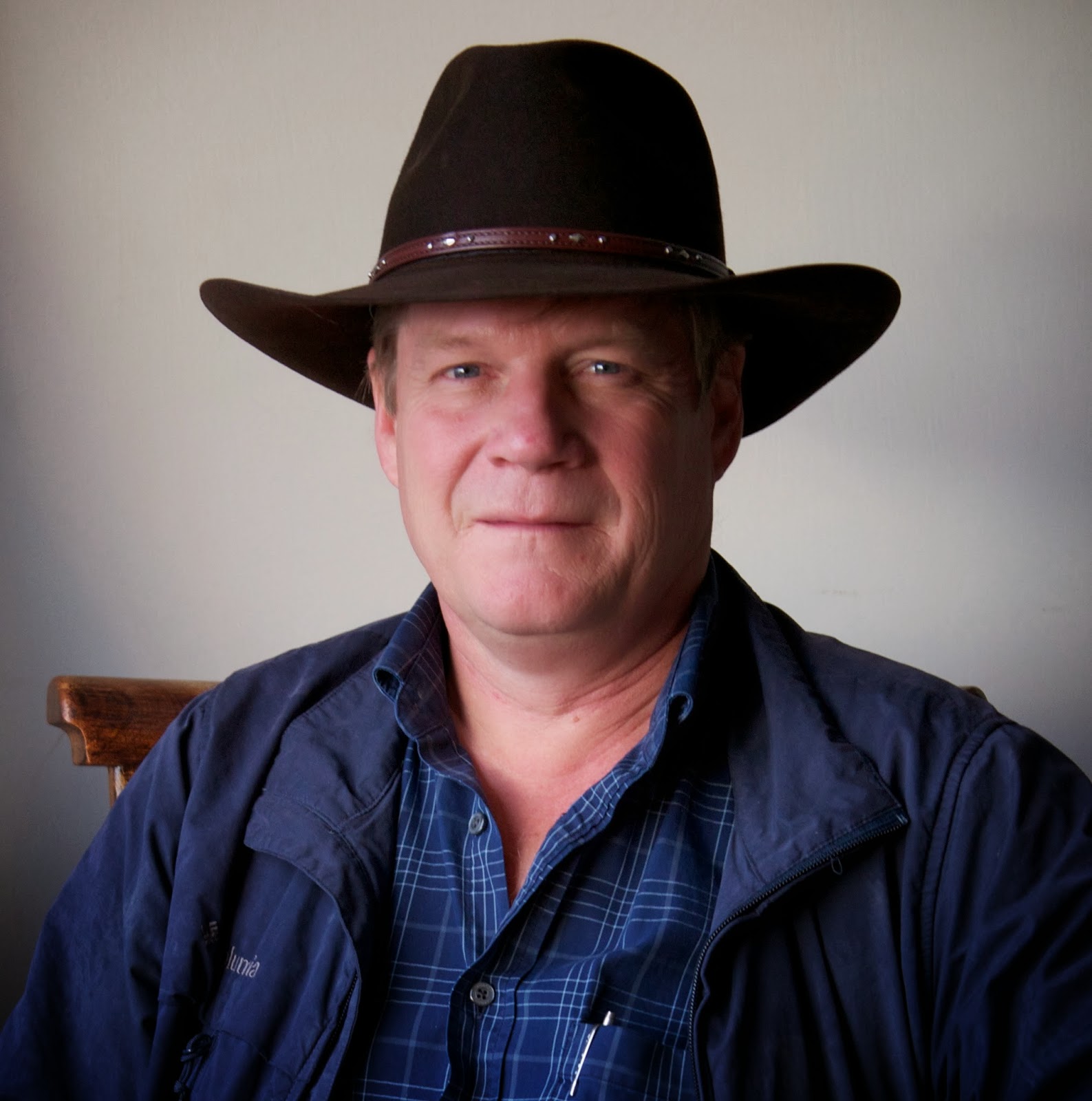
Russell Stendal was born in Minneapolis and raised on the mission field in Colombia, South America. He became a missionary jungle pilot at age nineteen. Almost ten years later in 1983, he was kidnapped by Marxist rebels and held hostage for five months. His book, Rescue the Captors, relates his experience, including how God worked in the hearts of the rebels.
Russell has written many other books, produced videos, and edited two Bible translations, the Spanish Reina-Valera 2000 and the Jubilee Bible in English.
Russell heads up the work of Colombia Para Cristo, which operates twelve radio stations involving more than one hundred staff and coworkers and covering much of Latin America with the gospel. A thriving underground church has developed in remote jungle areas of Colombia. New high-gain antennas are now beaming the gospel message deep into areas of increasing crisis across the borders of Venezuela, Ecuador, Peru, and Brazil, as well as throughout Colombia.
Sold by: Amazon Digital Services, Inc.
To the Reader:Have you ever come across footnotes in the Old Testament saying, “Hebrew Obscure”, or “Hebrew Uncertain”? This is not due to any lack of content or clarity in the original text, but rather to the fact that most modern Hebrew scholars simply do not know the precise meaning of many of the original idioms with any degree of certainty. For hundreds of years, Hebrew was studied as a “dead” language (a language that was not spoken in everyday life). The difference between studying a “living” versus a “dead” language could be compared to the difference between the study of fossils or museum exhibits of long extinct animals, versus the study of living examples of the same species.
A number of years ago, I was given a copy of an old Spanish Bible translated in the heat and fervor of the Reformation (which was brutally put down in Spain by the Inquisition) during a time when it was common practice to burn Bibles along with their owners. I immediately began to notice a depth and clarity to this translation that brought forth a clear witness of the Spirit of God as to the meanings of many seemingly unfathomable passages (mainly in the Psalms, Proverbs and Prophets) that had intrigued me for years. I began to investigate the unique circumstances of this Spanish translation by Casiodoro de Reina published in 1569.
Casiodoro de Reina was born in 1520. He learned Hebrew in Spain as a young man, apparently from Jews who still spoke Hebrew as a “living” language. The Jews had been officially expulsed from Spain in 1492, but it is estimated that only one-fourth of them left at that time (some of those who remained did their best to blend in with the Christians). Eventually, the Spanish Inquisition made it impossible for any Jewish people to survive in Spain speaking their own language. Almost every Hebrew scholar since Casiodoro de Reina has had to learn Hebrew as a “dead” language, which was no longer spoken, until the modern day ongoing resurrection of the Hebrew language in Israel.
Casiodoro began a translation of the Old Testament from Hebrew to Spanish and was forced to flee from Spain in 1551. Several Jewish translations of the Old Testament were published in Spanish about this time (such as the Biblia de Ferrara of 1553) to which Casiodoro had access. He also built on a translation of the Psalms that was published by his friend Juan Pérez de Pineda in 1557. He went to Geneva and was there until the government of Geneva under John Calvin burned Miguel Servet at the stake over differences on points of doctrine. Casiodoro had some strong words about this. He said that Geneva had become a “new Rome” and left for England. The Queen of England (Elizabeth I) allowed Casiodoro to preach to Spanish speakers in the Church of St. Mary Axe and gave him a monthly income. Casiodoro continued his Bible translation until the Inquisition found out about it and sent agents from Spain, who brought false charges against him and undermined his support from the Queen.
Casiodoro fled to Germany just in time to witness a war between Lutherans and Catholics. He had some words with the Lutherans regarding this and went on into the Low Countries. There he was given a place to preach in a Congregational Church where he spent quite a bit of time in conflict with the Consistory (the minutes of those meetings still exist). Casiodoro seemed to always maintain an open mind to truth and refused to go along with any given school of doctrine or thought believing that everyone must be responsible before God for their own conscience. After more than twenty years of working on his translation while fleeing with his wife and children, one jump ahead of the Inquisition, which was always sending agents to attempt to kill or hinder him, his Bible was finally printed. The Inquisition set up a ring of retenes or checkpoints all along the borders and for many years carefully searched every person and/or cargo that entered Spain, making an all-out effort to not let even one single Bible into the country. They searched for Bibles with the same intensity that our modern countries search passengers for weapons and drugs! Casiodoro was last heard of at age 70, still one jump ahead of the Inquisition, and it is not known for sure whether they got him in the end or not.
Casiodoro de Reina, although younger, was contemporary with William Tyndale. I have noticed many similarities between the translations of both men (William Tyndale in English and Casiodoro de Reina in Spanish). Studying these two Bibles (they basically agree, yet each brings out unique facets of truth from a slightly different perspective) has been the equivalent of getting the truth of the Scriptures of the Reformation in stereo. The power and clarity of their translations has a much sharper edge than the work that was done in either language even a generation later when the intense heat of the Reformation had died down, and Bible translation had to be officially approved by ecclesiastic and/or secular governments.
It is recognized that the Authorized Version (by King James) in English is basically a revision of Tyndale’s work (in many key passages the wording of the AV is ninety percent or more Tyndale’s) with the exception of the last half of the Old Testament (from Ezra to Malachi). This portion of Tyndale’s work is believed to have been lost at sea in a shipwreck (only the book of Jonah survived). Unfortunately, William Tyndale was burned at the stake before he could redo the books that were lost. This disaster has, in my opinion, placed these books of our English AV Bibles on a foundation less than equal in terms of clarity and consistency of translation with the rest of the AV which draws so extensively from the work of Tyndale.
When we edited a recent edition of the Spanish Bible (Las Sagradas Escrituras, Version Antigua, published March of 1998) based on the original text of Casiodoro de Reina, I checked much of it against the work of William Tyndale and against the Authorized Version. This strengthened the Spanish Bible in many areas and also tended to confirm the opinion that I gave in the preceding paragraph. Then I decided to diligently compare and align the work of Casiodoro de Reina with the books of the Authorized Version that did not receive the heritage of William Tyndale. The first fruit of that endeavor is this rendition of Psalms, Proverbs, Ecclesiastes and Song of Solomon.
Over the years there have been many revisions of the Authorized Version; some of these under the guise of modernizing the language have watered down the message and introduced errors proceeding from deviant manuscripts, from doctrines of men, and from over simplification of the English language. The same is true regarding the Spanish Bible. Instead of revising “forward” towards modernism and employing modern scholarship, textual criticism, and the like; it has been our intention to revise “back” and return as close as possible to the roots of the pure message and pure language. I believe we are at a place where brilliant scholarship and linguistics alone cannot discern between all the possible variations of meaning, or among what are all being presented as ancient and worthy manuscripts in the original languages. We must have the witness of the Holy Spirit. I have chosen to go with the Hebrew scholarship of Reformers such as William Tyndale and Casiodoro de Reina whose translations of the Received Text (Textus Receptus) shined the light of the truth into the spiritual darkness of their day and changed the church and the world for the better, rather than to rely on the modern scholarship which has a penchant for removing the fear of the LORD from among the people of God in this Laodicean hour.
Let us allow the Spirit of Truth to have the last word regarding this matter. We must always bear in mind that even if we were to all learn Hebrew to perfection and could obtain a flawless manuscript of the original text, there would still be a humanly insurmountable language barrier between us and the Truth that can only be bridged by the Spirit of God.
Russell M. Stendal
Editor
For with thee is the fountain of life: in thy light shall we see light. (Psalm 36:9)
Translator’s Notes
Amen. So be it.
Belial. Satan. The Evil One.
Charity. The original translators used this term to differentiate God’s love (Gr. ágape) from man’s love (Gr. phileos). God’s love is born of sacrifice (not of human emotion) and is redemptive by nature. God the Father gave his only Son. Jesus gave his life for us. Only God can put this type of love within us. We are not capable of it on our own. (See 1 Corinthians Chapter 13).
Chasten. Primary meaning: To refine or to purify.
Comes from the root: Chaste.
Congregation. In OT includes all Israel. In NT this word is used in italics to translate the Gr. ekklesia which literally means called out ones. This applies to and includes individuals, small or large groups and even the universal body of Christ.
Earth = Land. Same word in original. Spiritually this has to do with the People of God.
Eternal. Primary meaning: Denotes a change in quality (like a change of state). Secondary meaning: Unlimited time as a consequence of coming into another realm (God’s realm). Therefore, Eternal Life is not life in the human quality that we inherited from Adam going on forever; rather it is a new quality of life in Jesus Christ which may begin now for those who are born again by the Spirit of God.
Fools. Those who are governed by carnal thoughts or desires. This is folly in God’s eyes.
Halelu. Praise ye.
Jubilee. Primary meaning: Freedom, liberty. Secondary meaning: The joy of being set free.
Life = Soul. Same word in original. Translated one or the other according to context.
Right Hand. Authority (power strength).
Selah. Stop and think about it. Meditate on this.
Shadow. Includes the connotation of covering and protection.
Sheol (Heb.) Hades (Gr.). The empire of death under the power of Satan which imprisoned even the just until the redemptive work of Jesus and which even now retains the unjust as they await final judgment. This is different from the lake of fire or Gehena (Hell) of the final judgment which is the second death (See Luke 16:20-31; Ephesians 4:8; Revelation 20:14).
Shofar. Special ram’s horn trumpet blow on the Day of Atonement to announce the year of Jubilee and on other special occasions.
Spirit = Wind = Breath. Same word in original. Translated according to context.
Unicorn. Means one horn. In the old Spanish this is the Rhinoceros.
Use of Italics: Words added by the translator either for proper English or for clarification.
Use of pronouns:
Thee, Thou, Thy. Always singular. Note: Serious doctrinal error can result from the consequences of changing Thee, Thou, or Thy to You or Your. This can cause scriptural promises or directives addressed to the individual to be mistakenly applied to a corporate group. Modern English is ambiguous in this regard and lacks the precision necessary to accurately render the true meaning of the original.
Ye. Always plural. Always denotes a corporate or plural situation. Note: Serious doctrinal error can result from the consequences of changing ye to you and then indiscriminately applying scriptural promises or directives that apply corporately to the People of God to a given individual. Modern English has lost this important distinction.
Editor’s Note:
Of the original edition of Casiodoro de Reina, we only know of a handful of copies that survived the fire of the Spanish Inquisition. Many Bibles were burned together with their owners. William Tyndale was killed because he translated, published and distributed the Word of God. But when the devil knew that he could not stop subsequent editions of the Holy Scriptures, he was obligated to change his tactics. Taking advantage of the good intentions of many to actualize, modernize, and simplify the Bible, the enemy was able to plant his tares, partially dim the light and truth of the Word of God, and little by little dull the sword of the Christian.
It is our intention to actualize orthography and grammar only to the extent that we are confident that the original full range of meaning can be preserved; that we may deliver to you a translation that contains all the force and anointing that was poured out in the sixteenth century over men like Francisco de Encinas, Juan Pérez de Pineda, Casiodoro de Reina, Cipriano de Valera and William Tyndale: men who were chosen by God to be translators of the Bible.
Keeping to the tradition of these reformers, we have continued to take great care to ensure that key terminology is translated in a uniform manner and to footnote exceptions {these footnotes are printed directly in the text within brackets like those surrounding this phrase}. These features also make this an outstanding Bible to study by computer. The first usage, last usage and development of each key term has been carefully checked {the number of overall instances and number of verses in which a given term is used have been carefully tabulated and tracked to insure separation of terminology and to eliminate the use of synonyms wherever possible within the limits of the English language}. This means that when you print a list of all the occurrences of a given term or phrase and study these verse lists, this Bible then defines itself, and the exact value that God has placed on each key term can be established beyond the shadow of a doubt without the need to look up the meanings of the words in a dictionary or commentary that may have been tainted by human endeavor {which in some cases could also be slanted according to the doctrine or school of thought of those who compiled the material}.
We have also made an effort to preserve the emphasis of the original translators in our use of capitals, words in italics and/or in {brackets}. Italics are used when the translator considered the word to be necessary in order to complete a proper translation of the thought or phrase, but the word does not appear in the manuscript of the original language. Words enclosed in square brackets [ ] are explanations amplified by the translator to avoid misunderstandings. The punctuation and orthography have the principal purpose of preserving the meaning, flow and unity of the original manuscripts and do not always follow the norm of modern English.
The Name of God appears in the Hebrew manuscripts of the Holy Scriptures with four consonants (without vowels) YHWH or JHVH and translates literally into English as I AM (according to Exodus 3:14). This is expressed in like manner in Greek in various New Testament texts (see Matthew 14:27; Mark 14:62; Luke 22:70; John 4:26; 6:35, 41; 8:18, 24, 28, 58; 11:25; 18:5-8; Revelation 1:8, 11, 17; 2:23; 21:6; 22:13, 16). The ancients considered that the Name of God was too sacred to pronounce and so they read “Adonai” or Lord each time that they encountered the four consonants of the tetragrammaton. This tradition was followed by our Lord Jesus and by the apostles in more than three hundred instances when they were quoting the Scriptures of the Old Testament. In this work for the most part, we have continued in the tradition of our Lord in regard to the Name of God (YHWH) in the Old Testament. If the original read YHWH, the translation reads LORD. If the original read Adonai, the translation reads Lord. If the original read Adonai YHWH, the translation reads Lord GOD. In a few instances (such as Exodus 3:14), the tetragrammaton is translated I AM.
The First Book
of Moses Commonly Called
Genesis
Genesis 1
1 ¶ In the beginning God created the heavens and the earth.
2 And the earth was without order, and empty; and darkness was upon the face of the deep. And the Spirit of God moved upon the face of the waters.
3 ¶ And God said, Let there be light, and there was light.
4 And God saw that the light was good, and God divided the light from the darkness.
5 And God called the light Day and the darkness he called Night. And the evening and the morning were the first day.
6 ¶ And God said, Let there be a firmament in the midst of the waters, and let it divide the waters from the waters.
7 And God made a firmament and divided the waters which were under the firmament from the waters which were above the firmament; and it was so.
8 And God called the firmament Heavens. And the evening and the morning were the second day.
9 ¶ And God said, Let the waters under the heavens be gathered together unto one place, and let the dry land appear; and it was so.
10 And God called the dry land Earth, and the gathering together of the waters he called Seas; and God saw that it was good.
11 And God said, Let the earth bring forth green grass, herb yielding seed, and the fruit tree yielding fruit after its nature, whose seed is in itself upon the earth; and it was so.
12 And the earth brought forth green grass and herb yielding seed after its kind and the tree yielding fruit whose seed was in itself, according to its nature; and God saw that it was good.
13 And the evening and the morning were the third day.
14 ¶ And God said, Let there be lights in the firmament of the heavens to divide the day from the night; and let them be for signs and for appointed times and for days and years;
15 and let them be for lights in the firmament of the heavens to give light upon the earth; and it was so.
16 And God made two great lights: the greater light to rule the day, and the lesser light to rule the night; he made the stars also.
17 And God set them in the firmament of the heavens to give light upon the earth
18 and to rule over the day and over the night and to divide the light from the darkness; and God saw that it was good.
19 And the evening and the morning were the fourth day.
20 ¶ And God said, Let the waters bring forth great quantities of creatures with living souls and fowl that may fly above the earth upon the face of the firmament of the heavens.
21 And God created the great dragons and every living soul that moves, which the waters brought forth abundantly after their nature, and every winged fowl after its nature; and God saw that it was good.
22 And God blessed them, saying, Be fruitful and multiply and fill the waters in the seas, and let fowl multiply in the earth.
23 And the evening and the morning were the fifth day.
24 ¶ And God said, Let the earth bring forth the living soul after its nature, beasts and serpents and animals of the earth after its nature; and it was so.
25 And God made the beast of the earth after its kind and cattle after their kind and every thing that moves upon the earth after its kind; and God saw that it was good.
26 ¶ And God said, Let us make man in our image, after our likeness; and let them have dominion over the fish of the sea and over the fowl of the air and over the beasts and over all the earth and over every serpent that moves upon the earth.
27 So God created man in his own image, in the image of God created he him; male and female created he them.
28 And God blessed them, and God said unto them, Be fruitful and multiply and fill the earth and subdue it and have dominion over the fish of the sea and over the fowl of the air and over every beast that moves upon the earth.
29 ¶ And God said, Behold, I have given you every grass bearing seed, which is upon the face of all the earth, and every tree, in which is the fruit of a tree yielding seed; to you it shall be for food.
30 And to every beast of the earth and to every fowl of the air and to every thing that moves upon the earth, in which there is a living soul, I have given all green grass for food; and it was so.
31 ¶ And God saw every thing that he had made, and, behold, it was very good. And the evening and the morning were the sixth day.
Genesis 2
1 ¶ Thus the heavens and the earth were finished, and all the host of them.
2 And on the seventh day God finished his work which he had made, and he rested on the seventh day from all his work which he had made.
3 And God blessed the seventh day and sanctified it because in it he had rested from all his work which God created in perfection.
4 ¶ These are the origins of the heavens and of the earth when they were created, in the day that the LORD God made the earth and the heavens
5 and every plant of the field before it was in the earth and all the grass of the field before it grew, for the LORD God had not caused it to rain upon the earth, and neither was there a man to till the ground.
6 But there went up a mist from the earth and watered the whole face of the ground.
7 And the LORD God formed man of the dust of the ground and breathed into his nostrils the breath of life, and man became a living soul.
8 ¶ And the LORD God had planted a garden eastward in Eden, and there he put the man whom he had formed.
9 And out of the ground made the LORD God to grow every tree that is desirable to the sight and good for food, the tree of life also in the midst of the garden and the tree of knowledge of good and evil.
10 And a river went out of Eden to water the garden, and from there it was divided into four heads.
11 The name of the first is Pison; that is it which compasses the whole land of Havilah, where there is gold;
12 and the gold of that land is good; there is bdellium and the onyx stone.
13 And the name of the second river is Gihon; this is the same that compasses the whole land of Ethiopia.
14 And the name of the third river is Hiddekel; this is that which goes toward the east of Assyria. And the fourth river is Euphrates.
15 And the LORD God took the man and put him into the garden of Eden to dress it and to keep it.
16 ¶ And the LORD God commanded the man, saying, Of every tree of the garden thou may freely eat;
17 but of the tree of the knowledge of good and evil, thou shalt not eat of it; for in the day that thou dost eat of it thou shalt surely die.
18 ¶ And the LORD God said, It is not good that the man should be alone; I will make him a help meet for him.
19 And out of the ground the LORD God formed every beast of the field, and every fowl of the air; and brought them unto the man to see what he would call them; and whatever the man called every living soul, that was its name.
20 And the man gave names to every beast, and to the fowl of the heavens, and to every animal of the field; but for the man there was not found a help meet for him.
21 ¶ And the LORD God caused a deep sleep to fall upon Adam, and he slept; and he took one of his sides and closed up the flesh in its place;
22 and the LORD God built that which he had taken from the side of the man into a woman and brought her unto the man.
23 And the man said, This is now bone of my bones and flesh of my flesh; she shall be called Woman because she was taken out of Man.
24 Therefore shall a man leave his father and his mother and shall cleave unto his wife; and they shall be one flesh.
25 And they were both naked, the man and his wife, and were not ashamed.
Genesis 3
1 ¶ Now the serpent was more astute than all the animals of the field which the LORD God had made. And he said unto the woman, Has God indeed said, Ye shall not eat of every tree of the garden?
2 And the woman answered unto the serpent, We may eat of the fruit of the trees of the garden;
3 but of the fruit of the tree which is in the midst of the garden, God has said, Ye shall not eat of it; neither shall ye touch it, lest ye die.
4 Then the serpent said unto the woman, Ye shall not surely die:
5 For God knows that in the day ye eat of it then your eyes shall be opened, and ye shall be as gods, knowing good and evil.
6 ¶ And when the woman saw that the tree was good for food, and that it was desirable to the eyes, and a tree of covetousness to understand, she took of its fruit and ate and gave also unto her husband with her; and he ate.
7 And the eyes of them both were opened, and they knew that they were naked; so they sewed fig leaves together and made themselves girdles.
8 And they heard the voice of the LORD God walking in the garden in the cool of the day, and the man and his wife hid themselves from the presence of the LORD God among the trees of the garden.
9 ¶ And the LORD God called unto the man and said unto him, Where art thou?
10 And he replied, I heard thy voice in the garden, and I was afraid because I was naked; and I hid myself.
11 ¶ And he said, Who told thee that thou wast naked? Hast thou eaten of the tree, of which I commanded thee not to eat?
12 And the man said, The woman whom thou gavest to be with me, she gave me of the tree, and I ate.
13 Then the LORD God said unto the woman, What is this that thou hast done? And the woman said, The serpent beguiled me, and I ate.
14 ¶ And the LORD God said unto the serpent, Because thou hast done this, thou art cursed above all beasts and above every animal of the field; upon thy belly shalt thou go, and dust shalt thou eat all the days of thy life;
15 and I will put enmity between thee and the woman and between thy seed and her seed; that seed shall bruise thy head, and thou shalt bruise his heel.
16 ¶ Unto the woman he said, I will greatly multiply thy sorrow and thy conception; in sorrow thou shalt bring forth sons; and thy desire shall be to thy husband, and he shall rule over thee.
17 ¶ And unto Adam he said, Because thou hast hearkened unto the voice of thy wife and hast eaten of the tree of which I commanded thee, saying, Thou shalt not eat of it, cursed shall be the ground for thy sake; in sorrow shalt thou eat of it all the days of thy life;
18 thorns also and thistles shall it bring forth to thee; and thou shalt eat the grass of the field;
19 in the sweat of thy face shalt thou eat bread until thou return unto the ground; for out of it wast thou taken, for dust thou art, and unto dust shalt thou return.
20 ¶ And the man called his wife’s name Eve because she was the mother of all living.
21 ¶ Then the LORD God made coats of skins for Adam and his wife and clothed them.
22 ¶ And the LORD God said, Behold, the man is become as one of us, knowing good and evil; and now, lest he put forth his hand and take also of the tree of life and eat and live for ever,
23 therefore the LORD God sent him forth from the garden of Eden to till the ground from which he was taken.
24 So he drove out the man; and he placed at the east of the garden of Eden Cherubim and a flaming sword which turned every way to keep the way of the tree of life.